Investors are breathing a sigh of relief. A week after President Trump pledged to annihilate Iran if it didn't open the Strait of Hormuz, stocks are back near all-time highs.
The S&P 500 (^GSPC +0.59%) and other major indexes have surged over the last week, following a ceasefire agreement and signs that President Trump is looking for an off-ramp in the conflict, even as he just announced a blockade of the Strait of Hormuz. Oil prices have come down modestly, but are still elevated, and the Iran situation remains volatile as traffic through the Strait of Hormuz, the gateway for about a quarter of the world's oil, remains mostly blocked.
The threat of a recession has been on investors' minds as a sustained energy shock, such as the 1973 Arab oil embargo, can lead to an economic crisis. Elevated oil prices don't just lift prices at the pump, after all, but on a wide range of retail goods as shipping costs rise, and transportation prices, including for air travel, go up as well.
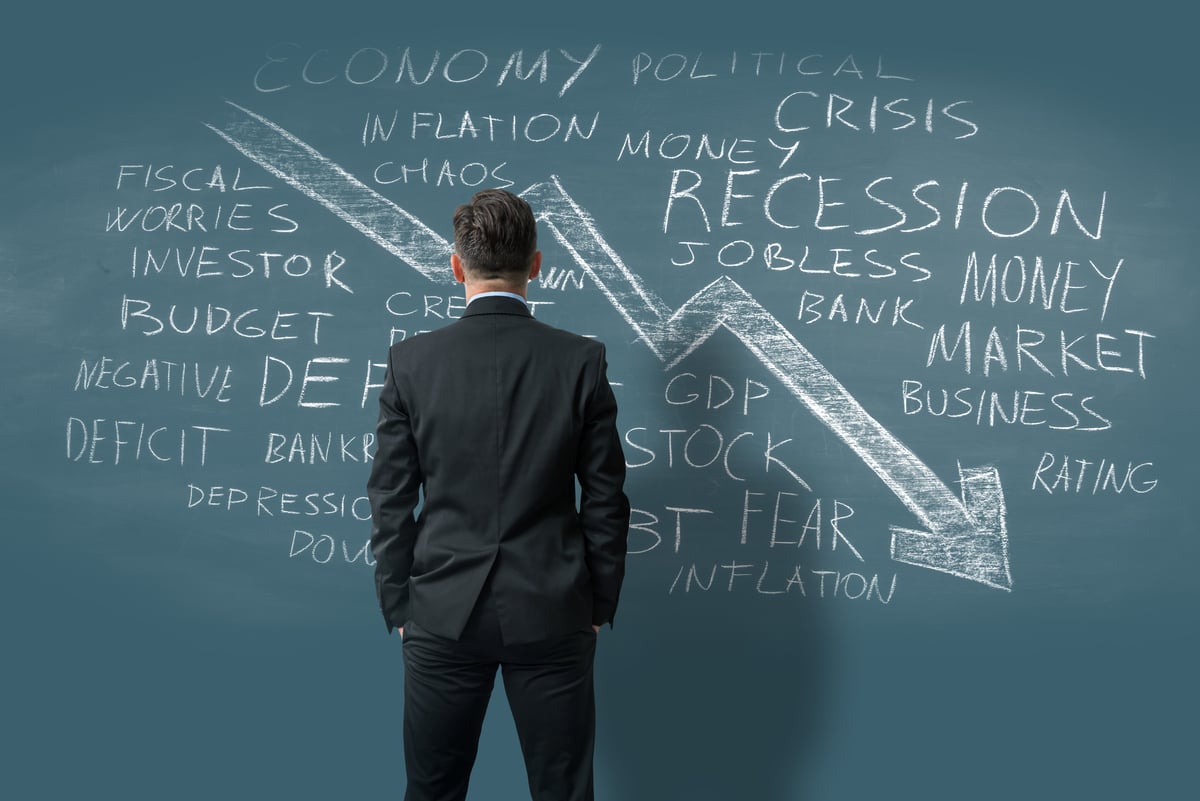
Image source: Getty Images.
What is the risk of a recession?
Recessions are never easy to predict, and economists tend to have a diverse range of forecasts on them.
This morning, the International Monetary Fund (IMF) cut its forecast for the year due to higher energy prices from the war in Iran. It's now calling for 3.1% global GDP growth, down from an earlier forecast of 3.3% and 3.5% growth in 2025, which assumes a short-lived war in Iran. In its "adverse scenario," which it believes is becoming more likely, growth would slow to 2.5%, and its worst-case forecast, which is modeled on oil averaging $110 a barrel in $125 in 2027, would push the economy toward a global recession.
Meanwhile, a monthly survey from the Bank of America showed economists are the most bearish they've been since June 2025, but most respondents did not foresee a recession, with 70% calling it unlikely.
Finally, Citadel's Ken Griffin weighed on the matter, saying that if the Strait of Hormuz were closed six to 12 months, it would cause a recession.
What it means for investors
The risk of recession isn't exactly binary. Higher oil prices could lead to slowing growth, which would weigh on stocks, but a recession is the real risk here, and the effects of an extended energy shock would hit some regions, like Asia, especially hard.
So overall, the latest update on the recession forecast is good news for investors. While economists are dialing down their expectations for GDP growth, the risk of recession seems to be less than investors had estimated at the S&P 500's nadir last week.