It has been a rough year for nuclear stocks like Oklo (OKLO +5.52%) and NuScale Power (SMR +1.58%). At one point, shares of both companies were down by more than 40%.
On April 12, I wrote about how both Oklo and NuScale are promising long term investments given the $10 trillion nuclear renaissance that has already begun to take shape. Since that research was published, shares of Oklo and NuScale have both surged by more than 30%.
Here's the good news: The runs may be far from over. If you've been looking for stocks with huge upside potential, pay close attention.

NYSE: SMR
Key Data Points
Nuclear stocks are directly exposed to rising demand for artificial intelligence
When it comes to artificial intelligence (AI) investments, most people think of either companies directly developing AI applications like OpenAI, or they think of companies that directly supply the AI industry like GPU stocks. There's no doubt that these categories will benefit from rising demand for artificial intelligence. The issue is that the market has already discovered most of these investments, often generating high valuations that aren't as friendly to prospective investors.
To get around this valuation premium, investors must look at businesses that aren't as obviously connected to AI. There may still be a growth premium involved, but it often isn't as steep as more direct AI investments. This thesis is largely why I think Rivian Automotive, an EV stock, is so underrated. Most people see Rivian as an automaker. In reality, however, the company is looking more like an AI business. Savvy investors can take advantage by buying into an emerging AI stock at a non-AI stock price.
The same looks true today for energy companies like Oklo and NuScale. On the surface, these companies are involved in the power generation business. And that's largely true. Much of the economics involved deal with capital-intensive manufacturing. But when you dig deeper, both Oklo and NuScale have multibillion-dollar market values not because their technology is new.
In fact, the concept of small modular reactors -- the technology that both companies' designs rely on -- has been around for decades. The difference this time around is that AI data centers -- core infrastructure that is necessary to support the ongoing AI revolution -- look like ideal adopters of SMR technology.
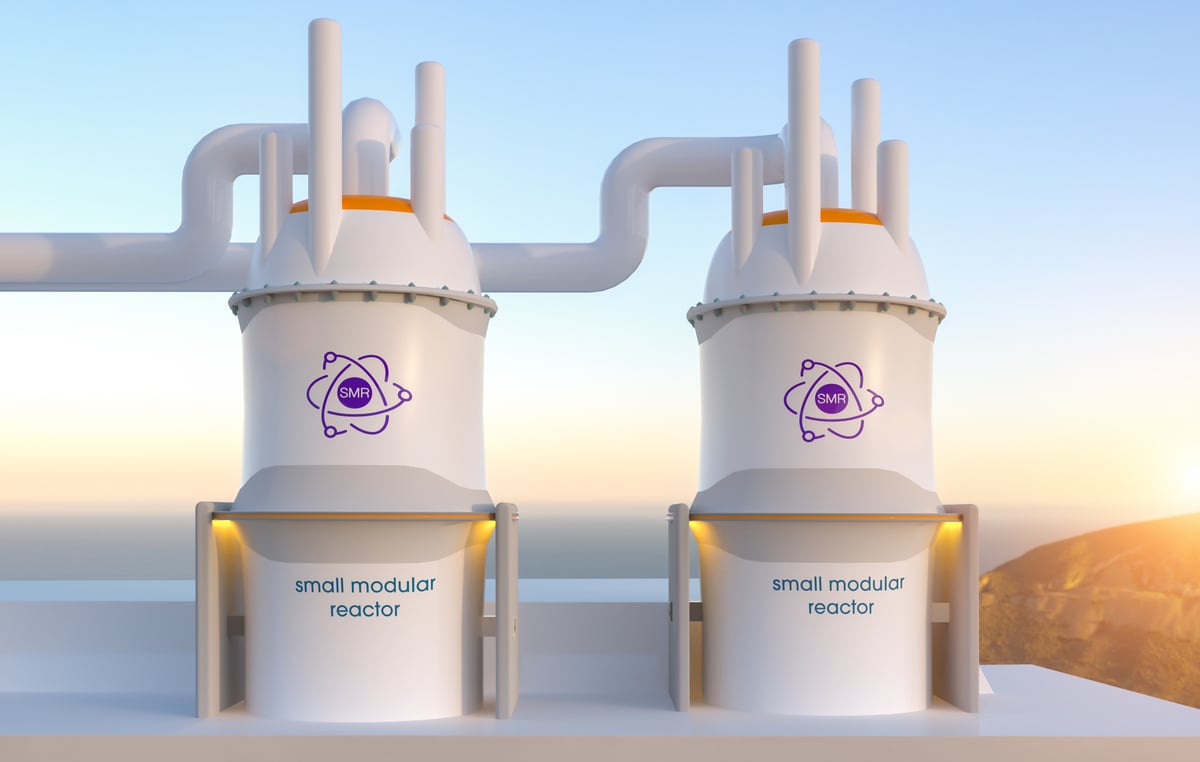
Image source: Getty Images.
Over the next few years, $7 trillion is expected to be deployed globally to build more data centers to serve the AI industry. Data centers are energy intensive, requiring huge amounts of electricity to not only run the hardware inside the building, but to also keep that hardware cool. In response, we've already seen power demand surge across regions where data center construction is highest, leading to higher electricity rates for everyday consumers.
Data center operators don't want to upset the public. And there will need to be far more energy generation supply added to the grid as it is. These operators, therefore, are looking for new sources of reliable, renewable energy that can be built quickly, with the option for future scalability, even if the upfront electricity rates come at a premium. This is where SMR technology fits in. These plants -- at least on paper -- can be climate friendly, be built much faster at lower cost than traditional nuclear plants, and often only need refueling every few decades.

NYSE: OKLO
Key Data Points
NuScale and Oklo aren't taking the same approach. NuScale is primarily looking to add SMR capacity to the grid through partners like TVA and ENTRA1. Oklo, meanwhile, has signed a growing list of smaller deals directly with data center operators.
Both approaches may work long term. And it's not hard to see 10x upside potential for both stocks considering their combined market caps remain under $20 billion. Bank of America sees the coming nuclear renaissance as a $10 trillion opportunity. But there's a catch: Its forecasts don't see SMR capacity ramping meaningfully until 2035.
In short, both Oklo and NuScale remain long-term investments only. Expect plenty of volatility along the way, plus plenty of shareholder dilution. But if you're willing to take on a long holding period for maximum upside potential, both of these stocks are suitable investments.