There has been a significant shift in vehicle preferences over the past couple of decades, as the U.S. market has increasingly favored SUVs and trucks. That was fantastic news for Ford Motor Company (F -1.39%) and General Motors (GM -1.02%) because a dirty little secret is that crossovers, SUVs, and trucks cost only marginally more to manufacture than sedans, and they fetch average transaction prices 2 to 3 times higher and carry much better margins. Unfortunately for automakers and investors, there is evidence suggesting that trend could be reversing -- and now Ford and GM face a massive dilemma.
Ford and GM appear to be shifting into reverse
The average consumer may not pay attention to an automaker's product lineup, but investors should. A newer lineup sells better at higher transaction prices and represents the future sales pipeline. Take Ford, for instance: The folks at the Blue Oval were all too happy to almost entirely get rid of their sedan product lineup in the U.S. market when consumers favored SUVs and trucks. In fact, in 2026, Ford offered a very limited selection of traditional sedans following the discontinuation of popular models such as the Fusion, Fiesta, Focus, and even Taurus. The lone survivor is Ford's iconic Mustang.
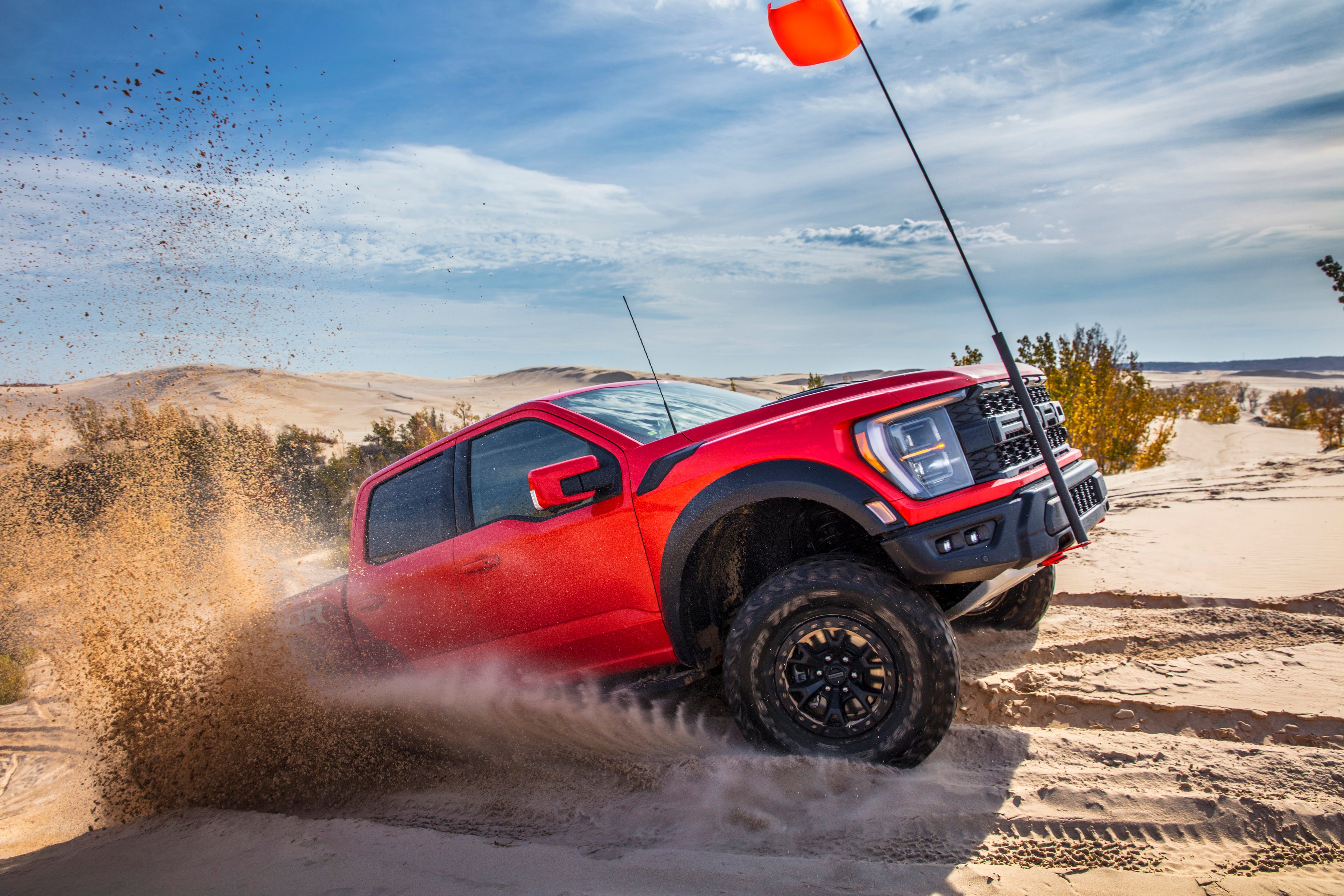
Image source: Ford Motor Company.
Of course, with fewer compelling sedan options in the market, and new-car prices rising seemingly endlessly, remaining sedans are having a resurgence. The pragmatic Japanese brands are taking advantage of this with Toyota Camry sales up 11% during the first quarter, Honda Accord sales up 22%, and Kia's K5 sales up 19%. It was the first quarter in nearly a decade that Toyota's Camry was the brand's top seller, beating out the popular RAV4 crossover.
"The sedan market is very vibrant," Ford CEO Jim Farley told reporters at the Detroit Auto Show in January, according to Automotive News. "It's not that there isn't a market there. It's just we couldn't find a way to compete and be profitable. Well, we may find a way to do that."
Ford's crosstown rival may be a step ahead already. It was first reported by GM Authority that GM plans to introduce a Buick sedan to the U.S. market. This would be the first Buick sedan offered in North America since 2020. It's rumored to be built on the same platform as the next-generation Cadillac CT5 and Camaro.

NYSE: F
Key Data Points
Insert dilemma for these automakers
That sets up a dilemma for Detroit automakers that have long dominated SUVs and trucks and enjoyed the juicy margins those segments bring. On one hand, focusing on the more profitable SUV/truck segments they dominate is solid business. On the other hand, giving up incremental sales as sedans gain market share leaves money on the table.
Another variable is that vehicles are becoming more defined by software and include more driverless vehicle technology. Those features and options should make sedans more profitable, especially as automakers work in subscription business models. However, another dilemma is that those technologies may make sedans more profitable to Ford and GM but less affordable and thus less in demand. The answer is far from clear, but it's absolutely something investors should pay attention to, as these are exactly the decisions that can and will change the bottom line in the years ahead.