Tesla's (TSLA -1.71%) first-quarter results weren't quite as bad as the stock's post-earning setback suggests. Sure, revenue fell short of most expectations, but the bottom line came in better than the consensus. The market's mostly -- and understandably -- just concerned about the company's big spending plans for the remainder of the year, even if almost everyone agrees that its impending capital investments in capacity and artificial intelligence-driven opportunities make sense.
The thing is, while investors are focused on Tesla's past and projected top and bottom lines, they've largely lost sight of the most important numbers in the middle. That, and the fact that electric vehicles (EVs) still account for the lion's share of the company's results. And when zooming in on this particular business, things look pretty bullish.
Image source: Tesla.
Tesla might just be turning the corner
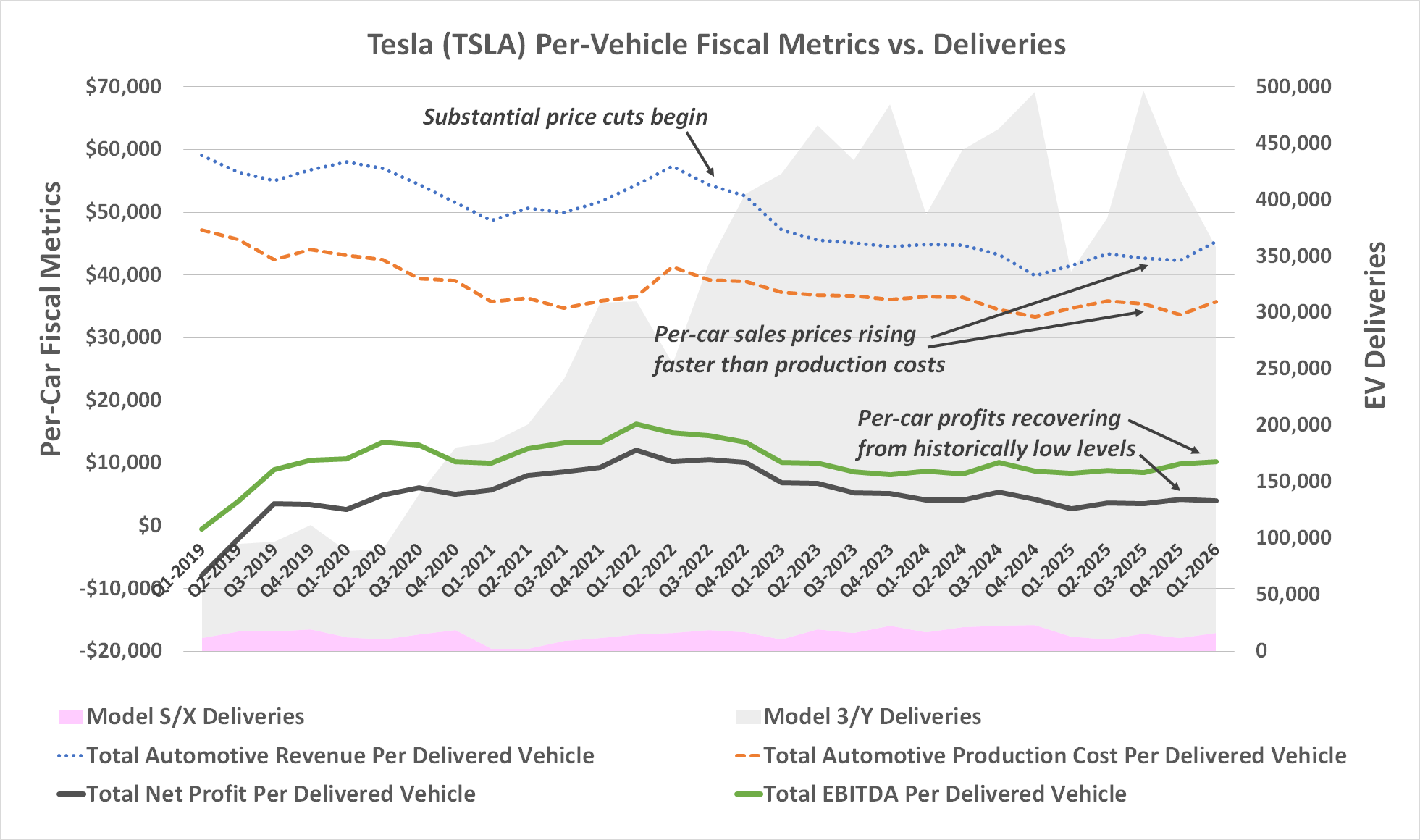
Tesla enjoyed the pricing power that comes with being the only major name in the electric vehicle business for a long, long time. That began changing in earnest in late 2022 and early 2023, however. And the price cuts implemented around that time took a clear toll on per-car profitability. Indeed, net profits that at one time exceeded $10,000 per automobile were pared back to less than half that figure by 2024.
After a fair amount of tweaking and fine-tuning, though, the company's EV business seems to be back on track. Its gross profit per vehicle delivered last year was $9,558, up from $8,000 in the prior quarter. Earnings before interest, taxes, depreciation, and amortization (EBITDA) per delivery also improved for a second quarter in a row, to $10,245.
Data source: Tesla Inc. Chart by author.
These still aren't the kind of per-unit figures we were seeing prior to and through 2022, when Tesla still faced little to no competition, and when interest in electric vehicles was still reasonably healthy. However, the turmoil that seems to have chipped away at profitability for most of the last couple of years finally appears to be abating.
Not as bad as the rhetoric suggests
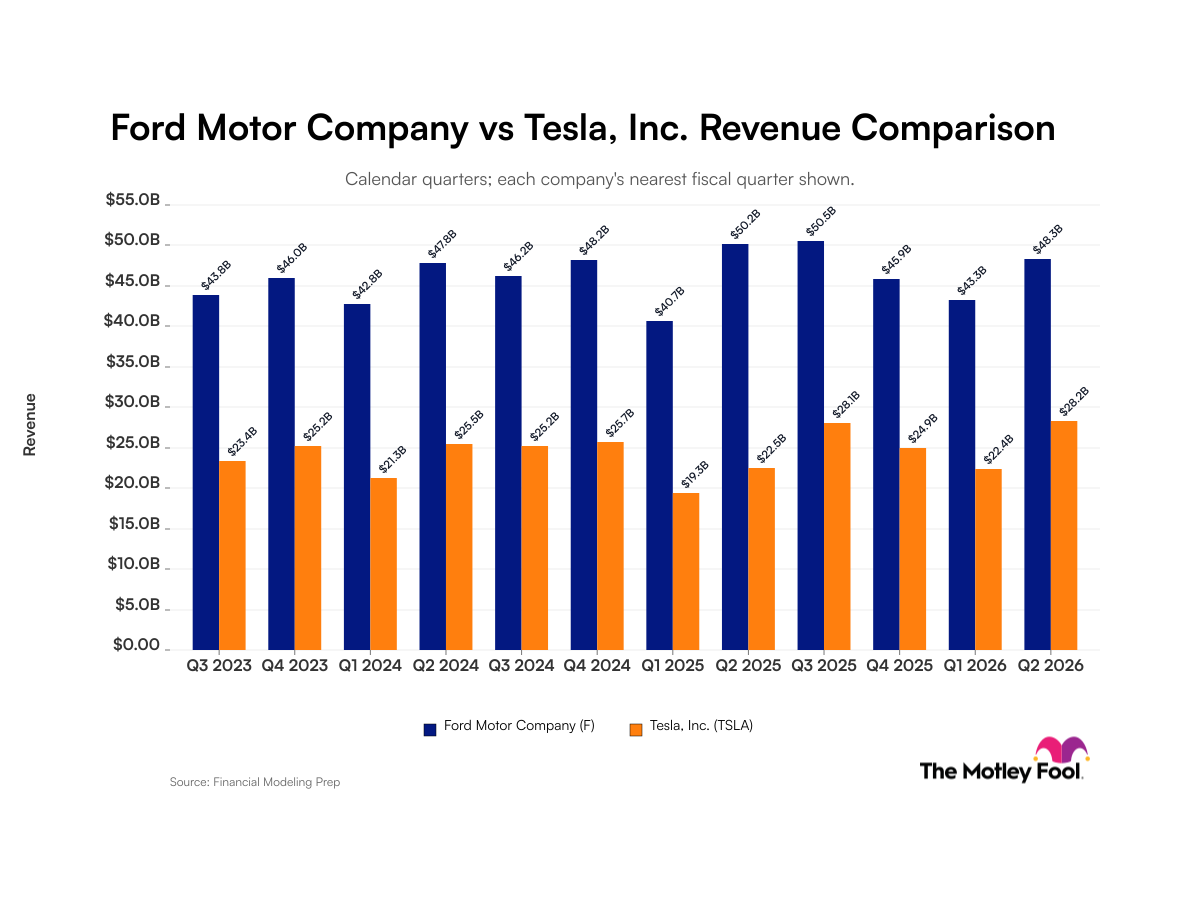
The company's biggest problem is still in place, to be clear. That's just selling its electric vehicles in a sea of new and existing EV competition like China's BYD. Tesla manufactured 408,386 battery-electric vehicles last quarter, but delivered only 358,203. That's the biggest production/delivery disparity seen since at least 2019 (although it got close to this gap in the first quarter of 2024). Some of this can be chalked up to logistical challenges. Some of it can't. Either way, this is at least part of the reason Tesla's Q1 top line of $22.4 billion slightly missed consensus estimates.

NASDAQ: TSLA
Key Data Points
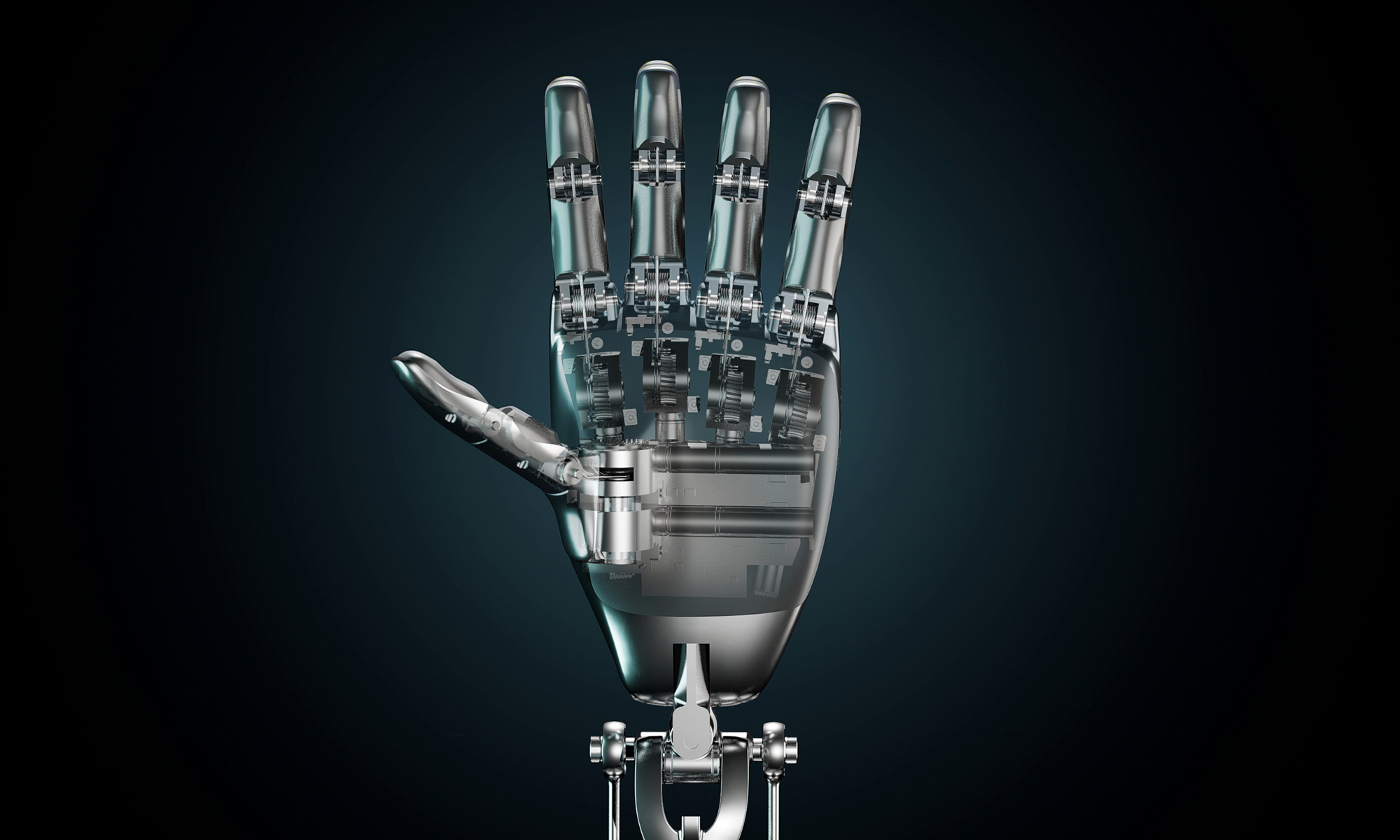
We do now know at least one encouraging thing about Tesla, though. That is, it can manufacture and market electric vehicles at a cost and price that's both respectable and sustainable. With this business humming along reasonably well, the company's 2026 plan for more than $25 billion worth of capital expenditures on things like its robotaxis, its Optimus robot, and other artificial intelligence initiatives doesn't seem quite so scary.
More to the point for anyone mulling a new stake in Tesla, the bearish argument may not be quite as solid as it's being made out to be following the release of the company's first-quarter numbers.