Semiconductor stocks have been on a tear recently, driving Nvidia (NVDA +1.30%) to a new all-time high. Its market cap is over $5 trillion at the time of this writing (April 27), and its financial performance supports the stock price. In its 2026 fiscal year, which ended Jan. 25, revenue increased 65% to $215.9 billion.
Although the numbers look good, Nvidia has one notable issue. It's extremely reliant on GPU demand in artificial intelligence (AI) data centers -- at $193.7 billion, data center revenue accounted for most of its sales. And much of that demand comes from just a handful of hyperscalers.
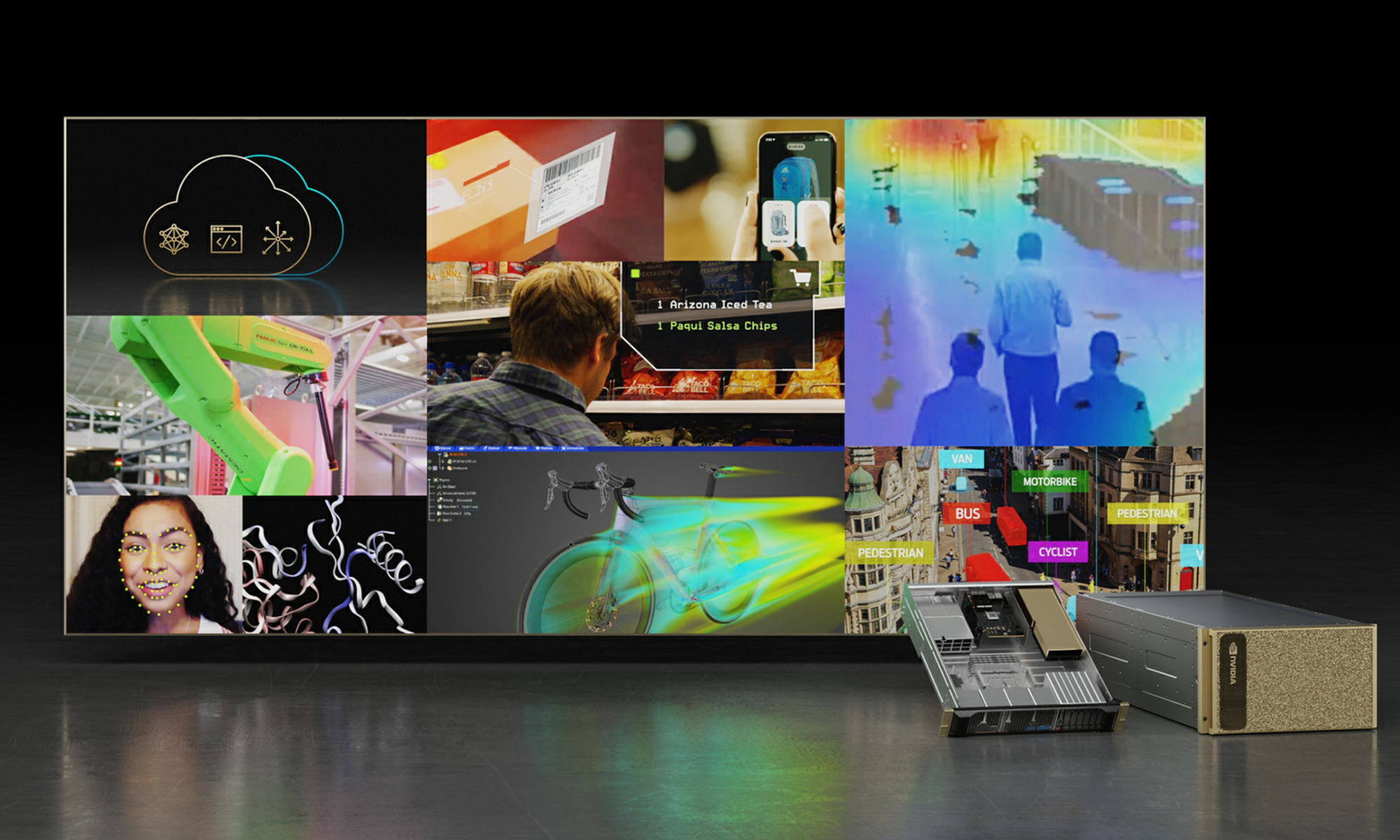
Image source: Nvidia.
Nvidia's concentrated customer base
Nvidia doesn't break down exactly how much its biggest clients spend, but in the company's Q4 2026 earnings call, CFO Colette M. Kress said that the top five cloud providers and hyperscalers accounted for a little over 50% of revenue. In another data point, the company's 10-K revealed that just two direct customers accounted for 36% of revenue in Nvidia's 2026 fiscal year.
If any major customers find an alternative to Nvidia GPUs, it could have a significant impact on the chipmaker's sales. That's not a far-fetched scenario. The four top hyperscalers are Alphabet, Amazon, Meta Platforms, and Microsoft, and they spent a combined $410 billion in 2025, according to research from The Motley Fool. Their capital expenditures are expected to be in the $600 billion to $700 billion range in 2026.
Those four are all developing their own custom AI chips, with some farther along than others. Alphabet's Google, for example, recently announced its eighth generation of TPUs, which handle substantial internal workloads. Custom chips are optimized for each company's specific needs, and they reduce dependence on Nvidia.
The customer base is broadening
Customer concentration and reliance on AI spending are both concerns for Nvidia. However, to its credit, the chipmaker has been expanding its customer base with more enterprise clients and sovereign buyers.
At GTC 2026, CEO Jensen Huang noted that about 40% of Nvidia's revenue comes from outside the top five hyperscalers. This includes customers across several fields, including enterprise, robotics, and edge computing. These kinds of companies aren't developing their own custom chips like the tech giants. They're going with what works, and that's still Nvidia, which has an estimated 80% to 90% of the AI accelerator market and a wide moat courtesy of its CUDA software.

NASDAQ: NVDA
Key Data Points
Nvidia is also benefiting from sovereign AI, or governments' abilities to launch and manage their own AI systems. Countries around the world, including Canada, France, the Netherlands, Singapore, and the United Kingdom, are building or bolstering their national AI platforms using Nvidia hardware. Nvidia reported over $30 billion in revenue from sovereign AI in its fiscal 2026, more than triple that of the prior year.
The fact that hyperscalers are working to reduce their reliance on Nvidia is still a risk. Its size also means growth will be much slower over the next five years than it was over the last five. Even with those drawbacks, I still consider it one of the top semiconductor stocks to invest in.
The company continues to deliver excellent revenue and income growth, and it's reasonably priced given that growth. The company's price/earnings-to-growth (PEG) ratio is below 0.7, and anything below 1 suggests a company could be undervalued based on its growth trajectory. That, along with its broadening customer base, is a good sign that it will be able to maintain a dominant market position.