Meta Platforms (META +2.27%) stock plunged on Thursday as investors balked at its plans to increase capital expenditures to fund its AI ambitions.
Meta is considered one of the big hyperscalers, and it's spending over $100 billion in capex this year, like Amazon, Alphabet, and Microsoft. However, Meta is the only one of those four companies that doesn't have a cloud computing business, which is the most direct way to monetize spending on chips and data centers.
The company also has a dubious track record of capital allocation, given its consistent losses in Reality Labs, its AI-focused division, which lost $4 billion in the first quarter on just $402 million in revenue, essentially the same thing it did in the quarter a year ago.
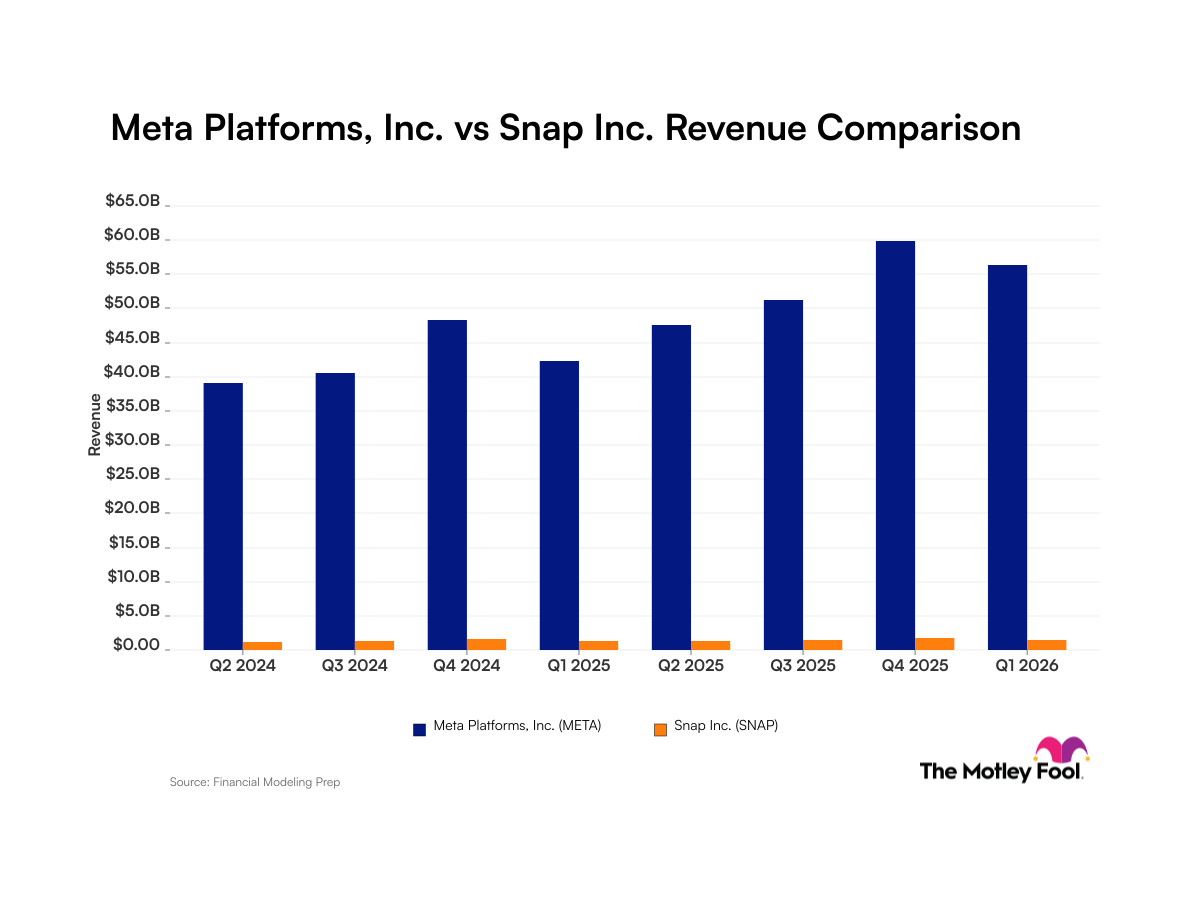
However, Meta's core business, advertising, has experienced an impressive acceleration over the last year, and in the first quarter, revenue jumped 33%, its fastest clip since the pandemic. On a constant-currency basis, revenue was up 29%.
Meta also easily outpaced rival Alphabet's ad growth again, which grew at less than half the rate of Meta's at 15.5% compared to 33%.
It's no accident that the Facebook parent has been able to do that, as it's invested in AI to improve ad targeted, ad content, and return on investment for its advertisers.

Image source: Getty Images.
How Meta is using AI
Meta launched Advantage+, a platform that automates the entire advertising process, including creative through generative AI that makes images, writes ad copy, and makes adjustments according to different devices. Advantage+ also identifies target audiences, determines the best platform on Meta's network, and has end-to-end automation for e-commerce, making it seamless for online sellers.
The company said more than 8 million advertisers are now using at least one generative AI creative tool.
Meta's growth in the first quarter was driven by 19% growth in ad impressions and a 12% increase in price per ad, both impressive numbers. Management credited ad performance improvements for the 12% increase in ad prices, along with better macro conditions and currency tailwinds. Ad impression growth was driven by an increase in engagement and users, in addition to ad load optimization.

NASDAQ: META
Key Data Points
What Meta is doing with AI
While Meta has already poured billions into AI and taken close to $100 billion in losses in the Reality Labs division, it still sees a lot of opportunity in the new technology.
In addition to using AI to improve its own products, Meta is also deploying AI to streamline its operations, expediting product rollouts by weeks and with much fewer people, which helps explain why the company said it would lay off 10% of its workforce.
Meanwhile, Meta is still focused on superintelligence, or artificial general intelligence (AGI). It developed a new large language model (LLM), Muse Spark, that achieved significantly better results than Llama, its original LLM.
Among the improvements it made in the first quarter to its ad business was Lattice, its ad-ranking architecture, as advances in the architecture drove a more-than-6% conversion rate in landing page video ads. It also rolled out its Meta AI business assistant, which provides personalized recommendations to advertisers, optimizes ad campaigns, and helps with customer service issues.
Overall, Meta is using AI for virtually every aspect of its business, from emerging products like the Meta Ray-Ban smart glasses to its core advertising business.
While it makes sense to want to see the company do a better job of controlling its Reality Labs losses, there's no doubt that AI is playing a role in the surging growth in the ads business.
Meta now trades at a price-to-earnings ratio of 22. At that price, it doesn't need to be the first to AGI for the stock to be a winner. Simply delivering continued growth in the ads business will be enough.