Nvidia (NVDA -4.58%) made a major quantum computing announcement when it launched its collection of open-source artificial intelligence (AI) models, called Ising, designed to make quantum computers more useful in real-world applications.
The big takeaway from the announcement is that Nvidia's AI helps solve one of quantum computing's biggest problems: The machines are still far too prone to data errors.
Nvidia is using a playbook similar to the one it created for AI -- developing leading architecture that integrates well with its hardware -- to help it gain an advantage in an emerging technology. And it could reap huge rewards as a result.
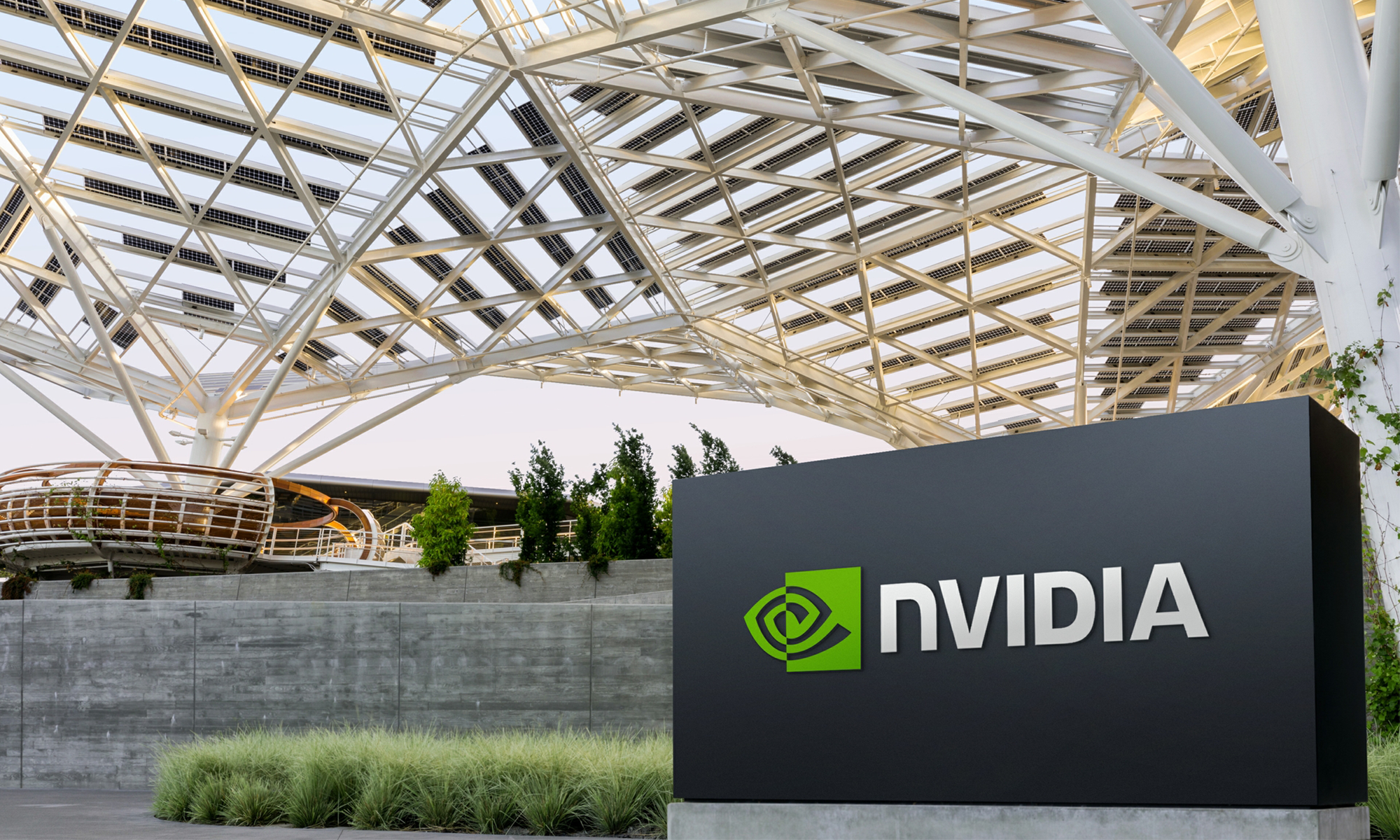
Image source: Getty Images.
How Nvidia's AI could fix quantum computing's biggest problem
Quantum computers are built around quantum bits, aka "qubits." And no matter which technology is used to create them (and there are many), qubits are incredibly sensitive to even the smallest interference from the world around them. If during a computation, that interference flips a qubit's state from 1 to 0 or vice versa, the answer can be compromised.
Solving this issue is one of the central problems in quantum computing today, and many tech companies are working hard on ways to reduce error rates and mitigate the errors that occur. Alphabet, for example, introduced its Willow processor in 2024, which the company said "can reduce errors exponentially as we scale up using more qubits."
Microsoft, too, released its own processor last year that's "reliable by design, incorporating error resistance at the hardware level, making it more stable."
But those approaches have mostly focused on quantum computing hardware. Nvidia is using artificial intelligence models to calibrate quantum computing processors. The result is that error-correction decoding is 2.5 times faster and 3 times more accurate than traditional approaches, the company says.
In practical terms, Nvidia believes its tech will help quantum computers advance faster to the point where they will be useful in more real-world applications.
"With Ising, AI becomes the control plane -- the operating system of quantum machines -- transforming fragile qubits to scalable and reliable quantum-GPU systems," Nvidia CEO Jensen Huang said in a press release.

NASDAQ: NVDA
Key Data Points
Nvidia could replicate the same success it's had with AI
Long before everyone was using ChatGPT and Claude, large tech companies were already using Nvidia's graphics processing units (GPUs) to build and test AI systems.
At the time, Nvidia's processors were primarily used for video games, video and graphics editing, and crypto mining. But the company recognized AI's massive potential and invested time and resources in developing semiconductor architecture for AI systems that could help accelerate the industry.
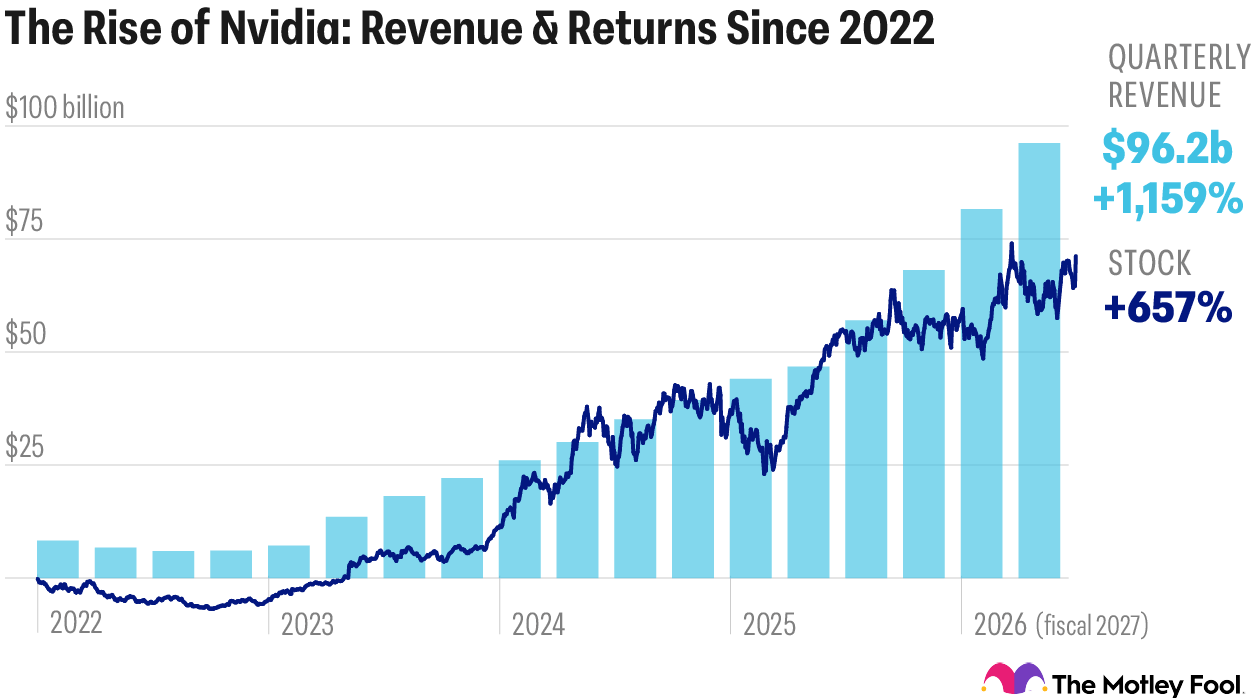
The payoff, obviously, has been massive. Over the past three years, the company's sales have climbed about 700%, and its earnings have soared nearly 2,650%. And that led to Nvidia stock skyrocketing by nearly 668% over that period.
Nvidia won't be able to replicate that type of blockbuster success in the quantum computing space, but it could use Ising to benefit from this emerging trend. The technology is still evolving, and Nvidia is getting involved early by giving quantum computing companies useful tools to improve their offerings.
Nvidia is also offering it as an open-source product, making it easy and inexpensive to use. This is similar to the approach the company took to driving adoption of its CUDA parallel computing platform and programming model, which let developers write code to run directly on Nvidia's GPUs. That has helped tech giants to better unlock the potential of the hardware they are using.
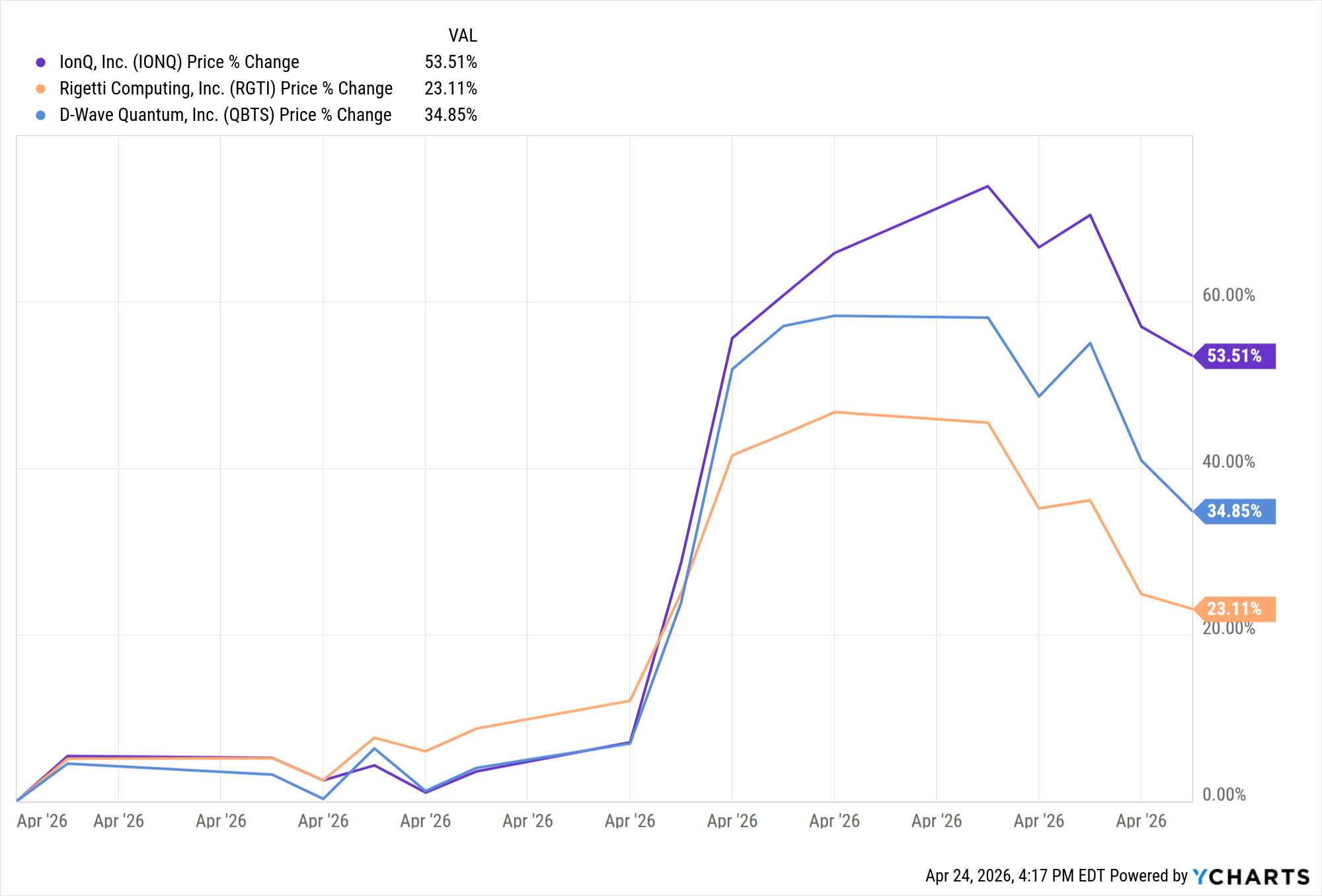
Quantum computing companies and investors immediately took notice after Ising was announced. Here's how the leading quantum computing stocks, IonQ, D-Wave Quantum, and Rigetti Computing, reacted to the news:
Data by YCharts.
Compared to the AI market, the quantum computing market is still relatively small. Nvidia cited Resonance research that says it will be worth $11 billion by 2030. But McKinsey estimates it could reach $100 billion by 2035.
Nvidia's playing the quantum computing long game, just like it did with AI. The general consensus about quantum computing is that the question isn't whether it will be one of the next big tech breakthroughs but rather when.
Nvidia's semiconductors will likely play a major role in hybrid quantum computing systems, where GPU-powered classical supercomputers work in tandem with quantum processors.
By helping accelerate the timeline for quantum computing to become broadly useful, and by making it easy for companies to use its tech, Nvidia is laying the groundwork now to become the de facto infrastructure layer for quantum computing years from now.
Nvidia ran this play perfectly with AI. And it can likely run it again with quantum computing.