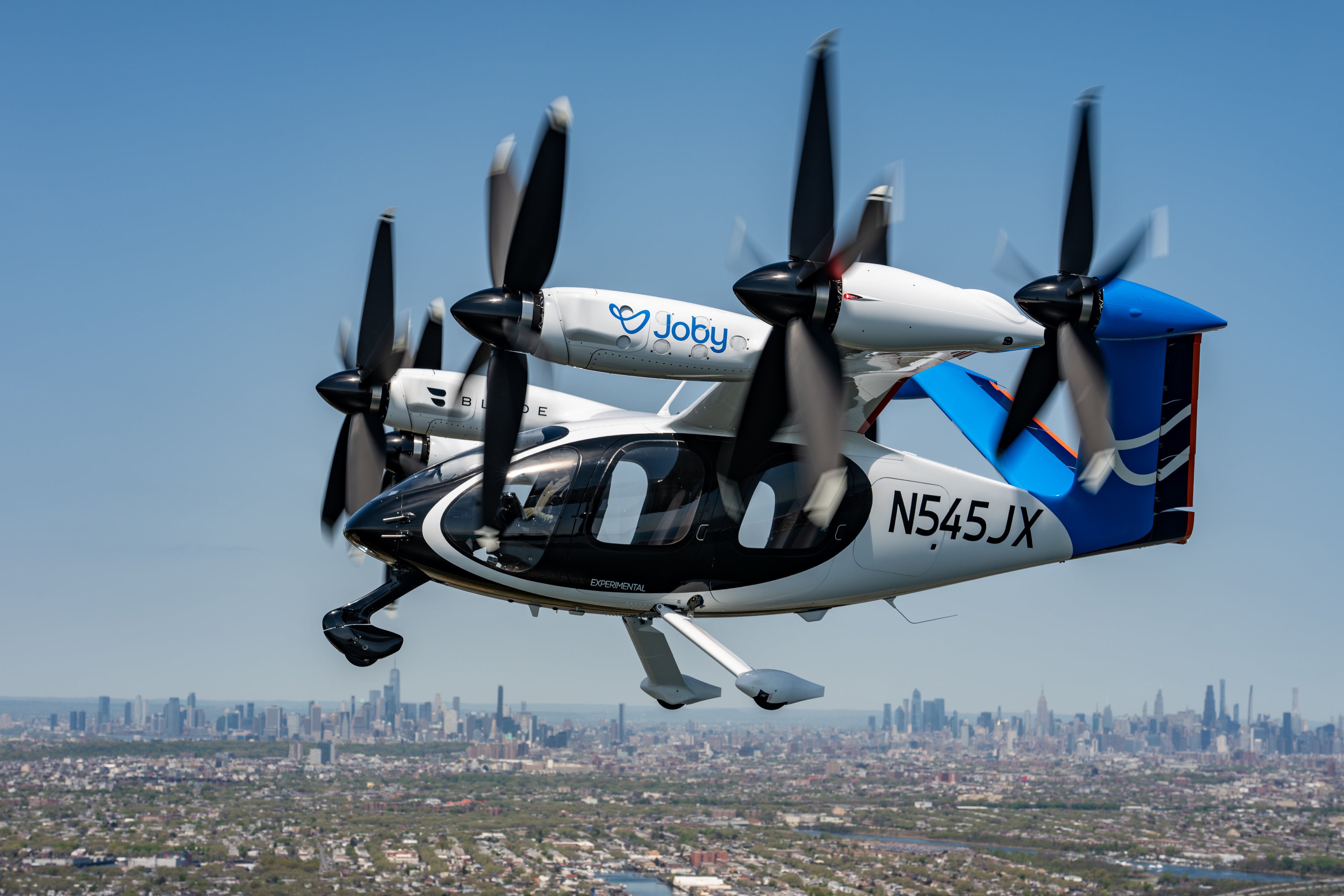
Flying taxis sound like science fiction. But companies like Joby Aviation (JOBY 2.27%) and Archer Aviation are working to make them a reality -- with electric aircraft designed to take off vertically, fly over cities, and land near their destinations.
The promise is simple: turn hour-long commutes into minutes. The opportunity sounds even bigger. JP Morgan estimates that urban air mobility could grow into a $1 trillion market over time.
But here's the catch: A large opportunity does not mean a near-term investment win. To understand what's at stake, investors need to separate potential from reality, and timing from hype.

Image source: Getty Images.
A massive market, but mostly in the future
Let's get it straight. The trillion-dollar figure comes from long-term scenarios where flying taxis become common in major cities worldwide. In that world, fleets of aircraft move both passengers and cargo, operating much like ride-hailing networks today.
But that future sits far ahead. In the near term, the market remains small. Most forecasts suggest urban air mobility will reach tens of billions of dollars by 2030. It's meaningful growth, but nowhere near the headline projections.
This gap matters. Stocks don't just price in opportunity, but they price in when that opportunity arrives. If the timeline stretches too long, stock returns will inevitably follow it.

NYSE: JOBY
Key Data Points
The real challenge: adoption, not technology
Both Joby Aviation and Archer Aviation have made real progress in areas like certification, testing, and early manufacturing capabilities. But technology alone doesn't build a business.
The real challenge is whether it can deliver on market adoption. For flying taxis to work at scale, three conditions must hold:
- Customers must use the service regularly
- Prices must be sufficient to support sustainable margins
- Operations must remain safe and reliable at high volume
Unfortunately, none of these is proven yet. While both companies aim to carry their first passenger in 2026, early use cases will likely focus on premium routes -- airport transfers, business travel, and high-income commuters. That's a logical starting point, but it also limits the market in the early years.
In short, until pricing falls and usage broadens, the practical market remains much smaller than the theoretical one.
Infrastructure and regulation will set the pace
Even if demand exists, flying taxis still need an ecosystem to operate.
That includes vertiports, charging systems, maintenance hubs, and air traffic coordination. Building this network requires time, capital, and coordination between public and private stakeholders.
Regulation adds another constraint. Agencies like the Federal Aviation Administration (FAA) must certify aircraft, define flight rules, and ensure safety standards. These processes are rigorous and normally lengthy.
Some regions, such as the Middle East, may move more quickly due to centralized decision-making and government backing. That's why companies are prioritizing markets like Dubai for early launches.
But global scale depends on regulatory alignment, and that tends to happen gradually.
The real risk is timing, not possibility
By now, it's quite obvious that the biggest risk for investors isn't that flying taxis fail. It's that they take longer to scale than expected.
If adoption unfolds gradually -- due to pricing, infrastructure, or regulation -- the market may grow in stages rather than all at once.
That creates a familiar problem: a mismatch between stock valuation and actual revenue and profitability. If the gap remains wide (or grows further), investors may face more price volatility down the road.
This is especially relevant for companies like Joby Aviation and Archer Aviation, which remain pre-revenue and continue to invest heavily in growth.
What does it mean for investors?
Joby Aviation and Archer Aviation are chasing a real opportunity. If urban air mobility reaches scale, both could play important roles in a new transportation system.
But investors also need to pay attention to timing, not just the size of the opportunity. The trillion-dollar market may exist, but it likely sits years, if not decades, into the future. In the near term, the industry remains small, unproven, and highly dependent on execution.
While that doesn't make these stocks uninvestable altogether, it does make them enormously risky. In short, the upside potential could be huge, but it's not for the faint-hearted.