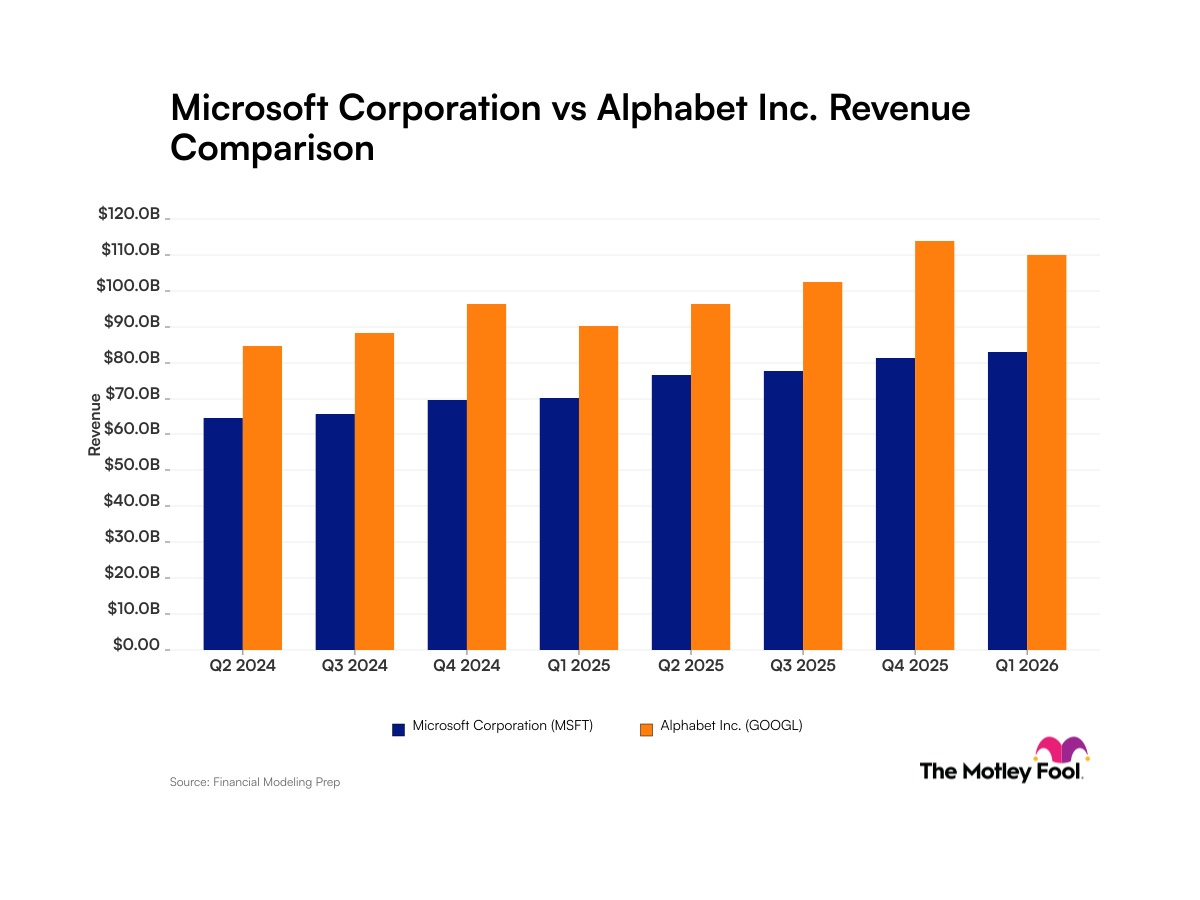
When Microsoft (MSFT 1.13%) announced it would spend $190 billion on capital expenditures (capex) in 2026, most people saw it as an arms-race headline. The race would involve chips, servers, and power cables; it would be a spending war with Amazon and Alphabet. Whoever builds the most wins. That framing misses the actual strategy.
Buried inside Microsoft's fiscal second-quarter 2026 earnings was a number that tells a fuller story than the capital expenditure figure alone. The company's commercial remaining performance obligations -- essentially, contracted future revenue customers have already agreed to pay -- surged 110% year over year to $625 billion. That's roughly 2.5 years of contracted revenue visibility, locked in before a single new server goes online.
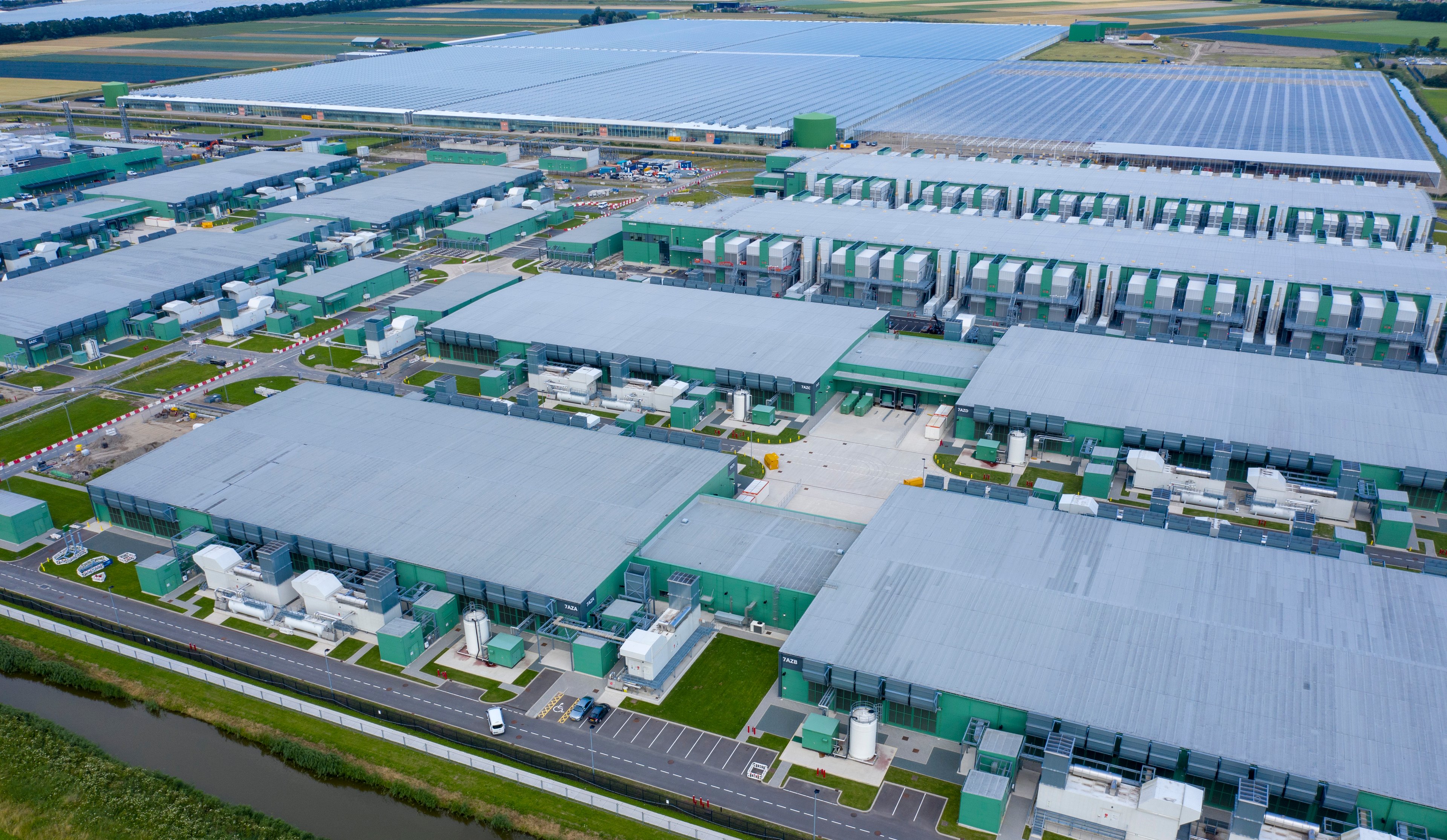
Image source: Getty Images.
To put that in perspective, even stripping out the $281 billion tied to OpenAI, the remaining $344 billion exceeds Amazon Web Services' entire backlog and more than doubles Google Cloud's. Microsoft CFO Amy Hood told investors the company expects to remain capacity-constrained on GPUs, CPUs, and storage through at least 2026. That's a rare problem to have. It means every gigawatt of power capacity Microsoft brings online converts directly into revenue it cannot currently recognize.

NASDAQ: MSFT
Key Data Points
Microsoft's infrastructure land grab, disguised as capex
The most important thing to understand about Microsoft's spending is where the money actually goes. Management disclosed that roughly two-thirds of the $37.5 billion in Q2 capital expenditures went to short-lived assets -- GPUs and CPUs -- while the remaining third funded long-duration infrastructure built to last 15 years or more.
Microsoft is also acquiring land. In Wyoming, the company disclosed plans to purchase approximately 3,200 acres in Cheyenne for a new data center campus. It has committed 19 billion Canadian dollars in Canada, $10 billion in Japan, and $10 billion in Portugal through partnerships involving Nvidia. These represent physical, permitting-constrained assets that competitors cannot replicate quickly.
The company has also contracted 40 gigawatts of new renewable energy capacity across 26 countries, reaching its goal of matching 100% of its electricity needs for the first time in 2025. The crown jewel of that effort: a 20-year, 835-megawatt power purchase agreement with Constellation Energy to restart Three Mile Island -- now rebranded as the Crane Clean Energy Center -- specifically to power Microsoft's artificial intelligence (AI) data centers in the PJM grid region, a deal finalized in March 2025 and valued at approximately $16 billion.
Power is the bottleneck for every hyperscaler. Microsoft is trying to solve it at the source.
Microsoft's model shift
Microsoft is moving from selling software licenses per employee to charging enterprises for AI agents that operate like digital employees. Each one is potentially a billable "seat." Rajesh Jha, Microsoft's Executive Vice President for Experiences & Devices, framed it directly: "All of those embodied agents are seat opportunities," envisioning organizations where agents outnumber humans on the payroll. Microsoft has already surpassed 15 million paid Copilot seats, generating over $5.4 billion in annual recurring revenue from the software layer alone.
The pricing architecture is also more resilient than the traditional models. Agents are available on a metered basis on top of the seat structure, meaning Microsoft captures both the predictable subscription floor and consumption-based upside as usage scales. This dual-revenue model -- seat fees plus usage charges -- has no direct analog in the company's prior history.
Enterprise software spending is growing as a result: A Gartner report projects a 15% increase to $1.4 trillion in 2026, with AI agents a core driver. Microsoft's platform sits at the center of that spending shift.
Some risks to consider
Microsoft's AI build-out carries real risks, starting with concentration: Roughly 45% of its $625 billion cloud backlog comes from OpenAI. If that relationship weakens or workloads move elsewhere, a large slice of contracted demand could vanish. Cloud margins are also under pressure as depreciation on new infrastructure grows faster than revenue, and management expects cost of goods sold to keep rising in the near term. On top of that, hyperscaler capex across Microsoft, Amazon, Alphabet, and Meta Platforms is soaring, raising the risk that industry supply outpaces enterprise AI adoption.
The other side of the ledger is still important. Microsoft is generating strong operating cash flow and is largely funding this expansion from its existing business, not aggressive borrowing. Rising return on invested capital suggests the new data centers are adding economic value to the stock, not just size. Its sovereign cloud footprint also positions Microsoft to serve governments and regulated industries that must keep data within national borders, a market that tends to grow during periods of geopolitical tension.