After $25 billion of U.S. spending and 39 days of fighting, the Iran war has settled into a ceasefire -- but there's no telling when it might flare up again. While active combat operations appear paused, sporadic missile and drone attacks continue in the Strait of Hormuz.
But Israel is taking no chances and wants to be prepared in the event hostilities resume.
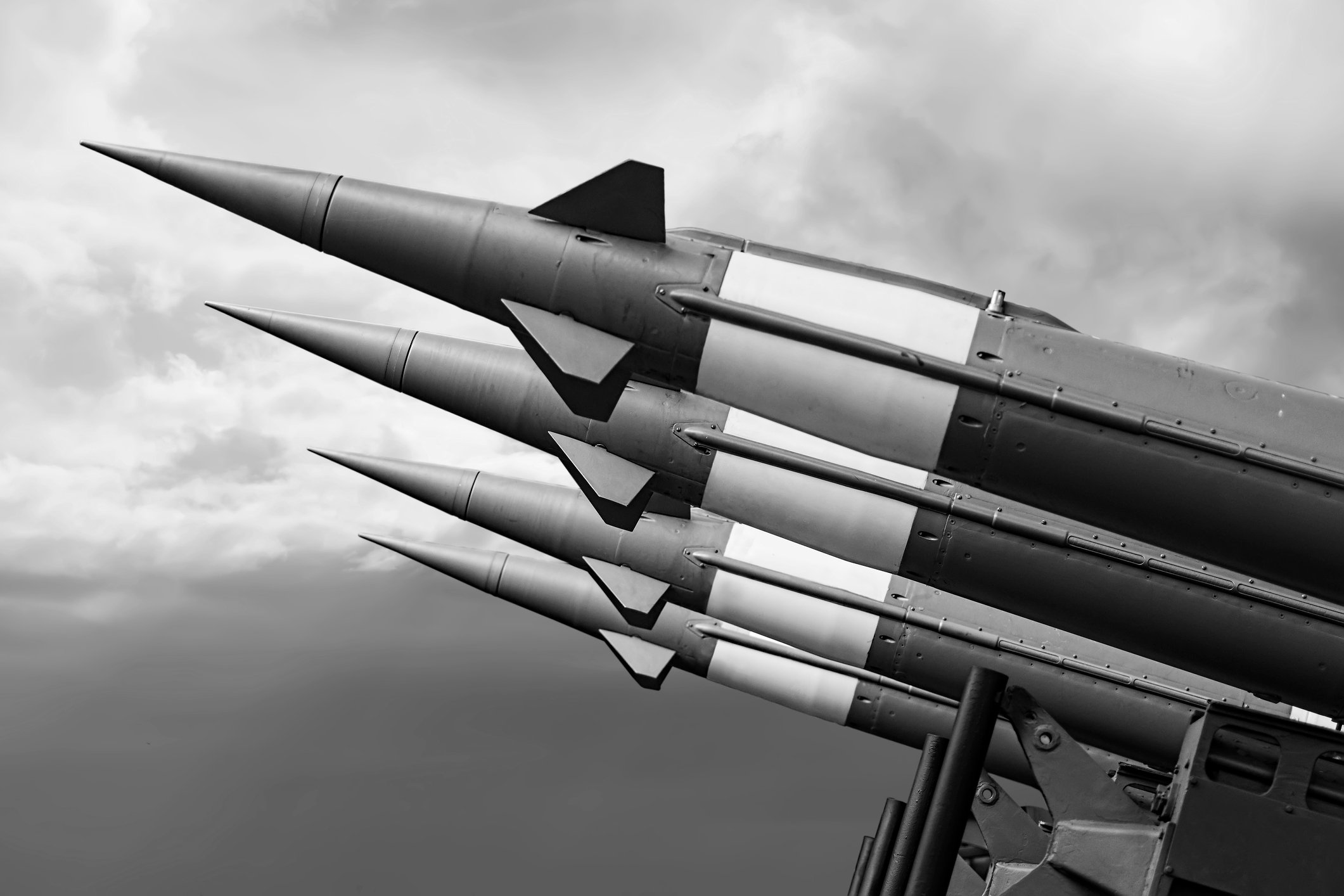
Image source: Getty Images.
Israel's billion-dollar plan to stop Iranian drones
Over the course of the war, Iran fired more than 2,000 ballistic missiles and launched more than 4,415 drone strikes. The majority of these targeted nearby Gulf nations, but some 650 medium-range ballistic missiles targeted Israel. Unlike in the April 2024 conflict between Israel and Iran, when Iran fired approximately 350 drones and missiles at Israel in a single weekend, almost no drones were launched at Israel during the present conflict.
But the drone threat remains.
To ensure it's ready to meet any contingency, drones, missiles, or a combination of the two, Israel has asked the U.S. government for permission to buy 10,000 Advanced Precision Kill Weapon System-II (APKWS) rockets from BAE Systems (BAESY +1.20%) for $992.4 million, for anti-drone defense.
Originally designed as an air-to-surface missile fired from platforms such as the Apache attack helicopter, the APKWS pairs an unguided 70 mm Hydra rocket with a laser guidance system to improve accuracy. The resulting product, it turns out, can shoot down drones midair.
APKWS had the opportunity to demonstrate this capability in Ukraine, where BAE Systems and its partner, L3Harris (LHX 0.64%), equipped pickup trucks with L3's Vehicle-Agnostic Modular Palletized ISR Rocket Equipment (VAMPIRE) launcher. Used to defend Ukrainian cities from attacks by Shahed-136 drones, built by Russia on license from Iran, the Vampire-plus-APKWS system proved remarkably effective.
New footage of a Ukrainian laser-guided APKWS rocket slamming into a Russian Shahed-136 attack drone, sending it spiraling toward the ground.
-- OSINTtechnical (@Osinttechnical) April 30, 2025
The low-cost rocket was fired and guided in by an L3Harris Vampire SAM system. pic.twitter.com/9rKEafTz9x
Even better, it proved remarkably cheap.
Suddenly, instead of firing $3 million Patriot missiles at $50,000 Iranian drones, Ukraine was able to shoot those same drones with $22,000 rockets -- upending the economics of defense versus offense.
What investors need to know
Iran is believed to possess thousands of drones still capable of reaching Israel, creating what the State Department calls "an emergency exists that requires the immediate sale to Israel of the above defense articles and defense services."
The sale is therefore almost certain to be approved.
As the principal contractor on this arms deal, BAE Systems will reap essentially all the rewards from Israel's purchase. What's more, because APKWS comes from BAE's most profitable business unit, Electronic Systems, this deal is likely to generate extraordinary profits for BAE -- a 15.5% operating profit margin, or more, according to S&P Global Market Intelligence.
Actually, that's the most important point of all. BAE says it can produce only 25,000 APKWS per year. Together with a similar 10,000-unit order just placed by Qatar, the 10,000 APKWS that Israel wants to buy will consume nearly one full year's production at BAE. In a situation like this, you'd expect prices to rise -- and they have!
The total of $992.4 million divided by 10,000 rockets equals a $99,000 unit price.
It's a seller's market for BAE Systems right now, and it will remain so until the company can expand its production capacity. Expect BAE's profit margins to reflect this.