With major U.S. indexes near record highs, dividend stocks are a great way to get paid now instead of simply speculating that stocks that have already soared will soar even more. That said, it may be tempting to chase dividend stocks with the highest dividend yield in this market to counter some of the high valuations in the market, but this is arguably a flawed approach to picking dividend stocks. Instead, the best dividend stocks to hold for a decade aren't usually the ones with the fattest yields today -- they're the ones whose payouts keep climbing, backed by a business likely to still be thriving 10 years out.
One name fits that bill almost too well: Costco Wholesale (COST 0.63%). The membership-based retailer's dividend yields only about 0.6% as of this writing -- a number most income investors would shrug at. But fixating on it misses the point. The real story is a payout that has grown relentlessly for more than two decades, backed by one of the steadiest business models in retail.
But the problem is valuation. Shares command a high premium.
So, is a stock this expensive still worth owning for the long haul? Let's take a look.

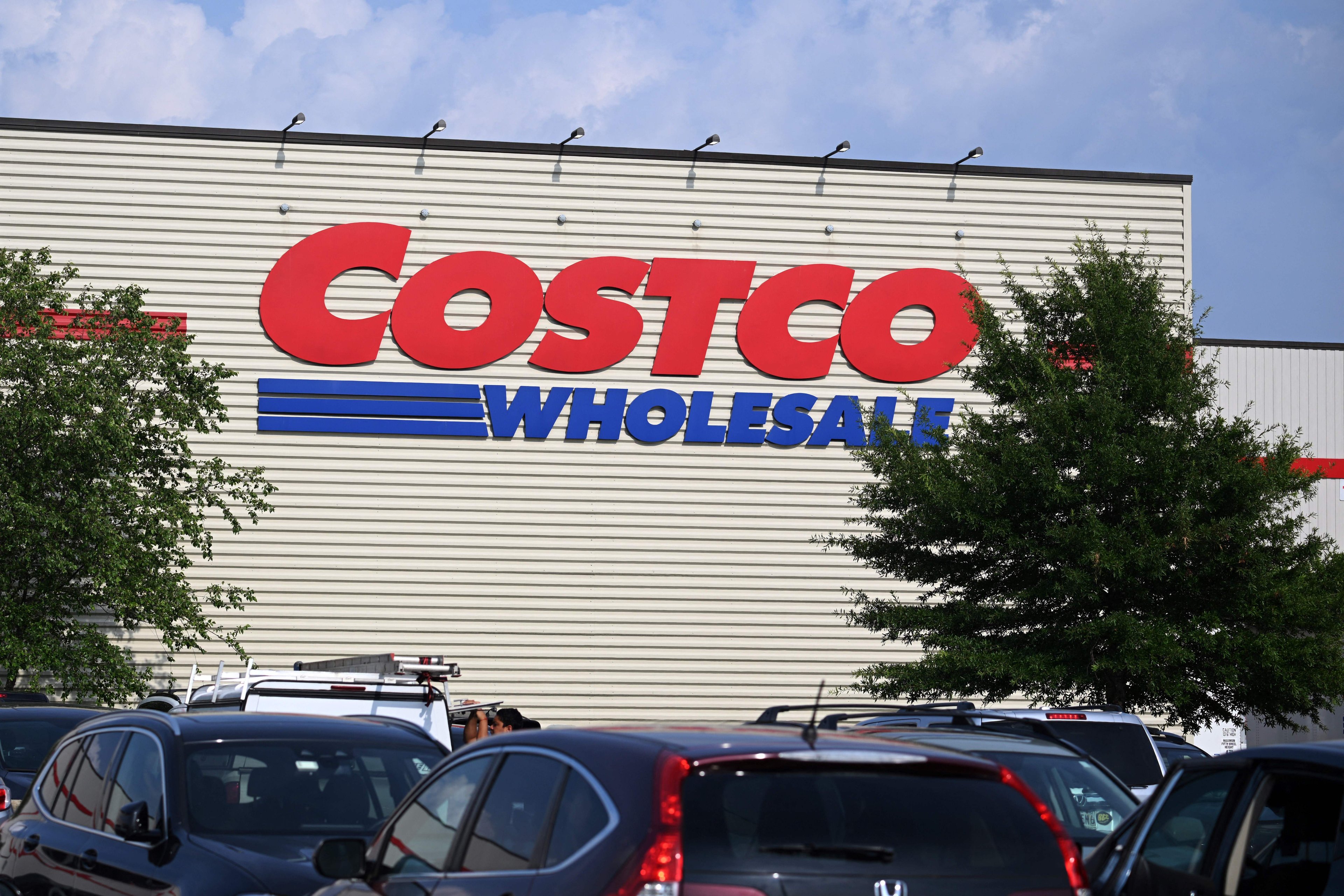
Image source: Getty Images.
Two decades of raises -- and the occasional bonus
Last month, Costco lifted its quarterly dividend by about 13%, to $1.47 per share, or $5.88 a year. It was the warehouse retailer's 22nd straight annual increase, a streak that reaches back to its first regular dividend in 2004. Over that stretch, the regular payout has grown more than 1,200%, easily outpacing inflation.
But the quarterly dividend is only part of how Costco rewards its owners. Every few years, the company also hands shareholders a large special dividend, funded by cash that piles up faster than the regular payout can return it. The most recent landed in January 2024, when Costco paid $15 per share -- roughly $6.7 billion in a single distribution. Earlier specials included $10 in 2020, $5 in 2025, and $7 in 2012. None of these are promised, and management has never tied them to a schedule. Still, given how much cash the business throws off, more seem likely over time.
The strong profits that leads to this cash piling up even as the company pays a regular dividend is also why the dividend looks so secure. Costco pays out only around 30% of its earnings through the regular dividend, leaving ample room to keep raising it even if profit growth slowed or even stalled.
The engine behind the payout
Of course, a growing dividend is only as dependable as the business funding it. Fortunately, Costco's is unusually sturdy.
The biggest reason arguably comes down to Costco's membership model. Shoppers pay an annual fee for the right to buy low-priced goods in bulk, which turns a chunk of the company's income into a recurring, high-margin stream that barely flinches when the economy wobbles. Highlighting the reliability of this income stream, about 90% of members worldwide renew each year.
That model held up nicely in Costco's fiscal second quarter of 2026 (the period ended Feb. 15, 2026). Membership fee income rose nearly 14% from a year earlier, to $1.355 billion, helped partly by a fee increase but mostly by a growing base of shoppers and a steady migration toward higher-priced Executive memberships, which climbed about 10%. Further, Costco's net sales rose 9.1%, and comparable sales, which track sales at warehouses open at least a year, increased 6.7% after adjusting for swings in gas prices and currency -- an acceleration from the prior quarter. And this strength has carried into spring, with adjusted comparable sales staying in the mid-to-high single digits through April.
Ultimately, what gives the business its staying power is the flywheel beneath it: Costco uses its scale to keep prices low, and low prices keep members renewing and paying their fees year after year.
CEO Ron Vachris summed up the philosophy on the company's fiscal second-quarter earnings call: "At Costco, we always want to be the first to lower prices and the last to raise them."
A similar culture is what keeps the company plowing money back into the business. It now runs more than 920 warehouses and plans to open at least 30 a year going forward -- a long runway for growth both at home and abroad.

NASDAQ: COST
Key Data Points
Unfortunately, shares look expensive -- especially at first glance. Costco stock trades at about 53 times earnings as of this writing. With the shares not far from their highs, that rich valuation is probably the biggest risk for the stock. It leaves little cushion if growth cools even slightly. Therefore, a softer consumer or a stumble in a key area for the business, like the company's overseas expansion, could pressure results. And given what investors are paying, even a modest disappointment could send the shares lower.
But there's a reason Costco almost never goes on sale: it's a remarkable business, and the market knows it. For an investor with a 10-year horizon rather than a 10-month one, the combination of a durable membership model and a long record of rising payouts -- topped off by those occasional special dividends -- adds up to a stock worth owning and holding. It may not be the cheapest dividend stock around, but it could prove one of the most dependable.