Grail's (GRAL +3.75%) share price decline of over 20% so far in 2026 is understandable. After all, when a multicancer early detection (MCED) test company misses a primary endpoint of a landmark three-year trial, investors immediately price in difficulties receiving Food and Drug Administration (FDA) approval, let alone receiving insurance coverage for a test that failed in a trial. That said, there's still a powerful case for the stock, and a very strong catalyst could be about to be unleashed, propelling it higher.
Grail's difficult 2026
The investment case for the stock centers on its MCED test, Galleri, which completed a three-year, 142,000-person trial with England's National Health Service (NHS). Grail released the top-line results from the trial in mid-February and promptly disappointed the market by revealing it had missed its primary endpoint.

NASDAQ: GRAL
Key Data Points
The Galleri trial explained
Early-stage cancers (Stage I and Stage II) are far easier and cheaper to treat than later-stage cancers (Stage III and Stage IV). The latter two are defined by cancer that has spread to surrounding tissues (Stage III) or to another organ (Stage IV).
Clearly, there's a major benefit to detecting cancers early, and one primary aim of the NHS-Galleri test was to report a statistically significant reduction in the detection of combined Stage III and Stage IV cancers in the tested group compared with the control group.
By way of explanation, if the test is detecting early-stage cancers, then the test group should report statistically significantly fewer Stage III and Stage IV cancers than the control group.
Unfortunately, that didn't happen, although CEO Bob Ragusa noted that "We are excited to see the substantial reduction in Stage IV cancer diagnoses, as well as the continued strong Galleri test performance metrics." The market's reaction to the bad news was severe.

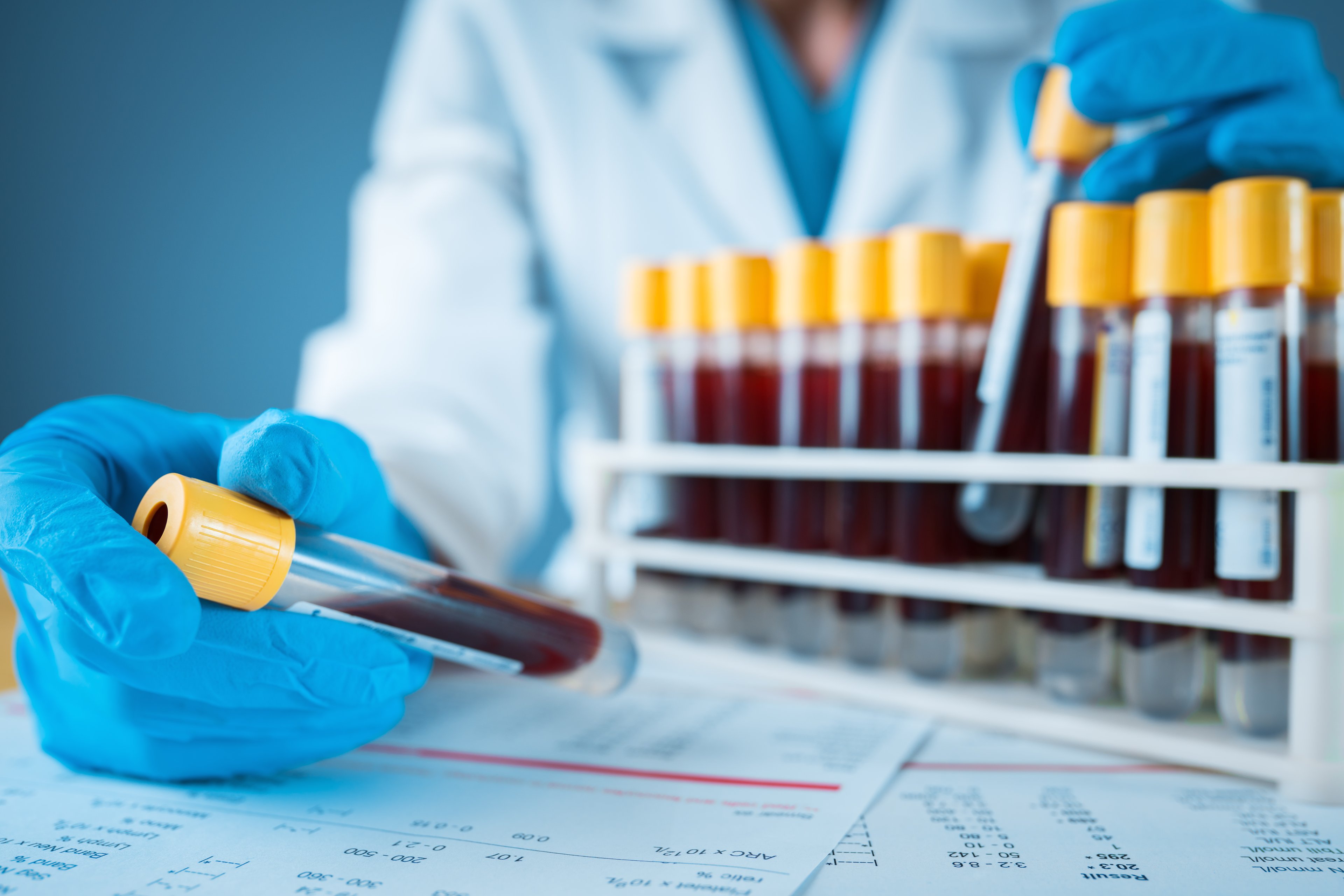
Image source: Getty Images.
The case for buying Grail stock
At a cursory glance, the outlook after the top-line results is bleak, but not many people made money in markets by taking fleeting looks. On closer inspection, there's still a powerful case for the stock. It's based on a few factors:
- Grail continues to deliver impressive growth in Grail test sales (available primarily on an out-of-pocket basis) and is gaining favor with prescribers and partners.
- Management hopes that a six- to 12-month follow-up to the trial will demonstrate the test's efficacy.
- Management is set to present detailed trial data at the annual American Society of Clinical Oncology (ASCO) meeting in late May/early June, providing far more underlying data for physicians, health systems, and life insurance providers to consider.
Grail sales, follow-up data, and ASCO presentation
Grail reports that revenue from its Galleri test grew 37% year over year in the first quarter of 2026. Importantly, Galleri test volumes grew 50% year over year to 56,000. This demonstrates increasing adoption of the test.
Management previously noted that the NHS-Galleri trial reported: "an increase in Stage III cancers detected and a decrease in Stage IV cancers detected, which ended up canceling one another out in this combined endpoint." As the primary endpoint required a combined reduction in Stage III and Stage IV cancers, it missed its primary endpoint.
It's possible that the trial's follow-up period will show an increase in Stage III cancers in the control group, which would help demonstrate the test's efficacy.
Moreover, the ASCO presentation is highly likely to emphasize the reduction in Stage IV cancers in the trial, which, as CFO, Aaron Freidin outlined at the Bank of America Global Healthcare Conference, "There's a large mortality cliff between Stage III and Stage IV right now for many cancers due to the advances in cancer therapies."

Image source: Getty Images.
A stock to buy?
The NHS-Galleri trial has attracted criticism in the U.K., and the failure to meet an endpoint is never good news. Still, there might be enough in the underlying data and the follow-up trial data to support insurance coverage of Galleri. Meanwhile, Grail continues to pursue FDA approval for Galleri.
All of which makes it a speculative stock for investors willing to take on risk. It's not a stock for widows and orphans, but it might attract risk-seeking, enterprising investors, because there's clearly value in the Galleri test. However, exactly what that value is will be decided by the data it can present at ASCO, and in the follow-up trial data, as well as potential adoption by insurers.