USA Rare Earth (USAR +2.71%) is an American mining company focused on helping the U.S. build a domestic supply chain for rare-earth magnets.
Put differently, USA Rare Earth wants to help the U.S. government break its dependence on Chinese rare-earth mining companies. Currently, China accounts for about 70% of the world's rare-earth extraction and 90% of its rare-earth processing. It also produces over 90% of the world's permanent magnets, underscoring its complete dominance in the rare-earth magnet market.
But does USA Rare Earth actually stand a chance in this cost-intensive industry? Can it scale its polymetallic Round Top deposit in Texas, which is currently under development, and its magnet factory in Oklahoma into profitable businesses? Or will USA Rare Earth, like so many mining companies before it, fall prey to the intense cyclicality of metal prices and the brutal capital demands of turning ore into a functioning supply chain?
Let's take a closer look at this potential millionaire-making metal stock and see what it's building.
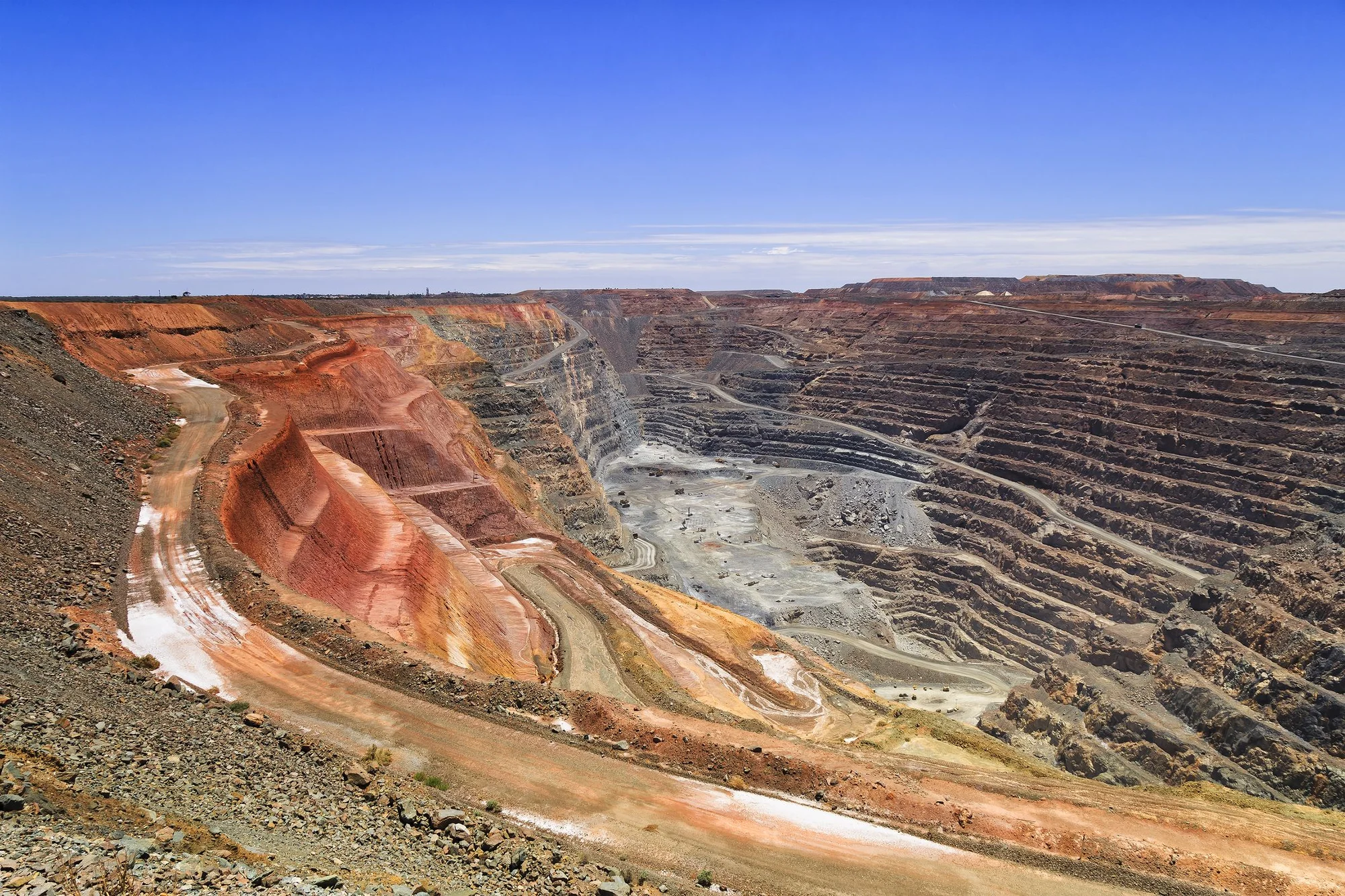
Image source: Getty Images.
A "mine-to-magnet" business with a lot of moving parts
The bullish case for USA Rare Earth is pretty straightforward. In a nutshell, the company is trying to build one of the few domestic rare-earth magnet supply chains in the U.S.

NASDAQ: USAR
Key Data Points
Theoretically, it has the assets to become America's rare-earth champion. Round Top is considered one of the largest rare-earth deposits in the U.S., with 16 of the 17 rare-earth elements. Its magnet factory in Oklahoma is expected to produce about 1,200 metric tons of magnets to start, then ramp up to 10,000 metric tons.
The combination of these two facilities -- the mine in Texas, and the magnet factory in Oklahoma -- forms two key links in USA Rare Earth's "mine-to-magnet" supply chain. However, they're not the only links in the chain -- which is where the story gets a little more interesting.
USA Rare Earth also owns Less Common Metals in the U.K., which can turn its rare-earth oxides into metals and alloys. It also agreed to buy Serra Verde, a Brazilian rare-earth mine that could give it access to four key ingredients in permanent magnets: neodymium, praseodymium, dysprosium, and terbium. That's important because Round Top alone may not have enough neodymium and praseodymium to feed its magnet factory at full scale.
These acquisitions have made USA Rare Earth's strategy more realistic, without deepening dependence on China. But it also makes its business much more complicated to run. It's one thing to describe the company as a "mine-to-magnet" operation on paper. It's quite another to coordinate a Brazilian mine, a processing facility in the U.K., a Texas mine that hasn't opened yet, and a magnet factory in Oklahoma into a profitable business.
Throw in the steep costs that come from mining and processing, and it's unclear how profitable USA Rare Earth's magnet business could really become.
Don't get me wrong: USA Rare Earth has a massive opportunity, and it could make millionaires out of early investors.
Yet the lack of meaningful revenue, along with its current multi-billion market valuation, makes me hesitate to go all in. At this point, I can only recommend opening a small position, which may not make you a millionaire, but could give you exposure without betting too much on a mining stock that still has a lot to prove.