This has not been a great year for Lululemon Athletica (LULU 2.79%) or its shareholders. The stock is down 36% so far this year, and the company has been mired in a proxy battle with founder Chip Wilson.
The ongoing struggle between the athleisure company and Wilson has been heated, with the company’s board of directors even issuing a letter to shareholders accusing its former leader of having “outdated perspectives about how to position Lululemon and the future of the company, as well as troubling conflicts of interest.”
But the company and Wilson may have finally put the issue to rest. Lululemon announced on May 27 an agreement with Wilson that prevents him from publicly criticizing the company -- a nondisparagement agreement -- for 18 months, and places two of Wilson’s selections on the board of directors. They were identified as former On co-CEO Marc Maurer and former ESPN chief marketing officer Laura Gentile. The company also pledged to appoint another director by Oct. 1 with product and brand expertise, and to make a donation to support athletics, art, and landscaping at Kitsilano Beach in Vancouver, where Lululemon was founded.
“Lululemon now has a clear path forward for our incoming CEO, Heidi O’Neill, and our leadership team, as we continue to advance our strategies to foster strong brand health, reaccelerate growth, and deliver enhanced value for our shareholders,” said the company’s executive chair, Marti Morfitt.
Lululemon stock was up 3% in afternoon trading after the announcement. But should investors consider this the first step in a turnaround for the struggling company?

NASDAQ: LULU
Key Data Points
The battle between Wilson and the board was ugly
Conflicts between Wilson and the board go back more than a decade. Wilson originally got into trouble in 2013 when he appeared on a Bloomberg TV show and said, “some women’s bodies actually don’t work” in the company’s yoga pants. Lululemon’s yoga pants arguably helped make athleisure clothing popular, as the company’s leggings were commonly worn in yoga studios, in casual settings, and even sometimes at work. Lululemon announced a month later that he would step down as chairman.
But Wilson, who continues to hold nearly 9% of Lululemon stock, has remained an outspoken critic. He has accused the company of losing its creative edge and blamed its leadership for the fall in stock prices.
Wilson also drew more controversy last year when he criticized models in the company’s ads for being “unhealthy,” “sickly,” and “not inspirational,” and that it’s important to be clear that “you don’t want certain customers coming in.”

Image source: The Motley Fool.
Where does Lululemon go from here?
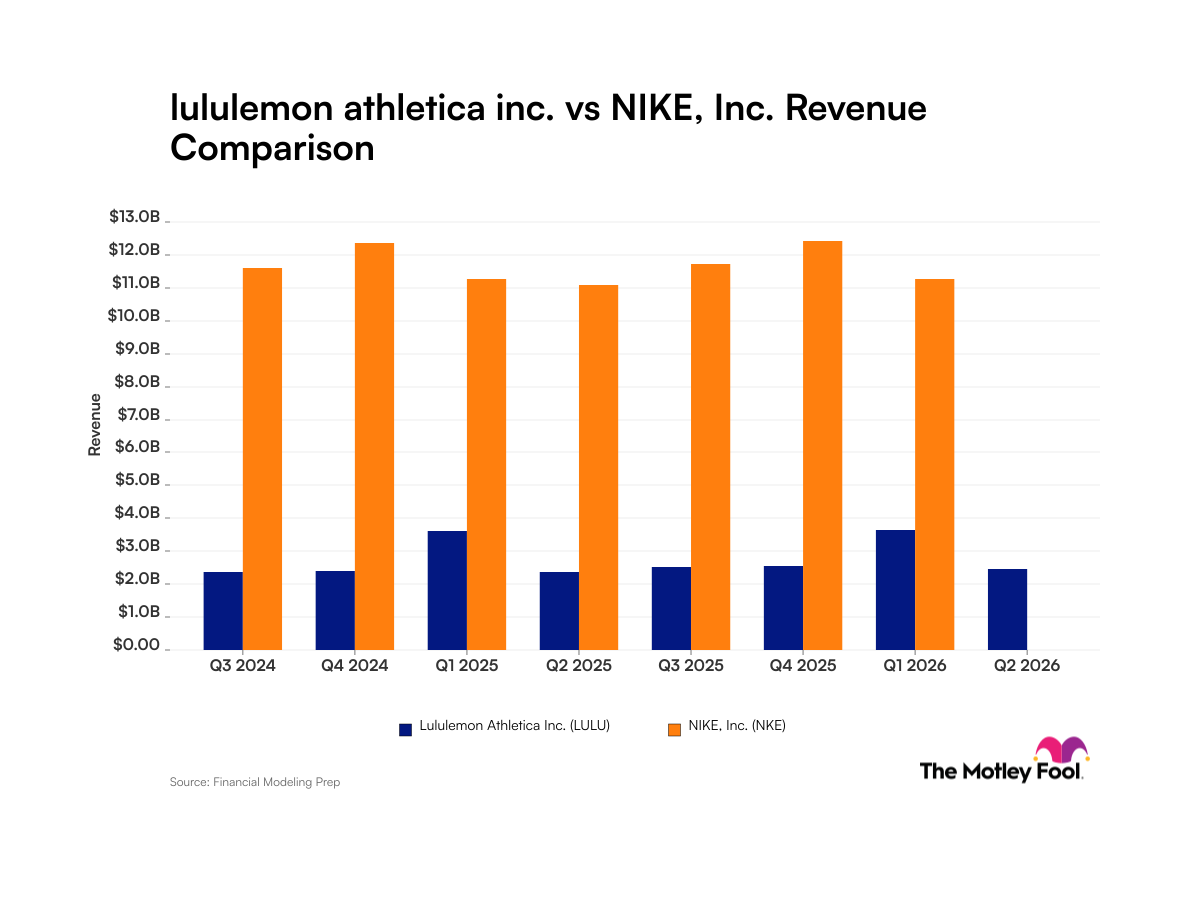
Investors have not been expecting a lot from Lululemon this year. Revenue for 2025 was $11.1 billion, up 4.5% from a year ago, but net income fell 13% to $1.57 billion.
Tariffs had a $380 million impact on the company, up from $275 million a year ago. The company had been negotiating with suppliers on costs to combat the tariff hikes, but had not increased prices because its products were already at a premium.
In addition, management projected first-quarter sales of $2.4 billion to $2.43 billion, below analyst estimates of $2.47 billion. Full-year revenue guidance of $11.35 billion and $11.50 billion was below expectations of $11.53 billion.
A majority of analysts who cover the stock at Yahoo! Finance have “Hold” ratings on Lululemon stock. Analysts at Piper Sandler were the most recent to weigh in, maintaining a “Neutral” rating but cutting their price target from $190 to $130. The analysts said they expect first-quarter sales growth of only 1%, with a 7% drop in U.S. sales.
And the market has reacted weakly to the April 22 announcement that O’Neill, a former Nike executive, will take over as CEO in September. Lululemon stock is down nearly 20% since that announcement.
Lululemon is expected to report first-quarter earnings on June 4, in which it will have an opportunity to turn the page from the Wilson conflict and reset expectations. However, the challenging retail market, sagging athleisure sales, and continued cost pressure from tariffs will be headwinds that affect the stock, making 2026 a challenging year for the company’s shareholders.