Since the war in Iran began on Feb. 28, it has been a chain reaction that has, unfortunately, weighed on many people's wallets and purses. Iran drastically reduced the number of ships allowed through the Strait of Hormuz, which facilitates the transportation of roughly 25% of the world's crude oil (oil used to make gasoline and diesel). This has increased the price of crude oil by around 45%, pushing it above $100 per barrel.
On the flip side, energy companies have been posting record profits, and energy stocks have surged as investors look to capitalize. But considering the momentum energy stocks have had to start the year, are they still a good choice for someone looking to begin or add to their stake, or has that ship sailed?
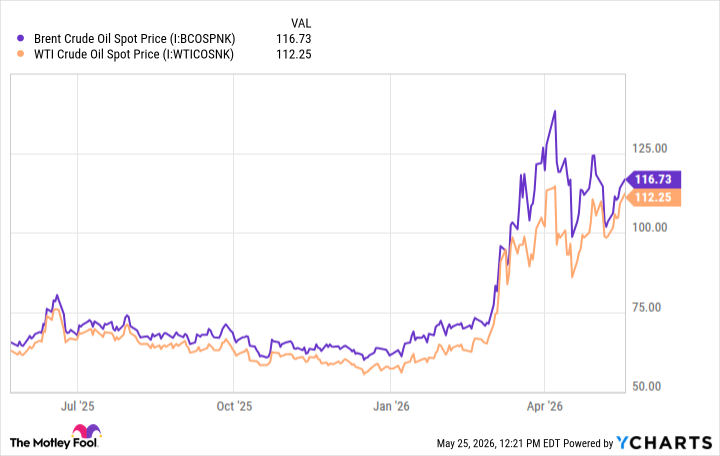
Brent Crude Oil Spot Price data by YCharts
How has the energy sector performed this year?
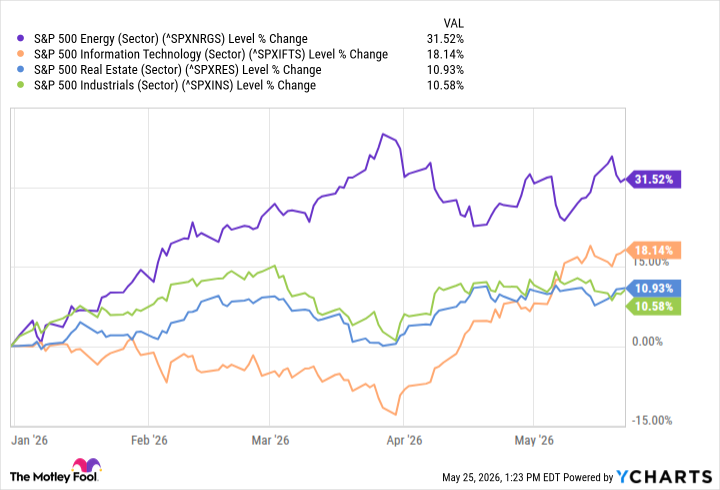
The S&P 500 categorizes companies into 11 major sectors. This year, the energy sector has outperformed the others by a long shot. Through May 25, the S&P 500 energy sector is up 31.5%. The next three best-performing sectors are tech, real estate, and industrials. The three largest U.S. energy companies by market cap -- ExxonMobil, Chevron, and ConocoPhillips -- are up 28.7%, 25.6%, and 28.7% year to date, respectively.
Is it too late to buy energy stocks?
If you're looking to buy energy stocks hoping to replicate the gains so far this year, the answer is yes: It's probably too late. We can't predict how stocks will perform, but much of the geopolitical uncertainty and rising oil prices have likely been priced into the market.
However, if you're a long-term investor (which you should be), the answer is no: It's absolutely not too late to buy energy stocks. The energy sector is cyclical, flourishing when supply is low and demand is high, and underperforming when the market is oversupplied. Right now, it's near the peak of the cycle, but it won't always be that way. Over the long run, however, the energy sector has shown resilience.
You never want to get in the habit of investing in a company, industry, or sector solely based on current events because they change and may not have long-lasting implications. You should always keep the long term in mind, especially in a cyclical sector like energy, where much of the value comes from compounding and dividends.

NYSEMKT: VDE
Key Data Points
Instead of trying to pick the "winner" in the energy sector, I'd recommend investing in an energy exchange-traded fund (ETF) like the Vanguard Energy ETF (VDE 0.52%). It includes 106 energy companies across industries such as drilling, transportation, production, and marketing. It's a great way to gain exposure to the energy sector without worrying too much about the risks associated with individual stocks.