Don't confuse electric vehicle (EV) stocks with traditional automotive stocks. In my view, most conventional auto stocks are akin to most manufacturing businesses. That means high capital expenditures (capex), exposure to shifting consumer trends, and growth rates that mirror the transportation industry overall.
EV businesses are something else entirely. Companies that specialize in them must build their vehicles to sell to consumers, but they are also exposed to a $10 trillion global opportunity powered by rapid advances in artificial intelligence (AI) -- an exposure that nearly every traditional auto stock lacks.
If you want exposure to this $10 trillion market, there are two EV stocks in particular to target.
Using AI to target a huge opportunity
What exactly is this $10 trillion opportunity? In a word: robotaxis. "We think US$8 [trillion] to US$10 trillion for the entire autonomous taxi opportunity throughout the world, from almost nothing," Cathie Wood, chief executive officer of ARK Invest, told a conference in Hong Kong a year ago, according to a transcript. "That's how quickly AI is going to cause these things to happen."
Robotaxis will arrive first, not self-driving private vehicles. And they're arriving sooner than you may think. "While L4 robo-taxis are now available in the first cities in the United States and China, the global rollout of robotaxis is now expected to become reality at a large scale in 2030," a recent report from consulting firm McKinsey said, referring to level 4 vehicle autonomy, just below complete self-driving ability.

NASDAQ: TSLA
Key Data Points
McKinsey said private self-driving vehicles will scale up meaningfully sometime by 2031, with trucking going autonomous by 2032. Experts expect robotaxis to be the first commercial application for L4 in mobility, not privately owned cars, McKinsey says.
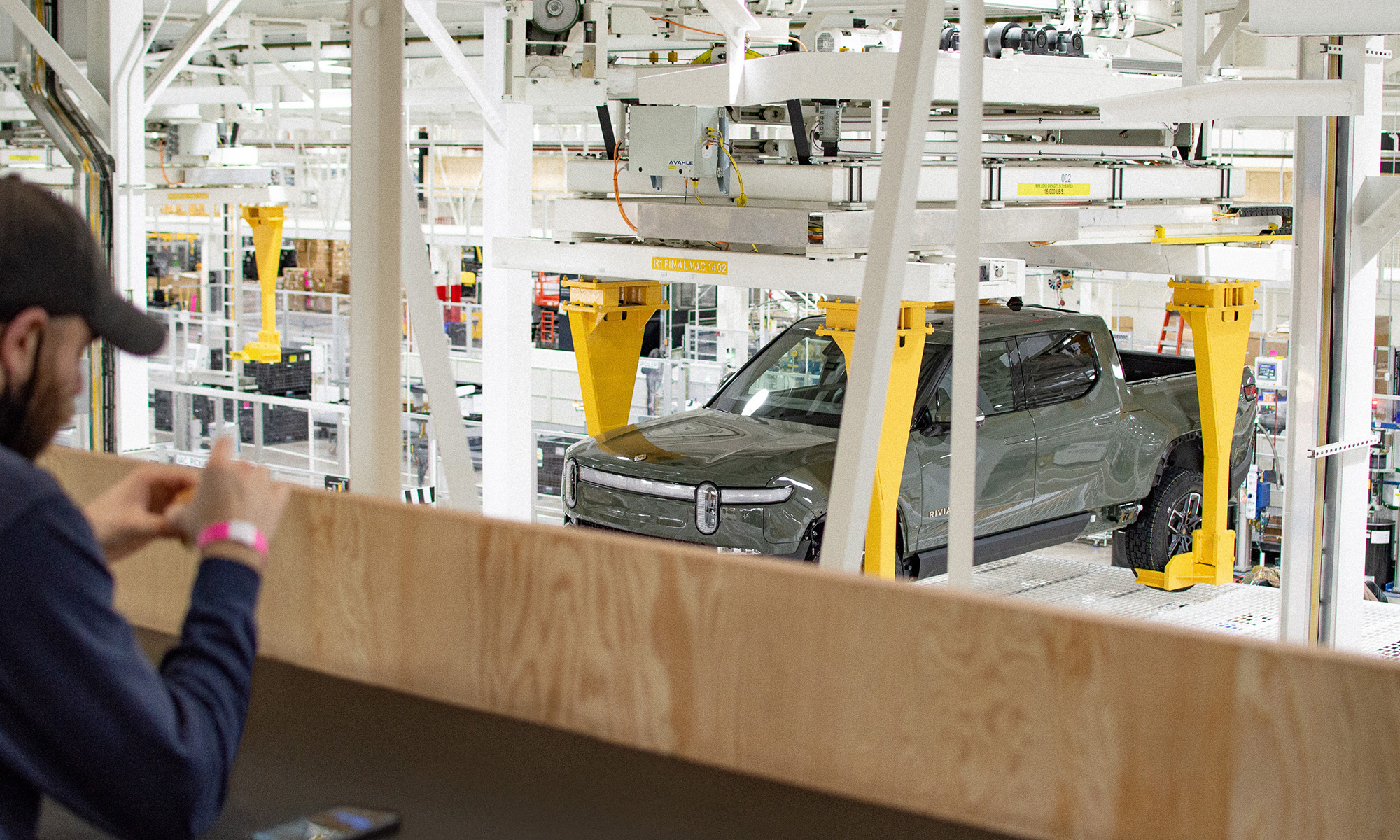
Image source: Rivian.
Which EV stocks are best positioned to benefit from the quickly emerging robotaxi market? Tesla (TSLA -1.22%) is the clear first choice. The company has aggressively pursued full self-driving capabilities for years.
This year, it established a $2 billion stake in xAI, the start-up of Tesla Chief Executive Officer Elon Musk. And much of its $20 billion capex plan for 2026 focused on AI and autonomy investments. Production of its Cybercab has already begun, too.
Tesla has all the parts in place -- many of which are already in use -- to take a sizable share of the robotaxi market. The only thing investors need to stomach is the stock's price tag: a market cap of $1.7 trillion despite declining auto sales year over year.
Rivian Automotive (RIVN -3.01%) is perhaps my favorite pick for targeting the nascent robotaxi market. Compared to Tesla's $1.7 trillion valuation, Rivian's relatively diminutive $20 billion valuation simply provides more upside. And while the company may not have some of Tesla's competitive advantages, it's still clearly positioned to grow.

NASDAQ: RIVN
Key Data Points
This year, Rivian decided to ramp up its investments in AI and self-driving, so much so that it no longer expects to reach certain profit metrics by 2027. According to filings, the company said it no longer anticipates being positive based on adjusted earnings before interest, taxes, depreciation, and amortization (EBITDA) in 2027 because of an expected increase in research and development spending for its autonomy road map.
Rivian's investments are already paying off. In March, Uber Technologies agreed to buy as many as 50,000 Rivian vehicles in a $1.25 billion deal for its own robotaxi service, a strategy that I expect from other robotaxi providers without their own manufacturing capabilities.
Rivian is positioned more as a supplier to the robotaxi market rather than a direct competitor. But as the saying goes, when there's a gold rush, sell shovels.