Rarely over the course of its existence has Microsoft (MSFT 1.13%) not been a good stock to buy and hold. It's now one of the largest and most successful companies of all time.
But as the market heads toward its next earnings season, this is a particularly good time to buy Microsoft stock. Here are three reasons why.
Image source: Getty Images.
1. Microsoft stock is historically cheap
Over the past decade, Microsoft stock has rarely been as cheap relative to its earnings as it is right now. It is trading at around 24 times earnings and 21 times forward earnings. The last time it was anywhere near this cheap was during the bear market of 2022. The last time before that was in 2018.
Microsoft stock is down about 12% year to date, and off by about 21% from its October peak. Part of the reason for the sell-off was that, after a three-year bull market, Microsoft was a tad overvalued at the end of 2025, as were most big tech stocks, so many investors likely cashed out.

NASDAQ: MSFT
Key Data Points
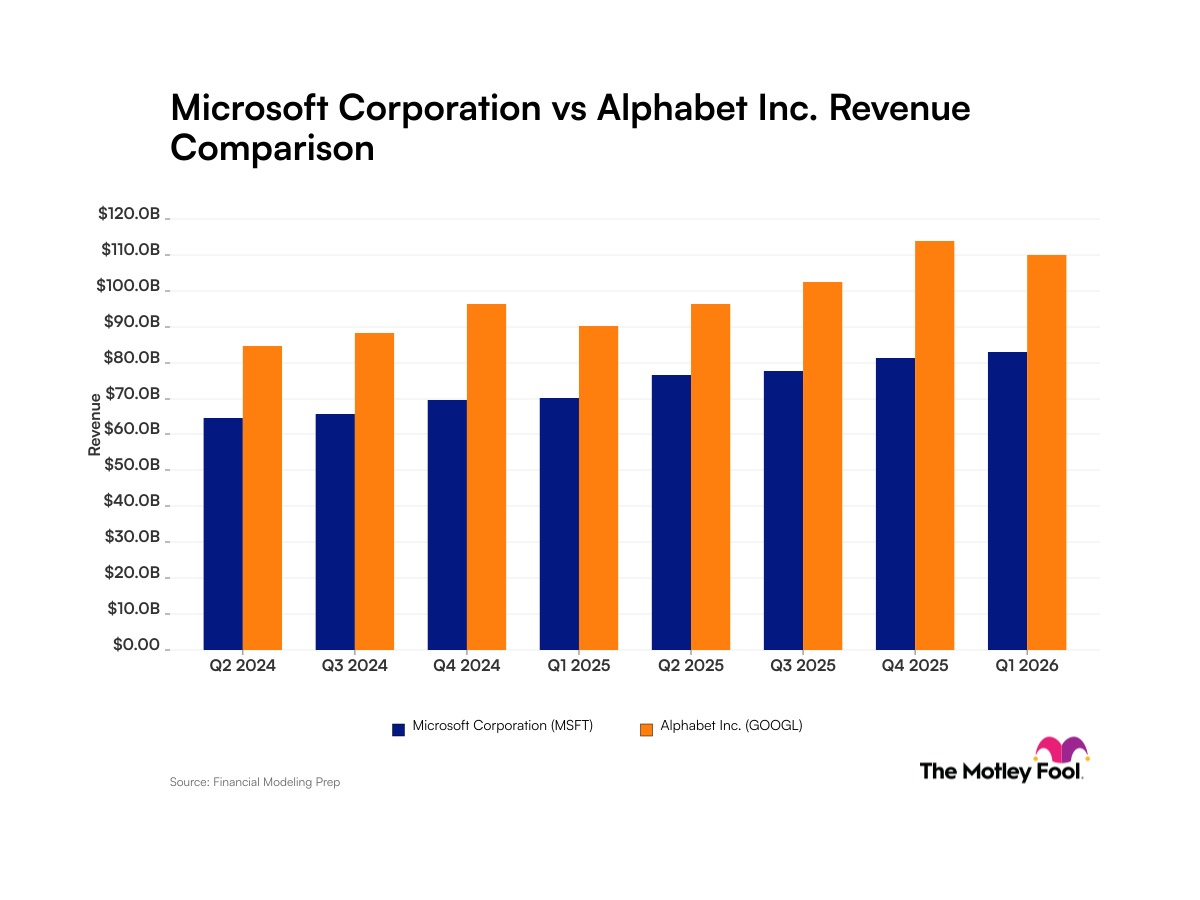
But unlike other "Magnificent Seven" tech giants such as Amazon and Nvidia, Microsoft has not bounced back from its first-quarter retreat. This is primarily due to investors' concerns about its massive capital expenditures on artificial intelligence (AI), its slowing AI cloud growth, and its declining free cash flow. In addition, it may have been tainted by concerns about OpenAI's path to profitability, given that OpenAI is a major Microsoft partner.
But these concerns are starting to subside.
2. New deal with OpenAI
In the next fiscal quarter, Microsoft should start to reap the benefits from its latest agreement with OpenAI. In summary, Microsoft will remain OpenAI's primary cloud partner, and it will retain its license to use OpenAI intellectual property (IP) for models and products through 2032. But their relationship is no longer exclusive; Microsoft can now form new partnerships, such as its recently expanded relationship with Anthropic.
Further, Microsoft will no longer pay a revenue share to OpenAI, but OpenAI's revenue share payments to Microsoft will continue through 2030. In addition, Microsoft remains a major shareholder in OpenAI. These changes will reduce Microsoft's overall exposure to OpenAI while likely boosting the profits it accrues from the company.
While Microsoft's revenue share is capped, the overall result should be a net positive for it. Analysts at Wedbush predict that it will result in $6 billion in income from OpenAI, up from the previously anticipated $4 billion. This will help alleviate investors' concerns about the tech giant's cash flow.
3. The new E7 rollout
On May 1, the company rolled out Microsoft 365 E7, its first major update to the popular software suite since 2015. The Microsoft 365 E7 platform is designed for businesses and includes Microsoft Office, agentic AI through Copilot, Teams, cybersecurity, and other products all in one package. It also features a new product, Microsoft 365 Agent, which the company describes as a "control plane that extends companies' existing governance, identity, security, and management frameworks to agents." In other words, it helps companies use, manage, and monitor AI agents across the enterprise, not just Microsoft AI agents.
The company is charging $99 per month per user for Microsoft 365 E7, and the platform is expected to generate significant revenue. The last update, E5, goes for about $60 per month per user, so if even a fraction of its clients upgrade to the new service, it would represent a meaningful revenue increase.
Analysts at Evercore say the E7 platform could boost Microsoft's revenue by 2.4% to 2.5% in the next fiscal year.
Overall, 95% of analysts covering Microsoft rate it a buy. It has a median 12-month price target of $550 per share, which is about 30% higher than its current price.
Beyond those near-term catalysts for the stock price, there are longer-term tailwinds. Microsoft should also benefit from the major investments it's making in data centers and AI infrastructure. So I would not be surprised to see the stock rise heading into the next earnings season.