Eli Lilly (LLY -2.54%) is a Wall Street darling thanks to its success in the GLP-1 weight-loss market. There's a problem here, however, because weight-loss drugs now account for nearly two-thirds of the drug maker's revenues. Johnson & Johnson (JNJ -1.42%) CEO Joaquin Duato isn't interested in being so reliant on just one healthcare niche. In fact, he's steering the company away from the hot GLP-1 sector. Here's why.
Wall Street loves a good story
GLP-1 weight-loss drugs are a new product category in the pharmaceutical sector. They appear to be miracle drugs, with Eli Lilly a leading company in the space. But Novo Nordisk (NVO -0.96%) is in the mix, too, as are several other companies working on these hot new drugs. If you get caught up in the hype, it almost seems like a drug stock has to have a GLP-1 drug plan, or they aren't even worth looking at as an investment. However, there are a lot of other conditions that are treated with drugs.

Image source: Getty Images.
J&J has decided to sidestep the hype and focus on areas where it has core competencies. One area of focus is oncology, or cancer drugs. The company has a strong position in bone and lung cancer, and it recently acquired a company with an attractive prostate cancer drug candidate. Instead of playing catch-up in weight loss, J&J is leaning into areas where it already has a strong position. And there are multiple levers for growth in the drug niches where J&J is focused, providing diversification that doesn't exist in the GLP-1 weight loss space today.
Diversification is a key part of the J&J story
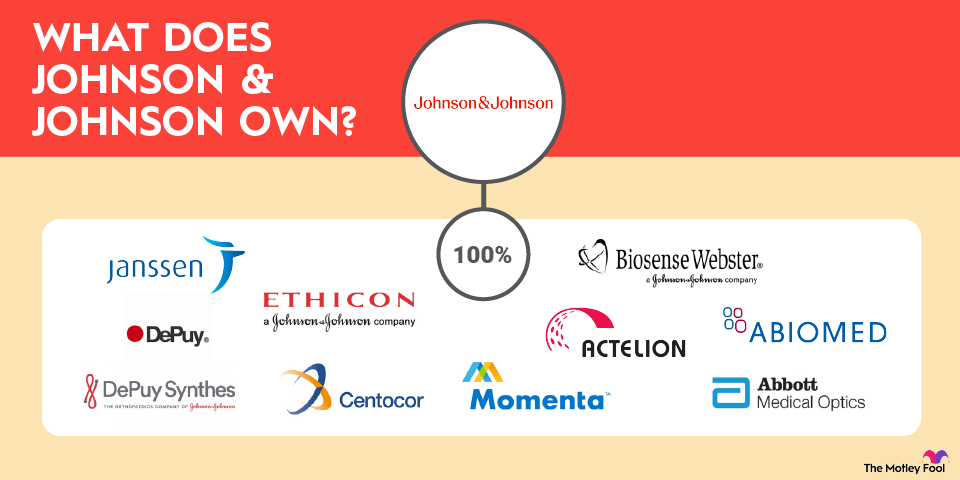
That said, while Eli Lilly is starting to look like a one-trick pony, J&J is anything but. In addition to being one of the world's largest drug companies, it is also one of the largest medical device companies, too. This segment of the business focuses on products such as surgical items and new joints. Like drugs, medical devices are usually life necessities. And this segment allows J&J to offer investors diversification that a pure-play drug-maker can't.
JNJ Johnson & Johnson
NYSE · As of 4:00 PM ET 10/23/26

There's one more little wrinkle to consider. GLP-1 drugs are so hot that Eli Lilly's leading position has resulted in a massive stock price advance. Its price-to-earnings ratio is over 40x. J&J's P/E is 29x. It wouldn't be fair to suggest that J&J is cheap, but it is notably cheaper than Eli Lilly. It also offers a more attractive dividend yield, at 2.1% compared to Eli Lilly's 0.6%.
All in, Johnson & Johnson looks like a more attractive investment than Eli Lilly, even though it has chosen to stay away from the hot new drugs that are all the rage among investors. But, sometimes, operating out of the spotlight can be very rewarding for investors who think long term, particularly if you have an income focus.