At first blush it would be easy to assume it's just another rekindling of the online feud between two celebrity CEOs that's been on-again/off-again since early last year.
Just for the sake of certainty, though, it can't hurt to put a public suggestion to the test. And as it turns out this time, OpenAI CEO Sam Altman may have a legitimate concern about Space Exploration Technologies Corp. (SPCX -0.40%) founder and chief executive Elon Musk's plans for putting artificial intelligence (AI) data centers in space.
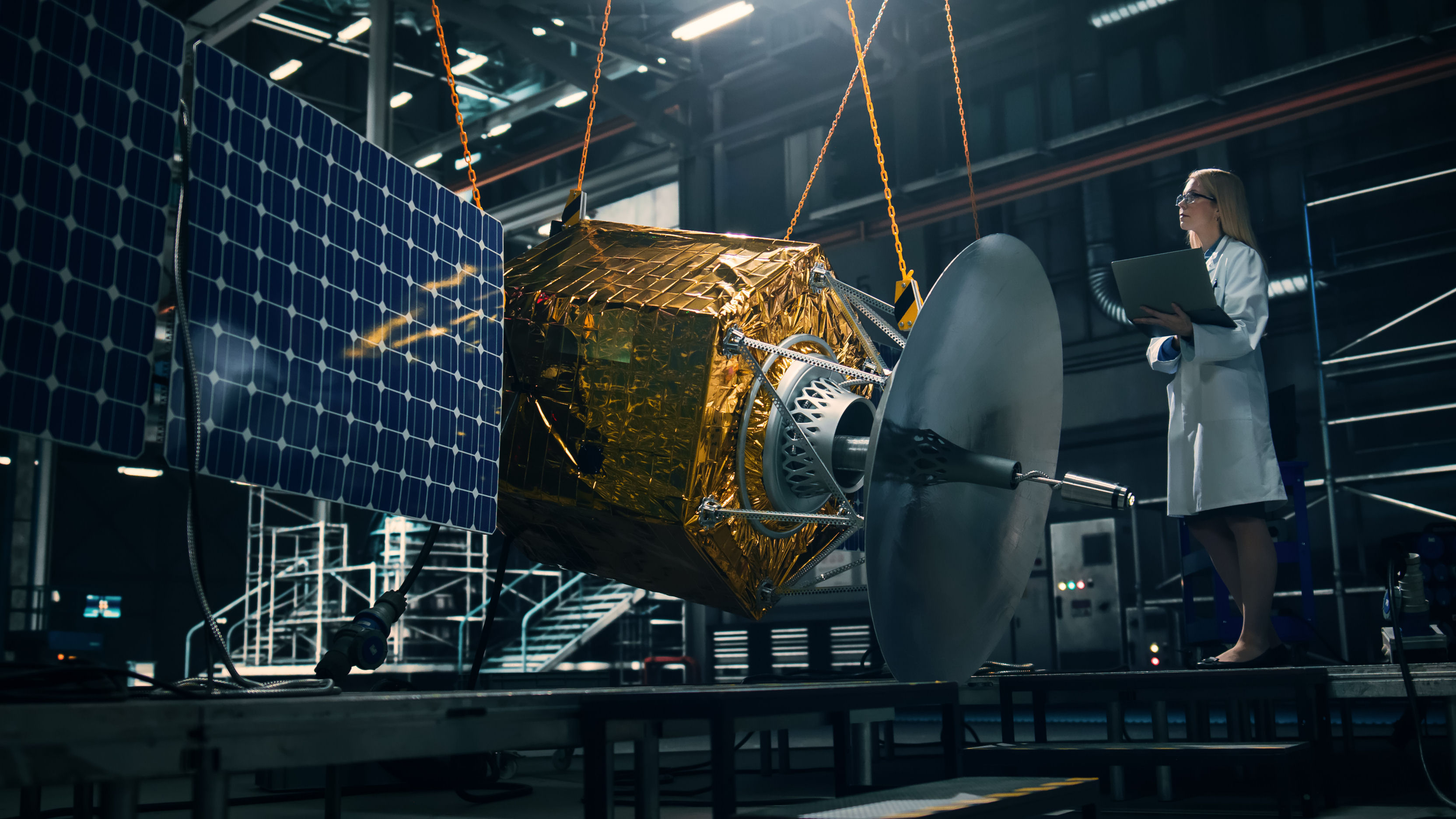
Image source: Getty Images.
What was said
Putting AI data centers in space is not quite as ridiculous as it sounds. An average-sized earthbound data center can span several football fields. They also generate enormous amounts of heat that must be addressed, but such cooling consumes even more electricity, which can still create heat while simultaneously polluting the planet. Putting AI data centers in orbit potentially addresses both problems. Not only is space inherently cold, but beyond the Earth's atmosphere, solar energy is abundant.
And, the technology needed to make this idea work technically exists.
Turning the idea into a cost-effective reality at a meaningful scale, however, is much easier said than done. In fact, Altman doesn't expect SpaceX to do it anytime soon, if ever. In a July 11 post on the social media platform X aimed at Musk, Altman wrote:
homeboy you're the one selling public market investors on short-term space datacenters
It's a reference to the filing made prior to SpaceX's recent initial public offering, which (among other things), indicates "SpaceX's reusable rockets, scaled satellite manufacturing, and operational expertise can enable the cost-effective and rapid deployment of massive AI compute satellite constellations -- with potentially millions of satellites -- for orbital data centers." And, never say never.
Musk's response of "We start flying them next year," however, may gloss over some important realities.
SPCX Space Exploration Technologies
NASDAQ · As of 4:00 PM ET 10/26/26
Chief among these realities is that the reliability and reusability of SpaceX's so-called Starship isn't exactly ironclad. For that matter, the booster lifting the reentry vehicle into space isn't exactly mishap-free enough to load up with hundreds of millions of dollars' worth of AI computing equipment just yet, either (although it is getting markedly better). The degree of reliability and sheer launch capacity Musk is talking about is still years away.
To this end, as Altman has commented in more than one recent interview, he doesn't see space-based AI data centers as a relevant option for at least the next several years, simply due to the technical challenges involved, such as making repairs or cost-effectively putting them into orbit in the first place. Never mind the scarcity of the bandwidth and spectrum needed to wirelessly deliver all of the digital data that orbiting AI data centers would be creating.
Plan on a long wait
Looking past the personality clash on display here, Altman's assessment is more right than it's wrong -- the logistical challenges of turning space-borne artificial intelligence data centers into a meaningful, profitable business are enormous. They'll almost certainly be resolved in time. Musk, however, has already demonstrated a penchant for overpromising and underdelivering as he turned Tesla into the EV powerhouse it is today.
Just keep in mind that Musk did eventually do it. The tough part for Tesla shareholders was just the unexpectedly long wait.