Since setting up Blue Origin 26 years ago, Jeff Bezos has invested a total of $30 billion in his space company, or roughly $1 billion per year. Last month, he doubled that, putting $2 billion into Blue Origin.
It still isn't enough.
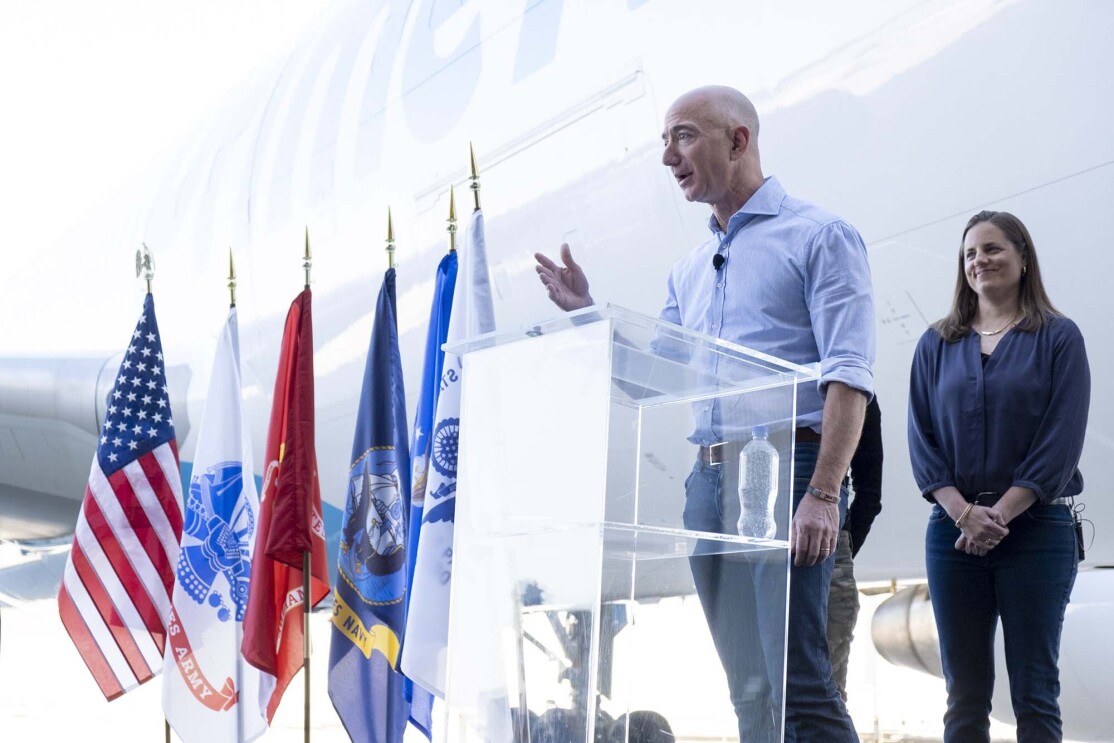
Jeff Bezos, Executive Chairman of Amazon. Image source: Amazon.com.
Feeding Blue Origin's cash bonfire
Analysts estimate that Blue Origin will spend $4.8 billion on capital investment this year as it rebuilds its Cape Canaveral launch pad (destroyed when a New Glenn rocket blew up during engine testing in May), and conducts tests to determine why the rocket exploded -- and make sure it will not happen again. At the rate Blue Origin is spending money, the $1 billion (or $2 billion) a year Bezos has been feeding into the fire will no longer do the trick.
And so Bezos has decided to seek outside investors.
Round up some unusual suspects
For the first time ever, Bezos announced this month that Blue Origin will raise $10 billion, of which he will personally ante up only $2 billion. Hedge fund Coatue Management reportedly wants to contribute $4 billion to the funding round, with the balance made up by "several major investors," reports CNBC.
The investments will be made at a private market valuation of $130 billion, which would put Blue Origin's market capitalization at approximately 8% that of Elon Musk's Space Exploration Technologies (SPCX -2.68%), which went public last month and -- after briefly spiking -- now trades below its IPO price at a valuation of $1.6 trillion as of this writing.

NASDAQ: SPCX
Key Data Points
Why Blue Origin needs money
This year's massive investments to repair the launch pad and get New Glenn flying right again are just the start. Once the New Glenn model is certified ready to return to flight, Blue Origin will need to build more of them -- enough to fly the rocket eight to 12 times this year (down from a previous target of 14). And eventually, the company wants to hit a cadence of 100 flights per year -- approaching the rate at which SpaceX launches its own Falcon 9.
In a further nod to the SpaceX playbook, Blue Origin plans to build a constellation of 5,408 TeraWave broadband internet satellites, similar to SpaceX's own Starlink satellite constellation -- and distinct from Amazon's (AMZN -0.70%) own constellation of Leo internet satellites. No price has been publicly attached to this project yet, but Amazon's smaller Leo project, for example, has already cost that company $10 billion. TeraWave could easily cost twice that.
I suspect this has something to do with why Jeff Bezos just doubled his spending on Blue Origin -- and called in outside investors to help. If even that doesn't do the trick, I suspect it won't be too much longer before we see Blue Origin announce an IPO.