For years, Wall Street analysts have predicted that profits were just around the corner for Rocket Lab (RKLB +2.24%). Ramping Electron launches and the potential for a newer, larger Neutron rocket have been repeatedly cited as reasons to expect Rocket Lab to turn that corner and begin reporting generally accepted accounting principles (GAAP) net earnings -- and free cash flow, too.
It hasn't happened yet, but now that Rocket Lab has announced a big acquisition of satellite company Iridium (IRDM +1.06%), I'm prepared to climb out on a limb myself and make the following prediction: Rocket Lab will turn profitable and free-cash-flow-positive in 2027.
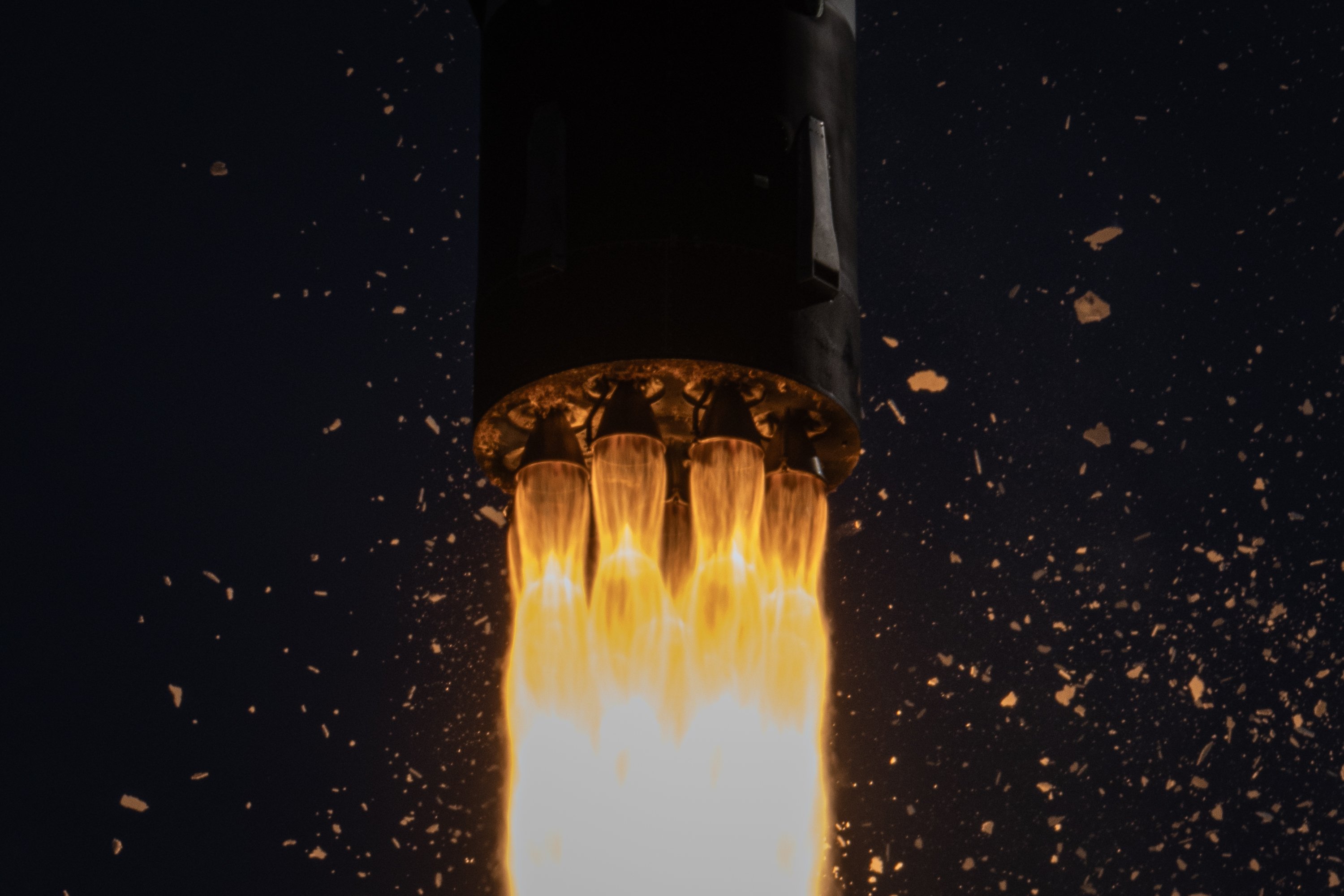
Image source: Rocket Lab.
Rocket Lab is buying Iridium
Rocket Lab today is an unprofitable space stock -- just like most space stocks are unprofitable. (Yes, even Space Exploration Technologies.) It's also a cash-burning business -- also like SpaceX. And yet, thanks to one inspired acquisition, Rocket Lab is on the cusp of turning into a company that's not just GAAP profitable, but generating real cash profit as well: free cash flow.
How do I know this?
Consider that over the last 12 months, Rocket Lab has racked up $183 million in GAAP losses and burned through $316 million in negative FCF. Iridium, on the other hand, reported $93 million in GAAP profit over this same period, and $288 million in positive free cash flow.
Were these two companies to become one immediately, Iridium's positive FCF would nearly cancel out Rocket Lab's negative FCF, even as Iridium's positive net profit erased more than half of Rocket Lab's own net losses. Granted, this merger won't happen immediately, but the companies are anticipating a mid-2027 closing date.
So let's fast-forward a few months and examine what the combined company might look like then.
Rocket Lab + Iridium = what?
According to analysts polled by S&P Global Market Intelligence, Rocket Lab's GAAP losses will probably shrink to only $24 million by 2027. Even better, these analysts agree that Rocket Lab is likely to generate positive free cash flow of $44 million next year.
But Iridium will do even better.
Forecasts have Iridium earning $161 million in 2027 (up 56% year over year) and generating free cash flow of $381 million (up 32%). When combined with Rocket Lab's tally, this implies that the combined company will earn $137 million and generate positive free cash flow of $425 million.
What will this work out to in terms of profits per share? That's hard to calculate until we know precisely how many shares Rocket Lab will "pay" for its purchase. Current plans are for half the $8 billion purchase price to be paid in stock; at the announced $54 per share purchase price, this implies Rocket Lab will need to issue about 74.1 million shares of stock.
Adding this to its current share count of 598.2 million shares would imply that Rocket Lab will have 672.3 million shares outstanding when the transaction closes, resulting in per-share profits of approximately $0.20 for the combined company.
But turning profitable in 2027 isn't the only reason Rocket Lab investors might like this acquisition.
RKLB Rocket Lab
NASDAQ · As of 1:54 PM ET 10/23/26

Looking beyond the numbers
Three years ago, I had the opportunity to ask Peter Beck, CEO of Rocket Lab, about his plans for the company beyond rockets. The market for space services is already much larger than that for space launch after all, and SpaceX had already demonstrated that it could earn much larger profits from its Starlink satellite communications business than from launching rockets.
And so I asked Beck: What kind of transformative business did he envision becoming "Rocket Lab's Starlink"?
I think we now have the answer: it's Iridium.
Announcing the acquisition last month, Rocket Lab explained that acquiring Iridium will make Rocket Lab a "fully vertically integrated space powerhouse," building satellite parts, building satellites, building rockets to launch those satellites -- and now, operating those satellites as a space business.
Going forward, Rocket Lab plans to use Iridium to provide direct-to-device satellite communications; positioning, navigation, and timing (PNT); and Internet of Things (IoT) services -- one market where SpaceX has only begun to compete and isn't yet dominant, and two more where SpaceX hardly operates at all.
For a space company striving to become the next SpaceX without competing head-to-head with SpaceX in the markets where it's strongest, this seems like the right approach to me. I'm still happiest to learn that Rocket Lab will finally turn profitable next year, but...
The new markets Rocket Lab is opening and the growth opportunities they offer are a nice bonus.