For the better part of the last four years, the bulls have been in firm control on Wall Street. Since early June, the ageless Dow Jones Industrial Average (^DJI -0.07%), benchmark S&P 500 (^GSPC +0.41%), and innovation-inspired Nasdaq Composite (^IXIC +1.11%) have vaulted to record-closing highs on the heels of the artificial intelligence (AI) revolution and better-than-expected corporate earnings.
But this doesn't mean headwinds aren't mounting for a historically pricey stock market. Arguably, the biggest unknown at the moment is inflation, which is exacerbated by the ideological overhaul that new Fed Chair Kevin Warsh is undertaking at America's foremost financial institution.
Although there's always some level of change and uncertainty when a new Fed chair takes the reins, Warsh's latest comments about inflation may have driven a proverbial dagger directly through Wall Street's heart.
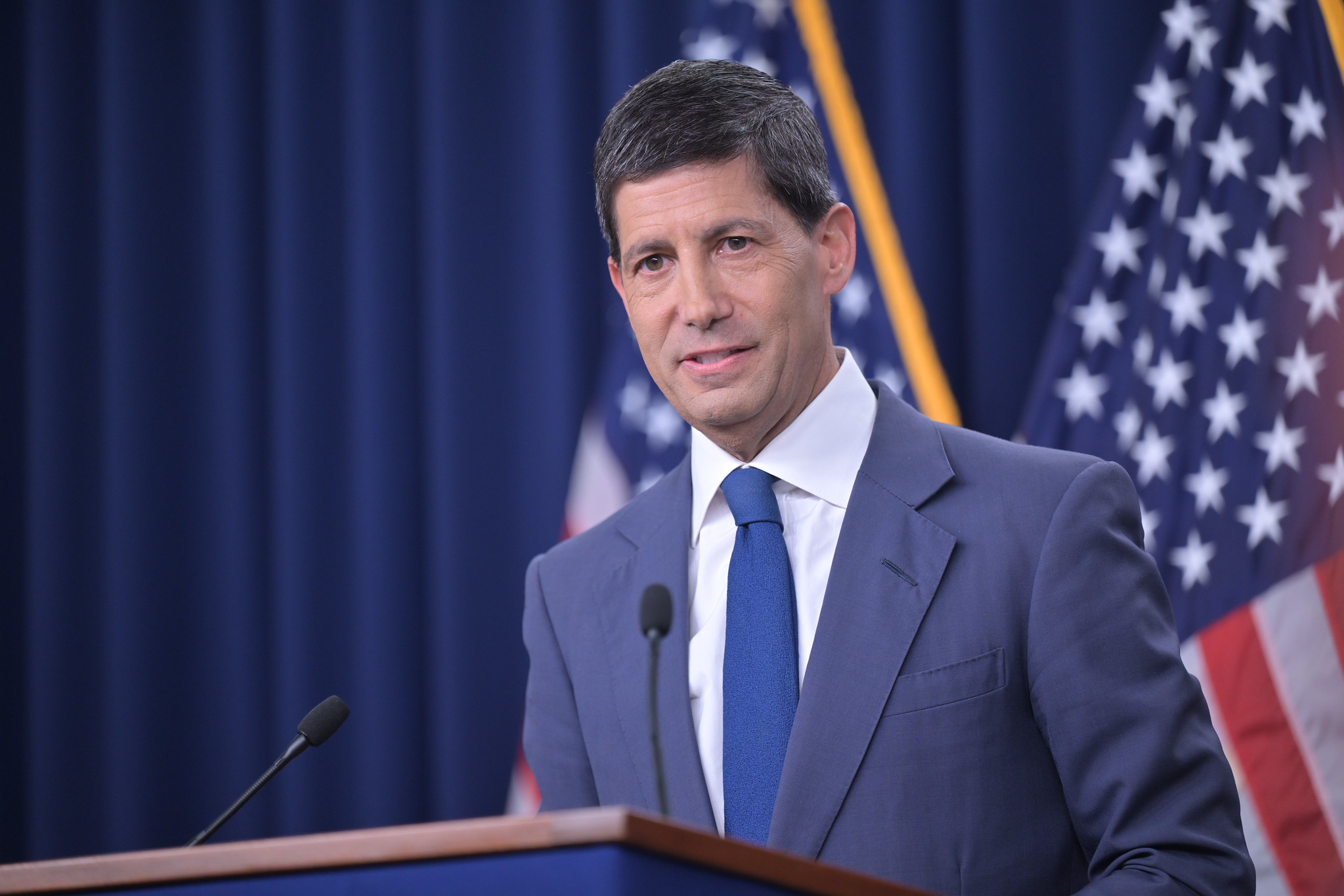
Kevin Warsh took over as Fed chair right as U.S. inflation reached a three-year high in May. Image source: Official Federal Reserve Photo.
The monetary hawk made his presence felt at the latest FOMC meeting
At Warsh's May 22 swearing-in ceremony at the White House, he vowed that the Federal Open Market Committee (FOMC) -- the 12-person body responsible for setting the nation's monetary policy -- would deliver "price stability." These are two words he's repeated several times since becoming head of the Fed.
But Wall Street and investors got their first true look at the monetary hawk hiding within Warsh at the July 28-29 FOMC meeting.
During Warsh's previous tenure on the Board of Governors from Feb. 24, 2006, to March 31, 2011, he was frequently labeled a monetary hawk -- i.e., someone who favors higher interest rates to suppress inflation. During the height of the financial crisis, he was the one voice consistently cautioning that lower interest rates (even amid higher unemployment) could fan the flames of inflation.
"If Trump wants someone easy on inflation, he got the wrong guy in Kevin Warsh."@AnnaEconomist pic.twitter.com/FGMfeSqHpU
-- Daily Chartbook (@dailychartbook) January 31, 2026
During the new Fed chair's press conference following the July FOMC meeting, the monetary hawk in Warsh was in plain view. Said Warsh,
For some households, businesses, and market professionals, five years of high inflation have left a mistaken impression that is hard to shake: that the Fed's implicit inflation target was somehow above 2%. Let me reiterate: There is no soft inflation target, there is no soft implicit target -- not on this Committee's watch.
These 12 words, "There is no soft inflation target, there is no soft implicit target," strongly suggest that he and his colleagues aren't comfortable waiting in the wings and hoping inflation comes back down to the FOMC's long-term target of 2%.
For the second-priciest stock market in history, a hawkish Fed may prove disastrous. While a rate-hiking cycle wouldn't normally halt a historic bull market in its tracks, today's expensive stock market is heavily dependent on the AI infrastructure build-out to fuel growth rates. If borrowing costs rise and this data center build-out slows, AI stock valuation reratings could result in an elevator-down move on Wall Street.
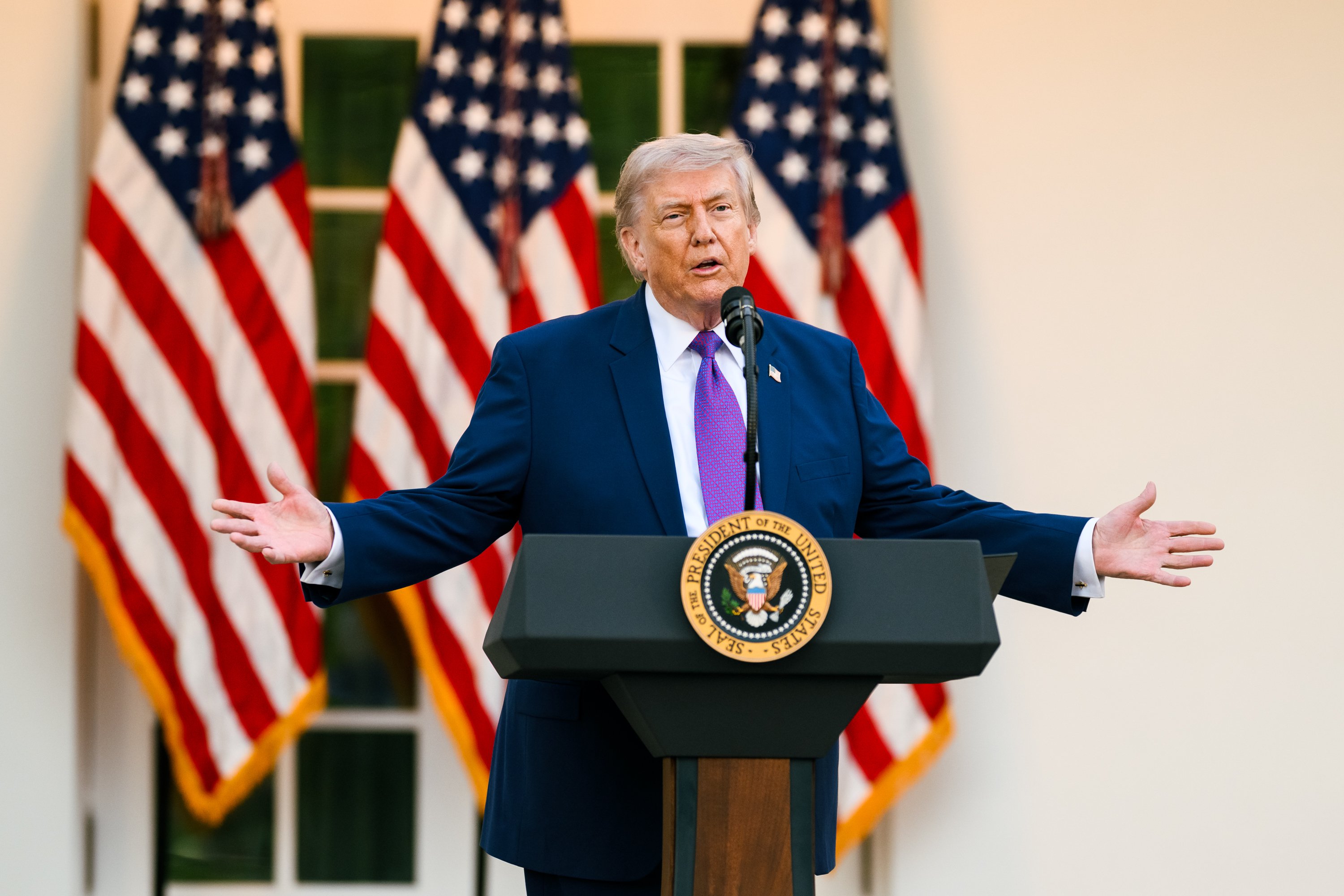
President Donald Trump delivering remarks. Image source: Official White House Photo by Molly Riley.
Trumpflation is evolving, heightening the likelihood that the Fed takes action
The problem for the historically hawkish Kevin Warsh, his colleagues at the FOMC, and Wall Street is that America's inflationary pressures are evolving. Even though headline inflation fell from a three-year high of 4.2% in May to 3.5% in June, the outlook for consumer prices has, arguably, worsened due to the evolution of Trumpflation.
In May, there was one clear source of inflationary pressure: the Iran war. President Trump's decision to attack Iran on Feb. 28 led the latter to close the Strait of Hormuz to most maritime traffic. Halting the daily movement of approximately 20 million barrels of petroleum liquids sent fuel prices soaring and almost single-handedly lifted the U.S. trailing 12-month inflation rate from 2.4% in February to 4.2% in May.
But the Iran war is now affecting far more than just the energy sector. Businesses are being forced to alter shipping routes, change suppliers, and/or pay higher costs for petroleum-based goods (e.g., plastics), among other factors. These higher costs work their way down the chain to consumers, who ultimately pay more for the goods they buy.
Additionally, FOMC policymakers have been under the impression that President Trump's tariffs would essentially be priced in by the end of this year and no longer represent a modest but persistent lift on inflation in 2027 and beyond. This thinking changed when the Trump administration announced a new round of tariffs on more than 80 countries last month.
64.
-- Charlie Bilello (@charliebilello) July 30, 2026
As in 64 consecutive months with US core inflation above the Fed's 2% target.
The Fed has lost all credibility when it comes to fighting inflation.
Kevin Warsh talks a big game, but talk is cheap. The Fed should have hiked rates yesterday and ended QE. pic.twitter.com/HvimqfW6WW
Placing duties on unfinished imported goods used to complete the manufacture of products in the U.S. can raise production costs. In turn, businesses often pass along these higher manufacturing costs to consumers. The stickiness we've seen in Core Personal Consumption Expenditures is evidence that Trumpflation has evolved into a broad-economy problem.
To round things out, the stock market's No. 1 catalyst, artificial intelligence, has also been singled out by FOMC policymakers as a burgeoning source of inflation.
While otherworldly demand for AI chips and memory solutions has helped lift the Dow Jones Industrial Average, S&P 500, and Nasdaq Composite to new heights, the outsize pricing power these companies are enjoying should translate into higher prices for consumers. There isn't an easy fix for the AI hardware supply demand mismatch that's currently fueling this dynamic.
With long-term bond yields soaring (10-year and 30-year Treasury bonds) and Fed Chair Warsh adamant that he and his colleagues are digging in to tame inflation, the prospect of stock market-crushing rate hikes appears highly likely.