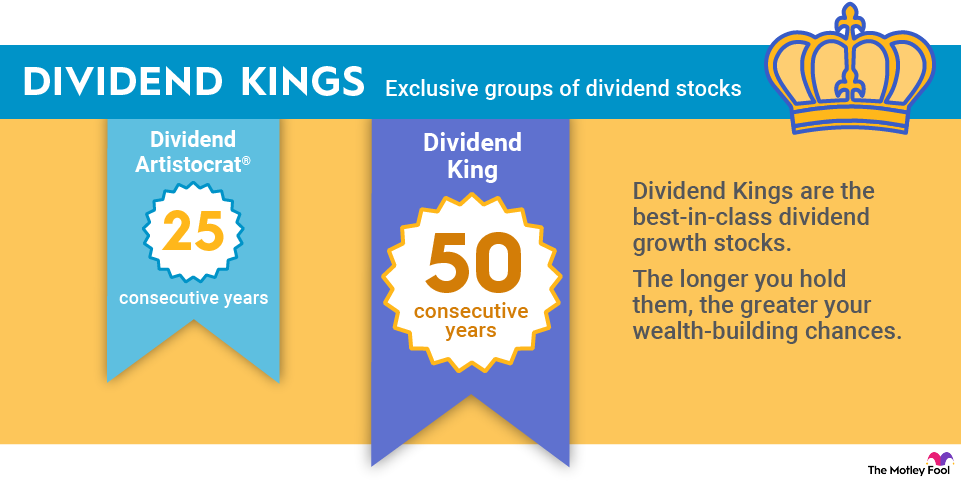
Coca-Cola (KO -0.52%) quietly extended its dividend growth streak to 64 consecutive years this past February. That kept it in the illustrious group of Dividend Kings, companies with 50 or more consecutive annual dividend increases.
While mature dividend payers tend to be lower-returning stocks, that's not the case this year. Coca-Cola stock is up over 25% this year, crushing the surprisingly meager 4.4% return of faster-growing "Magnificent Seven" stocks.

Image source: Getty Images.
Plenty of pop this year
Coca-Cola raised its dividend by 4% earlier this year. Even with that pay raise, the stock's yield has compressed to less than 2.5% these days due to the surge in its share price. Though that's still well above the Magnificent Seven (yields between 0% and 0.7%).
The company's slower growth had led it to underperform this fast-growing group in recent years. However, that has changed in 2026, with Coca-Cola beating every single name in the Magnificent Seven year to date:
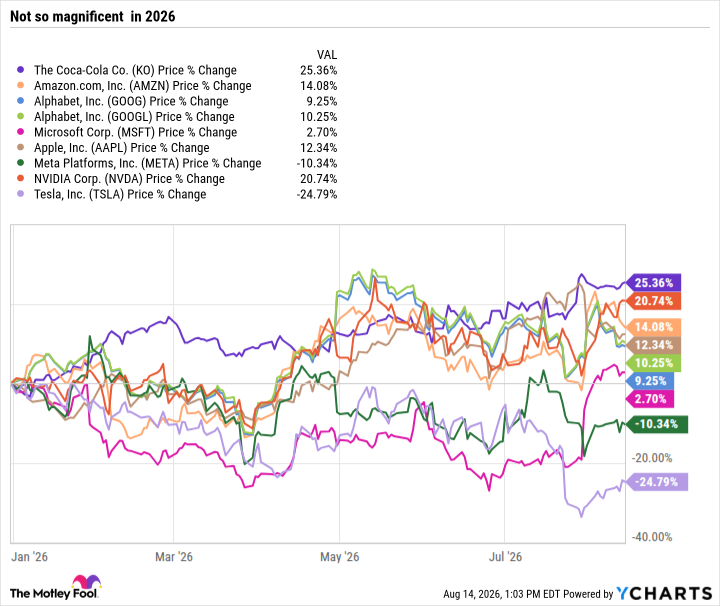
That's due to a couple of factors. Investors are growing concerned about burgeoning capex budgets as these tech giants race to build out AI infrastructure and products. This spending is weighing on investor sentiment, as these investments might not pay off over the long run.
That's driving some sector rotation as investors trim their tech positions and shift more of their portfolio into defensive sectors. That has benefited Coca-Cola, which has proven its durability over the decades. It's also having a strong year. Its revenues grew 7% in the second quarter, while its earnings per share jumped 16%.

NYSE: KO
Key Data Points
While Coca-Cola is having a strong year, that hasn't altered its long-term growth trajectory. The beverage giant's long-term growth ambition is to deliver 4%-6% annual organic revenue growth and 7%-9% annual earnings-per-share growth. That's a lot slower than the growth ambitions of the Magnificent Seven.
However, that's not to take anything away from the important role Coca-Cola can play in a portfolio. It can provide income, stability, and diversification, helping smooth out returns when investors' tastes abruptly change.