Despite volatility tied to the Iran war, it's shaping up to be another fantastic year for investors. Since the beginning of June, the ageless Dow Jones Industrial Average (^DJI -1.23%), broad-based S&P 500 (^GSPC -0.52%), and innovation-driven Nasdaq Composite (^IXIC -0.21%) have all catapulted to fresh highs, thanks in large part to the artificial intelligence (AI) revolution.
But several factors suggest the stock market is on shakier ground than the Dow, S&P 500, and Nasdaq Composite indicate. Perhaps no headwind echoes louder than inflation.

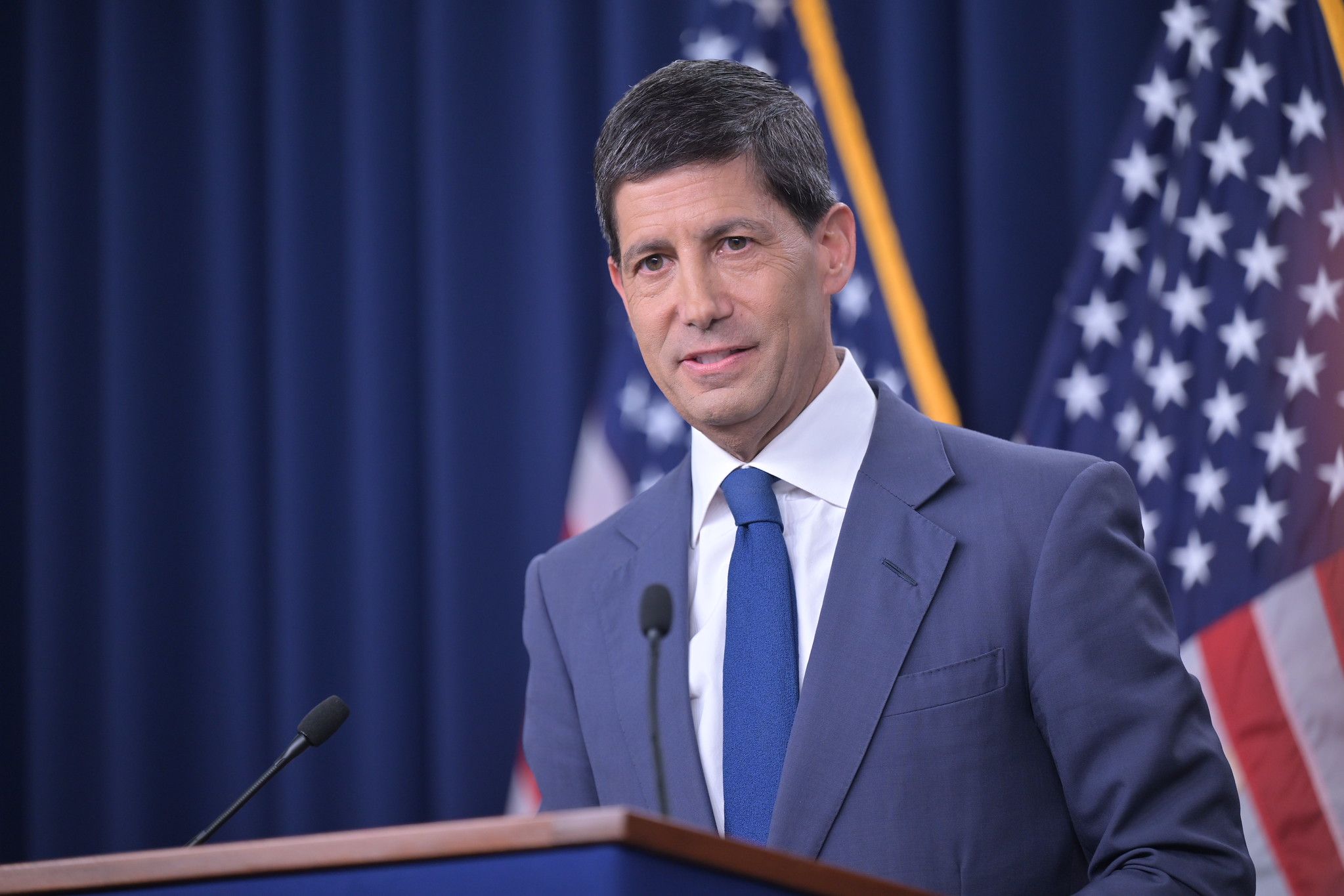
Fed Chair Kevin Warsh's job just became far more challenging. Image source: Official Federal Reserve Photo.
Fed Chair Kevin Warsh, who was sworn in just three months ago, took the reins with trailing 12-month inflation at a three-year high of 4.2%. While things appeared to be moving in the right direction on the inflation front in June and July, a surprise announcement by Treasury Secretary Scott Bessent on Aug. 19 just threw an enormous monkey wrench into Warsh's and the Federal Open Market Committee's (FOMC) plans.
The U.S. Treasury Department is conducting a surprise bond market intervention
In the lead-up to Warsh's swearing-in as Jerome Powell's successor on May 22, Treasury bond yields at the long end of the yield curve (10-, 20-, and 30-year bonds) started climbing. Recently, the 30-year Treasury bond yield hit a 19-year high, while the 10-year yield came within a stone's throw of matching its level during the financial crisis.
Bond yields, which are inversely related to bond prices, have jumped for several reasons.
BREAKING: 🇺🇸 The US 30 year bond yield just hit 5.334%, the highest in 19 years.
— Bull Theory (@BullTheoryio) August 18, 2026
The last time it was this high was 2007, the year before the global financial crisis started and the Nasdaq crashed 56% within the next 2 years. pic.twitter.com/OYRqldl1io
For starters, above-average inflation has bond traders on edge. Higher yields at the long end of the yield curve point to the growing likelihood of the Federal Reserve taking action and adjusting its federal funds target rate.
Secondly, Fed Chair Warsh removed forward-looking guidance from the FOMC's meeting statements. This guidance signaled whether the FOMC was more likely to hike or lower interest rates as its next move. Without this transparency, which had been a staple of FOMC statements for more than two decades, bond traders have been left to do a bit of guessing about the Fed's next action. With inflation well above the FOMC's long-term target of 2%, yields on 10- and 30-year Treasuries have notably risen.
Thirdly, U.S. government deficits have been unsightly throughout the decade. According to the latest Treasury data, total U.S. debt crossed above $40 trillion for the first time last week. The prospect of servicing our nation's mounting debt is becoming more burdensome, leading to higher yields.
BREAKING: The US Treasury announces it will double the size long-term US government debt buybacks following the rapid surge in US Treasury yields.
— The Kobeissi Letter (@KobeissiLetter) August 19, 2026
Repurchases of $2 billion will now be increased to "at least" $4 billion, the US Treasury said.
The move is intended to provide…
In the wake of these challenges, Scott Bessent surprised Wall Street by announcing that the U.S. Treasury would double its purchases of long-dated Treasury bonds from $2 billion to $4 billion. While $4 billion is a relatively modest figure, it's the message Bessent is sending that's noteworthy.
The Treasury Department's bond intervention clearly signals that it's not happy with 10- and 30-year Treasury yields soaring to near-multidecade highs. By purchasing bonds, the Treasury Department will be attempting to drive up bond prices and weigh down yields at the long end of the curve.
Lowering longer-duration bond yields can potentially reduce corporate borrowing costs (a big positive for companies spending freely on the AI infrastructure build-out), make it easier to service America's rapidly expanding debt, and decrease mortgage rates, thereby making housing more affordable.
It all sounds great on paper, but it's a nightmare scenario for Kevin Warsh and the FOMC.

Image source: Getty Images.
Fed Chair Warsh is stuck between a rock and a hard place
In the months since Warsh took over as Fed chair, the bond market has done him and the FOMC a favor. Even though the FOMC hasn't changed its federal funds target rate, higher bond yields at the long end of the yield curve have made it costlier to borrow capital. Without lifting a finger, Warsh had bond traders tapping the brakes on above-average inflation.
Fed Chair Warsh addressed this phenomenon when speaking with the press after the July 28-29 FOMC meeting:
Two economic developments are worth highlighting. The first is a very notable change since our last meeting 42 days ago: Nominal and real yields are materially higher across the Treasury curve. In fact, some of the increases in market interest rates between FOMC meetings are among the most significant in the last two decades, ranking around the top decile or so.
Warsh attributed this reaction to "market participants are learning to play the ball, not the referee." In other words, without forward-looking guidance, the bond market has been forced to trade off a much narrower pool of data.
But the Treasury's bond market intervention may throw this dynamic out the window. With Bessent seemingly intent on driving down long-term Treasury yields, it may leave Warsh and his colleagues with no choice but to act -- i.e., raise the federal funds target rate.
Even though a weak jobs report slashed the odds of a September FOMC interest rate hike, the Treasury Department's actions have likely put rate hikes back on the table as a necessary means to deliver price stability.
64.
— Charlie Bilello (@charliebilello) July 30, 2026
As in 64 consecutive months with US core inflation above the Fed's 2% target.
The Fed has lost all credibility when it comes to fighting inflation.
Kevin Warsh talks a big game, but talk is cheap. The Fed should have hiked rates yesterday and ended QE. pic.twitter.com/HvimqfW6WW
Keep in mind that Warsh and the FOMC aren't just dealing with an Iran-war-driven energy supply disruption any longer. Based on the price stickiness of Core Personal Consumption Expenditures (PCE), which excludes volatile food and energy costs, the inflationary pressures of the Iran war have reached the broader economy. Entrenched inflation is considerably tougher to combat than generally short-lived energy supply shocks.
If Kevin Warsh and his peers tackle sticky inflation head-on, they'll likely draw the ire of President Donald Trump and may halt the stock market's parabolic, AI-driven rally in its tracks. If they do nothing, inflation can accelerate, threatening economic growth and costing the central bank its hard-earned credibility in the eyes of investors.
Thanks to Scott Bessent and the U.S. Treasury Department, Kevin Warsh is now stuck between a rock and a hard place.