Rocket Lab (RKLB -6.64%), a developer of reusable orbital rockets, went public through a merger with a special-purpose acquisition company (SPAC) on Aug. 25, 2021. It started trading at $11.58 on the first day, but it now trades at about $64. Let's see why this space stock skyrocketed over the past five years -- and why its next earnings report could drive it higher.
Rocket Lab is expanding and evolving
Rocket Lab is best known for its Electron rockets, which the company has launched 94 times to deploy over 265 satellites, and its upcoming, higher-capacity Neutron rocket. Its big launch customers include NASA, the U.S. Space Force, and the Swedish National Space Agency. It also launches HASTE (Hypersonic Accelerator Suborbital Test Electron), a customized rocket that helps the U.S. Department of Defense test hypersonic and suborbital technologies.
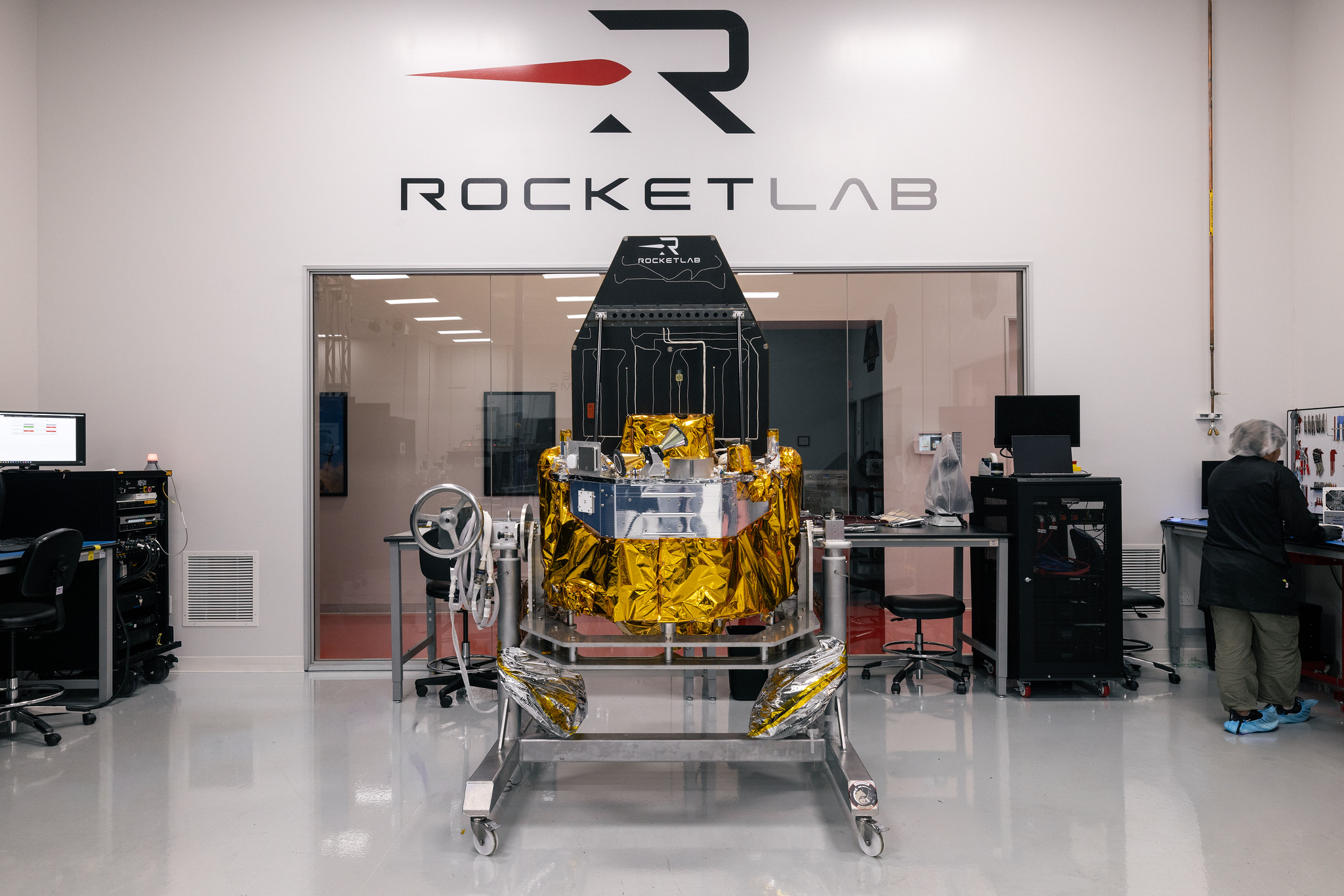
Image source: Rocket Lab.
However, those launch services typically account for only 25%-30% of Rocket Lab's total revenue. More than 70% comes from its space systems segment, which develops satellite components, satellite buses, and solar panels for a wide range of customers.
It's also in the process of acquiring Iridium (IRDM -1.73%), a developer of satellite networks for critical communications, in an $8 billion deal that is expected to close next year. It will expand its space systems segment and be "significantly accretive" to its cash flow and profitability.
RKLB Rocket Lab
NASDAQ · As of 4:00 PM ET 10/15/26

Rocket Lab has plenty of room to grow
At first glance, Rocket Lab might seem like a weaker space play than SpaceX (SPCX -2.33%), which also produces orbital rockets and satellites. However, Rocket Lab's rockets handle smaller payloads than SpaceX's Falcon rockets, its HASTE launch vehicles have cornered the market for suborbital hypersonic tests, and Iridium doesn't directly compete against SpaceX's Starlink. Therefore, there could be ample room for Rocket Lab and SpaceX to expand in the nascent space sector without clashing.
From 2025 to 2028, analysts expect Rocket Lab's revenue to grow at a 43% CAGR from $602 million to $1.78 billion. They expect its adjusted earnings before interest, taxes, depreciation, and amortization (EBITDA) to turn positive in 2027 and more than double to $272 million in 2028. With an enterprise value of $12.7 billion, it isn't cheap at 27 times next year's sales. But if you're looking for a smaller, simpler play on rockets and satellites than SpaceX -- which is burdened by a money-burning AI business -- Rocket Lab checks all the right boxes. That's why I'd keep an eye out for its next earnings report in early November.