Nvidia (NVDA +0.22%) has become one of the biggest names in the artificial intelligence (AI) boom, but what matters now is what comes next. Five years is a long time in tech, and Nvidia still has huge plans in its pipeline, spanning AI infrastructure, robotics, and more. So, where could Nvidia be in five years' time?

Image source: Getty Images.
Nvidia's new chip platform is built for AI agents
At GTC 2026, Nvidia unveiled Vera Rubin, a full-stack platform that combines graphics processing units (GPUs), central processing units (CPUs), networking, storage, and software into a single AI platform. That matters because AI infrastructure is becoming more complex.
Training a frontier model isn't just about buying GPUs. Companies also need networking, storage, and systems to tie everything together. So, Nvidia is selling more of the entire stack rather than individual GPUs.

NASDAQ: NVDA
Key Data Points
Nvidia says Vera Rubin systems are ramping up to full production and are designed for the next phase of AI -- sophisticated AI agents that can reason, use tools, and carry out tasks. Agents run 24-7 and therefore often require far more compute power to run than a single request.
The company also added that the Vera Rubin platform can deliver higher throughput than the previous-generation Grace Blackwell platform while reducing inference costs. That's important because AI's next phase could look very different from chat-based AI apps like ChatGPT.
As AI agents become more widely used across software, businesses, and even physical systems, the amount of compute needed for inference could grow dramatically. Meanwhile, Nvidia is still supplying the infrastructure behind it.
Nvidia deepens its push into AI infrastructure
Another important trend is Nvidia's push into complete AI infrastructure. The company is helping customers design entire AI factories rather than simply selling individual chips. Its DSX platform helps customers design, simulate, and operate these facilities, while Nvidia collaborates with data center, power, and infrastructure companies worldwide.
That could make Nvidia even more embedded in the physical infrastructure behind AI. Recent developments show just how massive this push has become.
For example, Nvidia recently announced an Australian AI infrastructure initiative involving multiple data center and infrastructure partners, with plans for up to a two-gigawatt build-out by 2027. The company has also partnered with Palantir to deploy sovereign AI across important supply chains, starting with Nvidia's own operations.
Data centers and infrastructure partnerships are only part of the picture. Nvidia is also finding new ways to put its computing power to work beyond the traditional data center.
Nvidia expands into robotics and space computing
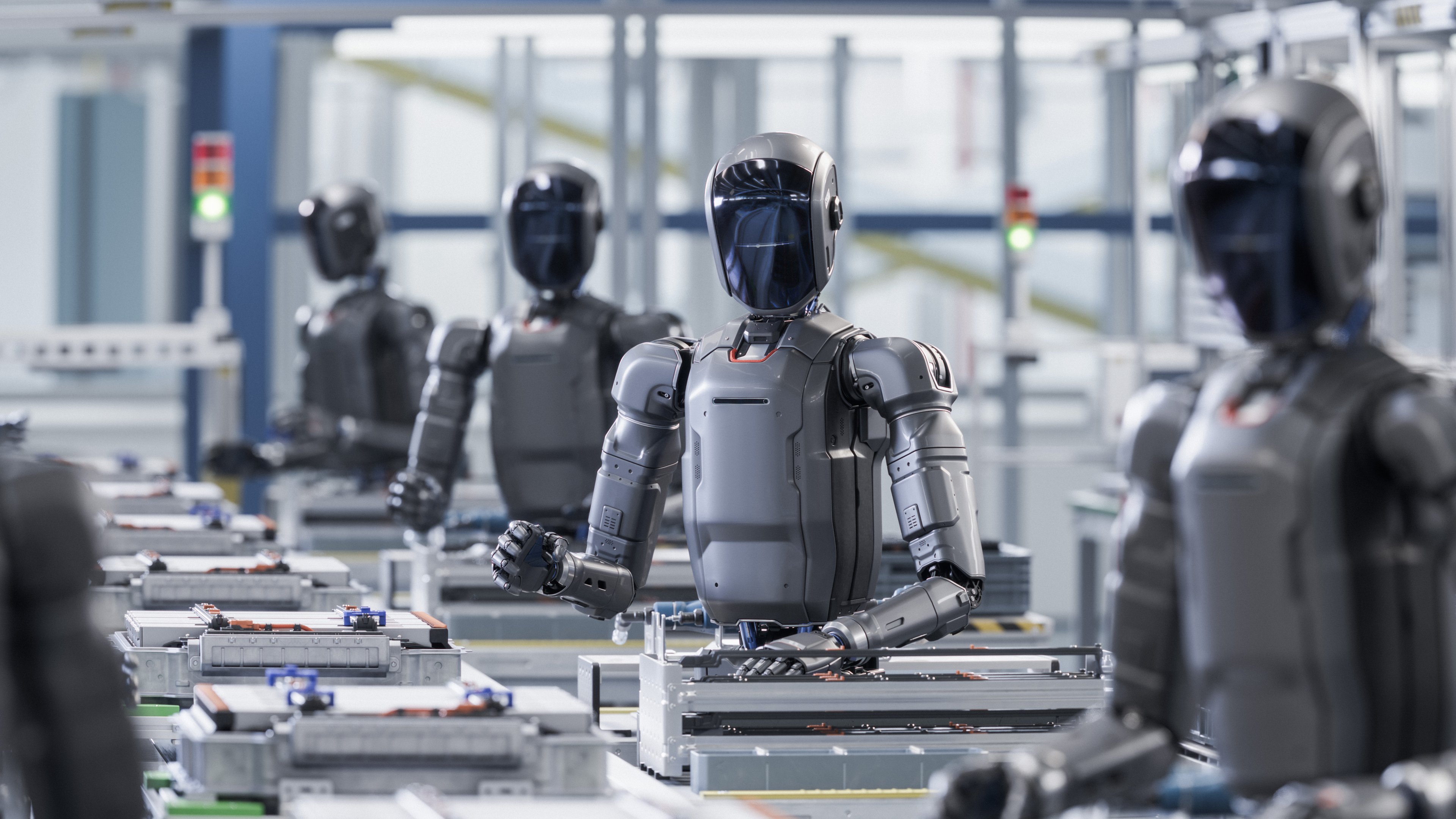
Nvidia could look very different in five years if it successfully pushes beyond conventional cloud infrastructure. The company has been pushing its technology into robotics, autonomous machines, and industrial simulations. On top of that, it introduced platforms for space computing, targeting applications like orbital data centers, geospatial intelligence, and even autonomous operations in space.
Still, that doesn't mean space will suddenly become a major part of Nvidia's revenue. Instead, the bigger takeaway is that Nvidia increasingly sees accelerated computing as a technology that can be deployed almost anywhere, even outside the planet.
That same idea applies to robotics and autonomous machines: collect data, process it, and run AI models that make decisions in real time.
Once these trends reach scale, Nvidia has another enormous market ahead of it.
What Nvidia's next five years could look like
Nvidia's next five years could be about much more than selling the world's fastest chips. The company is building an entire ecosystem around AI, spanning complete AI systems and software, robotics, and next-generation data centers.
If that strategy works, Nvidia could open up far more markets for its products. That's the real shift: The company isn't just powering the AI boom, it's shaping the industry's future. That's why Nvidia could be an even bigger force in the AI economy by 2031.