Warren Buffett has quite an extensive fan base, and for good reason. He took a failing textile company called Berkshire Hathaway (BRKA -0.07%) (BRKB -0.15%) and turned it into a multinational holding company with a massive insurance operation at its center and a stock portfolio worth hundreds of billions of dollars. (He couldn't save the textile business, though.)
One of his fans is Bill Ackman, who aspires to build Howard Hughes Holdings into another Berkshire. He's still just getting started on that effort, acquiring an insurance business for the company this year. In the meantime, he runs a hedge fund firm, Pershing Square, which holds a concentrated portfolio of his top investment ideas.
There's not much overlap between Ackman's portfolio and the portfolio Buffett left Berkshire investors with after he stepped down as CEO (at the end of 2025) and as chairman (this month). But there's one investment theme they agree on, and it explains why both men love Alphabet (GOOG -0.54%) (GOOGL -0.53%), Amazon (AMZN +0.21%), Microsoft (MSFT -0.05%), and Meta Platforms (META +3.24%). It all comes down to two numbers.
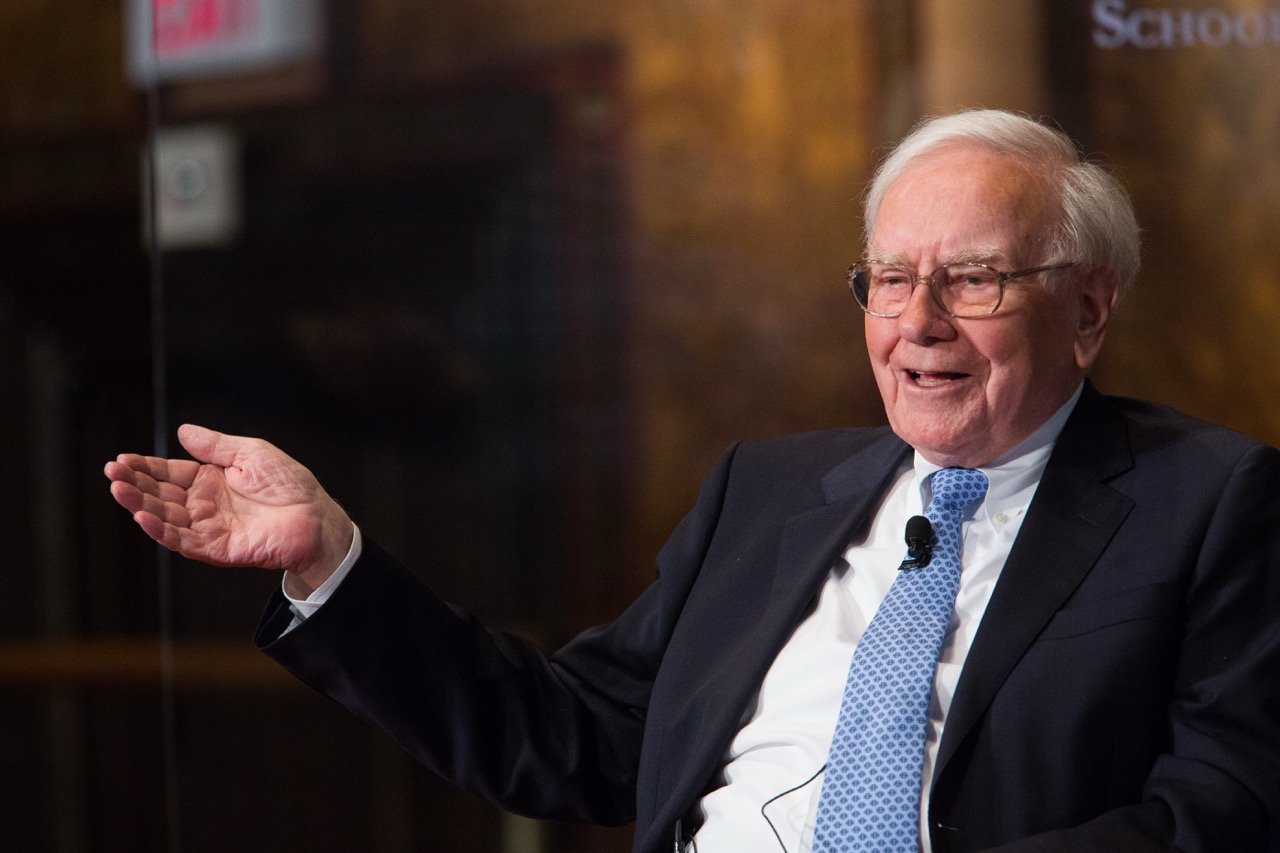
Former Berkshire Hathaway CEO and Chairman Warren Buffett. Image source: Getty Images.
Buffett explains why he initiated a position in Alphabet
In an interview with CNBC in July, Buffett revealed that he was the one who initiated Berkshire's position in Alphabet. The trick in investing, he said, "is to find businesses that are going to earn high returns on capital for an extended period of time." He noted that many of Berkshire's top investment holdings exhibit the trait, and suggested that Alphabet is no different.
What makes an even better investment, Buffett explained, isn't just a company earning high returns on capital, but a company that can redeploy those returns into the business and continue earning a high return on capital. That's what makes Alphabet so appealing right now. It has the opportunity to deploy hundreds of billions of dollars and earn high returns on those capital expenditures. That opportunity comes in the form of building new AI data centers and leasing out compute capacity on the servers it puts in them.

NASDAQ: GOOG
Key Data Points
Ackman shared that same sentiment in his letter to Pershing Square shareholders in February.
"As long as a company's increased capex spending is on projects that are expected to deliver returns comfortably in excess of the company's cost of capital and the company has the financial wherewithal to make these investments, the company's growth and intrinsic value should increase as a result," he wrote.
And that gets to the two key numbers that factor into both Buffett's and Ackman's decisions to invest huge sums of cash in the hyperscalers: return on invested capital and cost of capital.
The two numbers investors should pay attention to
First, some definitions:
- Return on (invested) capital: net operating profit after taxes divided by invested capital.
- Weighted average cost of capital: the cost of equity and debt adjusted for the company's financing mix between equity and debt:
- Cost of debt: the interest rate paid, adjusted for taxes.
- Cost of equity: the theoretical return of the company's stock above the risk-free rate.
Investors shouldn't fear to buy shares of a company that's producing negative free cash flow and taking on debt -- if the expected returns on capital are significantly higher than the cost of capital. Doing so should ultimately result in far greater cash flows over the long run.
Amazon has gone through multiple investment cycles, building out its fulfillment infrastructure to improve the competitive positioning of its e-commerce operations. Every time, it has gone on to produce significantly higher free cash flow than it did before starting the investment cycle. Its investments in cloud computing are no different.

NASDAQ: AMZN
Key Data Points
An analysis by Michael Mauboussin, head of research at Morgan Stanley Investment Management's Counterpoint Global, found that hyperscalers, including Oracle, are expected to produce a return on invested capital above 24% through the end of the decade. Meanwhile, their weighted average cost of capital sits around 8%. Alphabet is expected to produce the highest return on invested capital of the group -- above 30% through 2031.
Those kinds of expected returns leave room for a lot of error. The long-term cloud contracts that Amazon Web Services, Google Cloud, and Microsoft Azure have signed with their top customers significantly reduce the risk for those companies. It's no wonder they're spending as much as they reasonably can building new infrastructure.
The results appear predictable. Just as we've seen with Amazon in past investment cycles, most of the hyperscalers' free cash flows will dip into negative territory. But as those businesses start producing returns on that capital, their free cash flows will rocket higher. The group is expected to see total free cash flow exceed $500 billion by 2030. By 2031, both Amazon and Alphabet could generate over $300 billion in free cash flow each.
Even at historically low free-cash-flow multiples, these businesses could be worth trillions of dollars more by the end of the decade than they are today. The potential returns are extremely attractive, especially given the market's current pessimism about their AI spending commitments, which is holding down stock prices. Right now is a great opportunity to invest in the hyperscalers.