Graphics processing units (GPUs) are the data center chips that do most of the heavy lifting in artificial intelligence (AI) workloads. Nvidia (NVDA -2.94%) supplies the world's best GPUs, and sales have been so strong that the company's market capitalization has grown from $360 billion to a whopping $5.8 trillion since the start of 2023.
However, it will be hard for Nvidia to replicate those returns going forward because of its enormous size, which is why its stock has only mustered a 28% gain so far in 2026 (at the market close on Monday, Oct. 5). Corning (GLW -6.38%) stock, on the other hand, has rocketed higher by 82% this year.
Corning is a 175-year-old glass manufacturer with a wealth of experience serving the electronics industry. It supplied the glass for Thomas Edison's original lightbulb in 1879, and today, it makes the glass for all of Apple's iPhones. But the company is now at the center of the AI boom thanks to its fiber-optic data center cables, and here's why its stock probably isn't done going higher over the long term.

Image source: Getty Images.
The shift to optical fiber presents a big opportunity
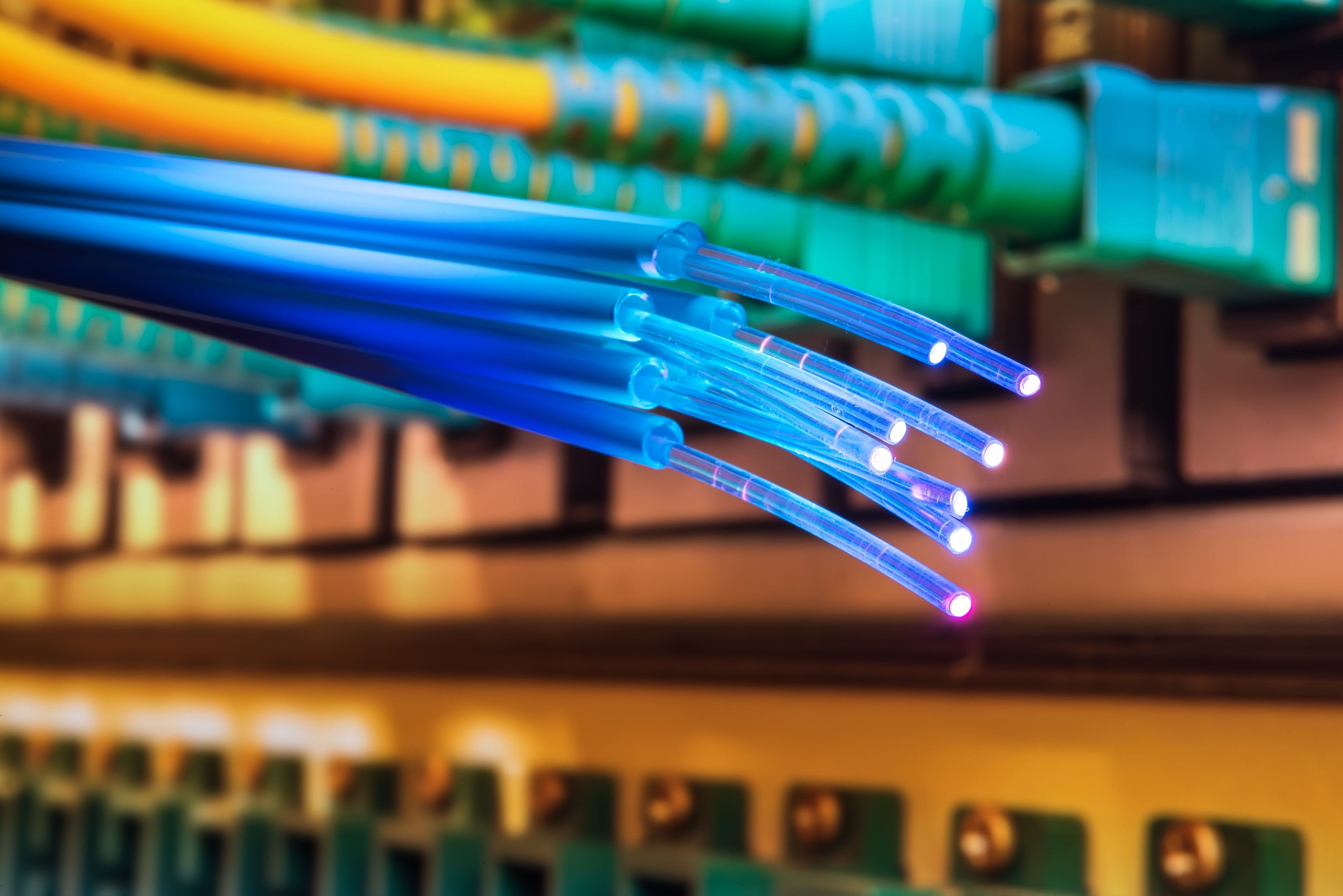
The typical Nvidia NVLink 72 data center rack includes 72 GPUs, 36 central processing units (CPUs), and various networking components, which are connected using two miles of copper cables. However, there is an ongoing shift toward fiber-optic cables instead, because they can transmit data much faster and with better energy efficiency -- a great combination for AI developers who want to maximize processing speeds while keeping costs down.
Corning developed an entire portfolio of optical connectivity products for the AI industry under a new brand called GlassWorks AI Solutions. One of them is Multicore Fiber (MCF), which packs four cores into a single strand of 125-micron fiber. Since MCF is effectively four-times as dense as a traditional fiber-optic cable, data center operators can achieve the same performance with 75% fewer cables, which will be particularly useful as GPU clusters grow larger over time.
According to Corning, clusters of 130,000 (or more) GPUs typically require an extra optical layer which adds around 50% more fiber content. MCF could be the ideal solution in those settings.
Corning is already working with an impressive list of AI companies, including Nvidia, Meta Platforms, and Amazon. Meta plans to buy $6 billion worth of optical connectivity solutions from Corning over the next few years, and the Amazon deal could be worth a similar amount.
Corning's AI revenue is growing rapidly
Corning generated $9.1 billion in core revenue during the first half of 2026 (ended June 30), an 18% increase from the year-ago period. The optical communications segment contributed $3.9 billion in revenue, and it grew at a much faster pace of 34%. During the second quarter (April to June), AI-related sales in the optical communications segment almost doubled.
The optical communications business also delivered $825 million in net income during the first half of the year, up 84% compared to the first half of 2025. The incredible demand for optical fiber solutions is a massive tailwind for Corning's profit margins, because it's giving the company the ability to dictate prices.
Corning believes AI-related demand will drive its annualized revenue to $20 billion by the end of 2026, and then to $30 billion by the end of 2028, and to $40 billion by the end of 2030. Simply put, this growth story appears to be in the very early stages.
Corning stock is pricey, but watch for a pullback
Corning delivered adjusted (non-GAAP) earnings of $2.87 per share over the last four quarters (to June 30), placing its stock at a price-to-earnings (P/E) ratio of 55.5. For some perspective, Nvidia stock is trading at a P/E of just 30.2, so Corning definitely isn't cheap.

NYSE: GLW
Key Data Points
However, if we assume Corning will double its annual revenue between now and 2030 as management expects, its earnings could grow at a similar rate, which would make its stock quite attractive on a forward basis. But that means investors who buy the stock today must be prepared to hold it for at least the next four years to maximize their chances of yielding a positive return.
Alternatively, if Corning stock were to suffer a decline of around 30% from its current price of $159 (at the market close on Monday, Oct. 5) amid a correction in the broader market, that could be a better buying opportunity for investors. Therefore, it might be a good idea to watchlist this stock for the time being.