Tesla (TSLA +3.01%) is the dominant player in the U.S. electric vehicle (EV) market. It held a commanding 59% of the U.S. EV market in early 2026. While Tesla's competitors had been steadily taking market share over the years, they’ve lost ground since the end of federal EV incentives in late 2025.
Despite that recent speed bump, Tesla’s competitors aren’t going to completely cede the EV market to the company. Here’s an analysis of Tesla's top rivals at home and abroad to help those interested in buying Tesla stock make a better-informed decision about whether to invest in its stock.

NASDAQ: TSLA
Key Data Points
Tesla (TSLA) overview
Martin Eberhard and Marc Tarpenning originally founded Tesla in 2003. Elon Musk is a leading Tesla owner after he led the company’s first funding round a year later and became its chairman and a co-founder. Musk subsequently became Tesla’s CEO in 2008. He currently leads all product design, engineering, and global manufacturing of the company’s products.
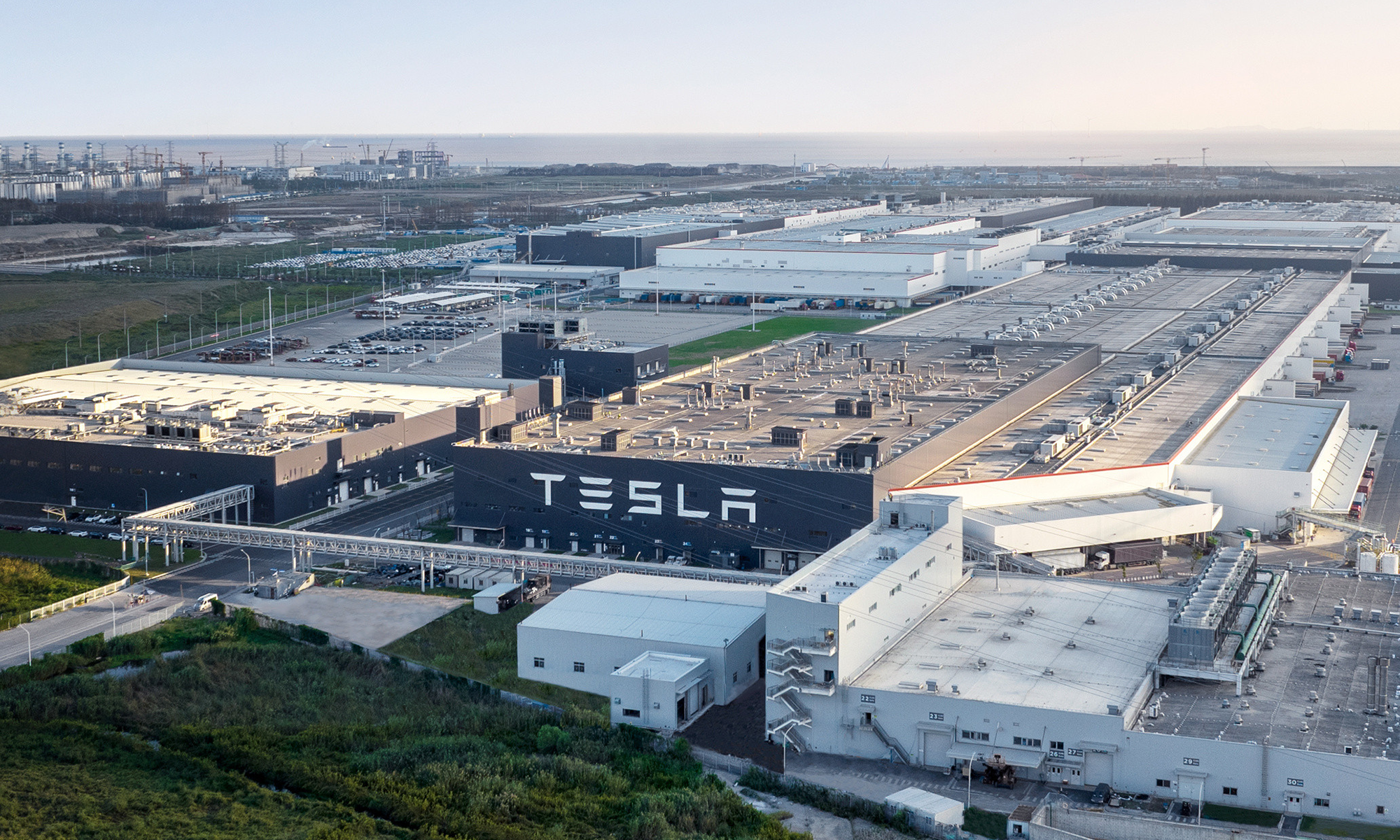
Tesla has grown from an EV start-up to a global leader in EVs, batteries, and solar energy. Tesla is also a leader in robotics and automation. The company has a massive scale, including six gigafactories across three continents that produce EVs and batteries. In 2025, Tesla produced nearly 1.7 million EVs. It generated almost $95 billion in revenue (nearly $70 million from EVs) and more than $6 billion in free cash flow.
Tesla's top competitors:
| Name and ticker | Current price | Market cap | Dividend yield |
|---|---|---|---|
| BYD Company (OTC:BYDDY) | $14.27 | $157.7 billion | 1.29% |
| Ford Motor Company (NYSE:F) | $12.87 | $51.3 billion | 4.66% |
| General Motors (NYSE:GM) | $81.26 | $73.5 billion | 0.77% |
| Rivian Automotive (NASDAQ:RIVN) | $17.20 | $21.4 billion | 0.00% |
1. BYD

OTC: BYDDY
Key Data Points
BYD (BYDDY -0.56%) began as a battery company in 1995 and entered the automotive industry in 2003. The Chinese company has since grown into the world’s largest mobile phone battery manufacturer and top EV producer. The Chinese automaker sold 4.6 million vehicles in 2025 (almost an 8% year-over-year increase), including 2.3 million EVs (a 28% increase) and 1 million vehicles to overseas markets (a more than 150% jump from the prior year). BYD’s move outside China has made it a major Tesla competitor, especially in Europe, where it sold significantly more EVs than Tesla last year.
Tesla’s strategic focus has been to start at the top with premium-priced EVs and then work its way down to more affordable EVs as it scales. BYD, on the other hand, has focused on the lower end of the market. Its Ocean and Dynasty series EVs have much lower price points than Tesla's.
BYD expects to continue expanding its international sales, targeting 1.3 million vehicles sold outside China in 2026. However, while it competes globally with Tesla, BYD doesn’t sell its EVs in the U.S. due to tariffs and higher U.S. safety standards. The company has no plans to enter the U.S. auto market due to the current restrictions.
2. Ford Motor Company

NYSE: F
Key Data Points
Ford Motor Company (F +3.54%) is an iconic U.S. automaker founded in 1903 by Henry Ford. It has grown to become one of the world’s largest automakers. Ford sold 2.2 million vehicles in 2025, giving it a 13.2% share of the U.S. auto market. The iconic automaker has also invested billions of dollars into developing EVs.
However, Ford’s big bet on EVs hasn’t paid off. It only sold 84,000 EVs in 2025, while its EV and technology segment (Ford Model e) lost almost $5 billion. The company also took a massive $8.5 billion write-down after cancelling several EV models due to falling demand following the end of the federal EV tax incentives.
Despite those losses, Ford isn’t giving up on EVs. Instead, the company is shifting its focus to more affordable EV models. It plans to launch an EV priced at $30,000 in 2027 and build a mid-sized electric truck. Ford aims to have 50% of its sales mix come from hybrids and EVs by 2030, up from 17% last year.
3. General Motors

NYSE: GM
Key Data Points
General Motors' (GM +4.11%) roots date back to 1908, when William Durant formed it as a holding company for Buick, which he already owned. The company has grown into the largest U.S. automaker, with almost 2.8 million vehicles sold in 2025 (17% market share). It was also the No. 2 EV seller behind Tesla at nearly 170,000 units sold in 2025, up 48%. However, its sales volume cratered 43% in the fourth quarter to only 25,000 units due to the expiration of the federal EV tax credit.
Like Ford, GM is scaling back. It took a $6 billion charge related to its EV business in the fourth quarter of 2025. The bulk of that stems from contract cancellations and supplier settlements after GM cut back on its EV production plans. GM stopped production on EV batteries at two joint venture plants for six months and cut production at an EV-only factory to one shift.
However, while the company is scaling back its manufacturing plans, it’s not canceling EV models. GM has retained its stated goal to phase out gas-powered cars and trucks by 2035. While that will be a difficult target to reach after the company shifted a planned EV plant in Michigan to producing full-sized pickups and the Cadillac Escalade in 2026, GM’s current EV strategy is to take its foot off the gas rather than slam on the brakes.
4. Rivian Automotive

NASDAQ: RIVN
Key Data Points
Tesla's competitive advantages
Tesla has several competitive advantages over its EV rivals. It’s a first mover in the industry, which has enabled it to build significant expertise and brand awareness. Tesla also has a visionary leader in Elon Musk. Additionally, the company has a massive scale through its vertically integrated manufacturing operations, technology expertise and a vast supercharger network.
Tesla’s scale might be its biggest competitive advantage. Tesla builds massive factories (gigafactories) where it produces high volumes of electric motors, power trains, batteries, and EVs. The company builds enormous factories because large-scale production helps drive down costs. As a result, it has much higher margins than its competitors, enabling it to reinvest in the business while also being very competitive on pricing. The company’s scale enabled it to better withstand the hit from losing the federal EV tax credit to gain market share over its competitors at the end of 2025.
The company’s software and technology expertise are also huge competitive advantages. It has also invested heavily in software and AI to develop self-driving technology, positioning it to become a leader in robotaxis, which it believes will eventually disrupt the entire auto industry. Further, while many of Tesla’s competitors use robots to produce cars, it's rapidly becoming a leading robotics company. Tesla has developed several robots, including a humanoid robot (Optimus). CEO Elon Musk believes 80% of its future market value will come from robots, which will eventually turn it into a $25 trillion company.
The future of Tesla's market share
Tesla held a commanding 59% share of the U.S. EV market in early 2026. That was up from 41% in the previous quarter, as it reclaimed some lost market share following the end of the federal EV incentives, which had a greater impact on rivals' sales. While some of its competitors are taking their foot off the accelerator as they readjust, they aren’t slamming on the brakes. My Tesla prediction is that it will start losing market share again as rivals recalibrate and then reaccelerate.
Related investing topics
FAQ
Tesla's competitors: FAQ
About the Author

Matt DiLallo has positions in Ford Motor Company and Tesla and has the following options: short March 2026 $14 calls on Ford Motor Company. The Motley Fool has positions in and recommends Tesla. The Motley Fool recommends BYD Company and General Motors. The Motley Fool has a disclosure policy.