Tesla's competitive advantages
Tesla has several competitive advantages over its EV rivals. It’s a first mover in the industry, which has enabled it to build significant expertise and brand awareness. Tesla also has a visionary leader in Elon Musk. Additionally, the company has a massive scale through its vertically integrated manufacturing operations, technology expertise and a vast supercharger network.
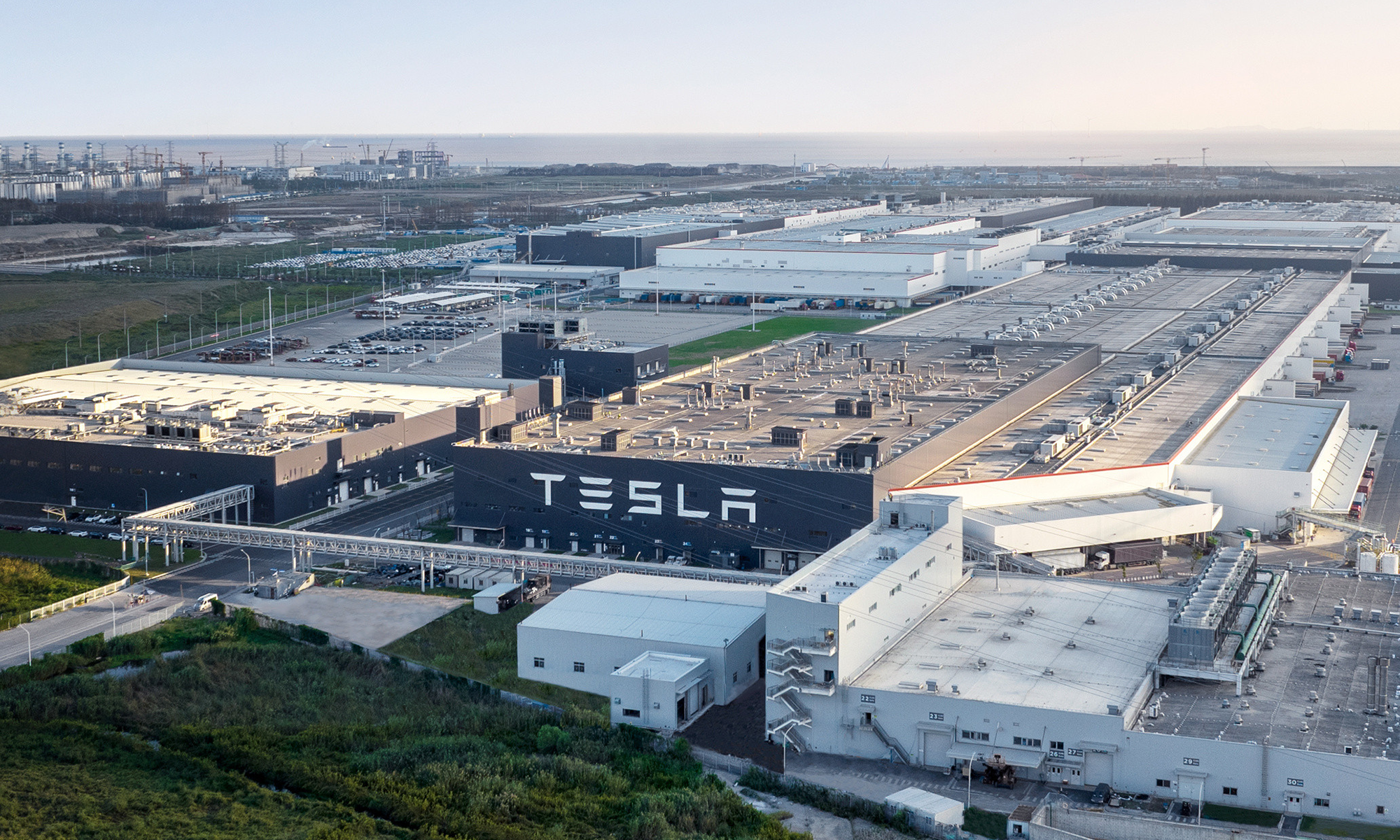
Tesla’s scale might be its biggest competitive advantage. Tesla builds massive factories (gigafactories) where it produces high volumes of electric motors, power trains, batteries, and EVs. The company builds enormous factories because large-scale production helps drive down costs. As a result, it has much higher margins than its competitors, enabling it to reinvest in the business while also being very competitive on pricing. The company’s scale enabled it to better withstand the hit from losing the federal EV tax credit to gain market share over its competitors at the end of 2025.
The company’s software and technology expertise are also huge competitive advantages. It has also invested heavily in software and AI to develop self-driving technology, positioning it to become a leader in robotaxis, which it believes will eventually disrupt the entire auto industry. Further, while many of Tesla’s competitors use robots to produce cars, it's rapidly becoming a leading robotics company. Tesla has developed several robots, including a humanoid robot (Optimus). CEO Elon Musk believes 80% of its future market value will come from robots, which will eventually turn it into a $25 trillion company.
The future of Tesla's market share
Tesla held a commanding 59% share of the U.S. EV market in early 2026. That was up from 41% in the previous quarter, as it reclaimed some lost market share following the end of the federal EV incentives, which had a greater impact on rivals' sales. While some of its competitors are taking their foot off the accelerator as they readjust, they aren’t slamming on the brakes. My Tesla prediction is that it will start losing market share again as rivals recalibrate and then reaccelerate.