

Loading paragraph...
Loading paragraph...
U.S. semiconductor trade with China
Loading paragraph...
Loading paragraph...
Loading paragraph...
Loading company_card...
Loading paragraph...
Semiconductor production capacity by country and segment
Loading paragraph...
Loading paragraph...
Loading accordion...
Loading accordion...
About the Author

Jack Caporal is the Research Director for The Motley Fool and Motley Fool Money. Jack leads efforts to identify and analyze trends shaping investing and personal financial decisions across the United States. His research has appeared in thousands of media outlets including Harvard Business Review, The New York Times, Bloomberg, and CNBC, and has been cited in congressional testimony. He previously covered business and economic trends as a reporter and policy analyst in Washington, D.C. He serves as Chair of the Trade Policy Committee at the World Trade Center in Denver, Colorado. He holds a B.A. degree in International Relations with a concentration in International Economics from Michigan State University.
Jack Caporal has positions in Advanced Micro Devices and Apple. The Motley Fool has positions in and recommends Advanced Micro Devices, Apple, GlobalFoundries, Intel, Nvidia, and Taiwan Semiconductor Manufacturing. The Motley Fool has a disclosure policy.
Read Next

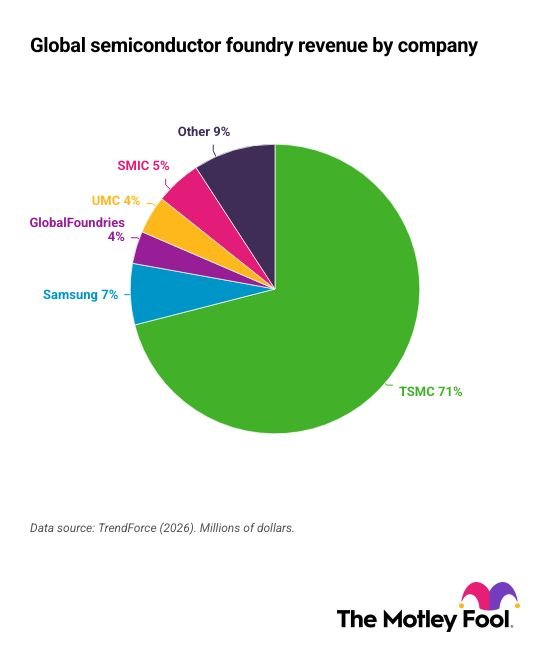
•By Jack Caporal
Ranked: Semiconductor Manufacturers by Global Foundry Revenue
•By Jack Caporal
The Average Social Security Check


•By Lyle Daly
How Many People Use AI and For What Jobs?


