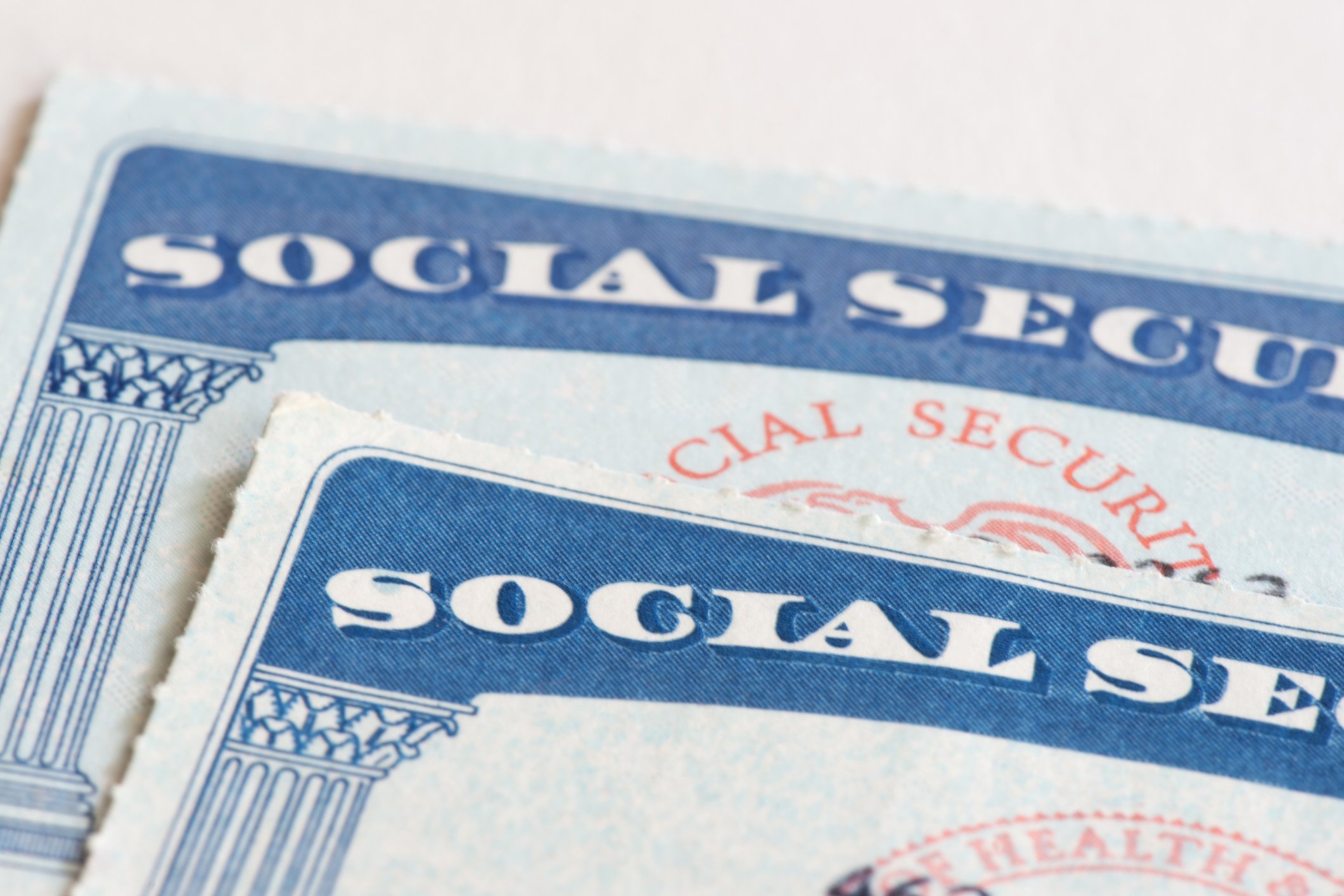
Social Security has a lot of complicated rules, and it is important for both current and future retirees to understand them. This is especially true when it comes to rules that can affect the amount of benefits seniors can take home and spend.
Unfortunately, one Social Security rule could end up being a big surprise -- and it could cost seniors thousands of dollars. Current and future retirees need to be aware of and prepare for it, so they can take steps to protect their benefits or adjust their budgets if their benefits take a hit.

Image source: Getty Images.
This Social Security rule could come as a surprise to many seniors
The Social Security rule that could come as a big surprise to current and future retirees relates to taxes on benefits.
Future retirees may assume that Social Security payments are not taxed, because these are earned benefits that come from the government. Many other kinds of government benefits aren't subject to income tax, so it's not a stretch to assume that Social Security won't be.
That's especially true since you're paying into the system throughout your career. You've already paid Social Security tax on your wages, so the idea that you'll be taxed again when you actually receive the benefits may not factor into your retirement planning.
Unfortunately, rules about taxes on Social Security benefits could even come as a surprise to current retirees. That's because the Trump administration touted its success in eliminating tax on Social Security benefits when, in fact, the tax rules didn't actually change at all.
Instead, the rules for taxation on Social Security remained the same, and a new tax deduction for older Americans was introduced that is not directly linked to Social Security at all. It's understandable that retirees might be confused about this, though, given some of the statements made about the "One Big Beautiful Bill Act" passed by the administration.
Sadly, if current and future retirees don't understand that they will be taxed, this could mean they end up bringing home thousands of dollars less in benefits than they anticipated once the IRS takes its cut.
What are the rules for taxing Social Security benefits?
Social Security's tax rules are also surprising for another reason beyond the simple fact that many seniors may not expect to be taxed on benefits. The other surprise comes in how low the thresholds are for when benefits become taxable.
Specifically, once your provisional income hits $25,000 for single tax filers or $32,000 for married joint tax filers, up to 50% of benefits are taxed. If your provisional income reaches $34,000 as a single taxpayer or $44,000 as a married joint filer, you'll be taxed on up to 85% of benefits.
Your provisional income is half of all your Social Security, as well as all your taxable income and some of your non-taxable income. So, these thresholds are very low, even after taking into account that not every dollar of your income counts. This is especially true since Social Security benefits were not taxed until reforms in the 1980s, and when the changes were made, only a small percentage of high earners were hit with an IRS bill.
The issue, however, is that the thresholds were not indexed to inflation. They have not increased since they were put into place decades ago. As a result, a growing number of retirees end up owing the IRS taxes on a portion of their benefits each year.
Since many other Social Security rules do take inflation into account, including the periodic cost-of-living adjustments retirees get, it may not seem to make a lot of sense that the tax thresholds don't increase in this one particular case. Unfortunately, this is the reality of the Social Security rules.
Future retirees can prepare and plan to try to minimize taxes by investing in Roth accounts, as their non-taxable distributions don't count in determining if they've hit the threshold for taxation of Social Security.
Current retirees can also try to work with a tax professional to minimize the taxes on their benefits, although avoiding them altogether may be difficult or impossible if you've put your funds into more traditional retirement plans and are limited in how much you can change your provisional income.
Still, everyone needs to know the rules for taxes on Social Security so they can make their financial decisions accordingly, as this tax surprise could cost thousands.