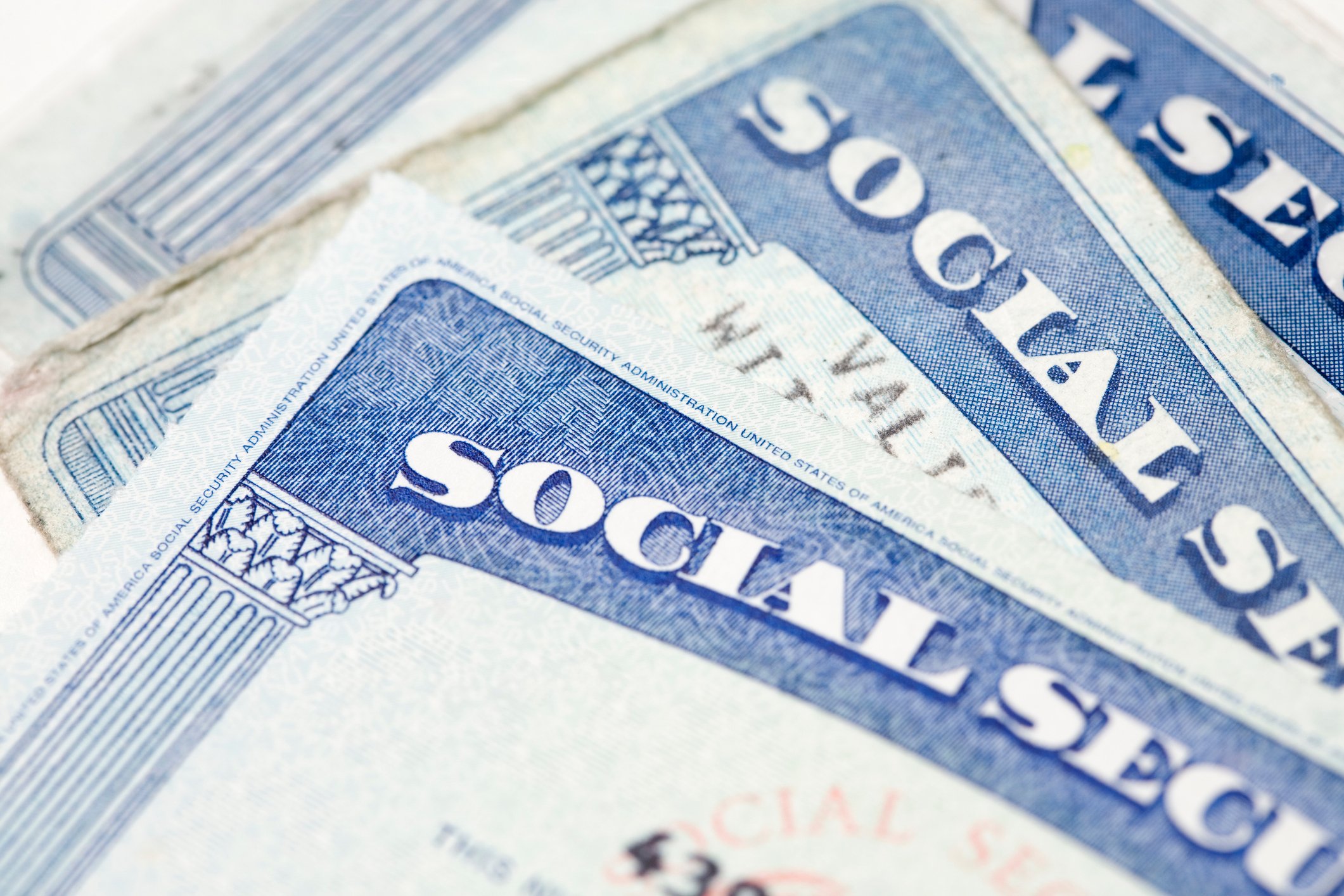
You probably know you'll get some money from Social Security in retirement, but figuring out how much isn't always straightforward. Part of it depends on factors such as your future income history, which is difficult to predict. The type of benefit you're claiming also matters.
You may qualify for a retirement benefit on your own if you've worked long enough. You might also be eligible for a spousal benefit if you're married to a qualifying worker. But marriage isn't the only requirement for spousal benefits, and divorce isn't always a dealbreaker. Here are the boxes you must check if you hope to claim benefits on your spouse's or ex's work record in retirement.

Image source: Getty Images.
You must meet the appropriate length-of-marriage requirement
The Social Security Administration has two length-of-marriage requirements for spousal benefits. The first applies to married couples. If you fall into this group, you typically must be married for a whole year before you become eligible for spousal benefits. However, if you are the parent of your spouse's child or you were eligible for Social Security or railroad benefits in the month before the month you got married, you become eligible as soon as your marriage is legal.
The other length-of-marriage requirement applies to those who hope to claim benefits based on their ex's work record. These individuals must have been married to the qualifying worker for at least 10 years before divorcing. The person hoping to claim the spousal benefit also cannot have remarried, but it doesn't matter if the qualifying worker has.
Your spouse must claim their retirement benefit
If you meet the length-of-marriage requirement and your partner or ex has worked long enough to be eligible for a Social Security retirement benefit, you will be eligible for a spousal benefit on their work record -- but that's not the same as being entitled to one. It's possible to be eligible for a spousal benefit and still be unable to claim it.
That's because for married couples, the Social Security Administration only permits you to claim a spousal benefit after your partner has begun receiving their retirement benefit. If they have not signed up yet, you must wait until they do before you can claim your spousal benefit. However, if you qualify for your own retirement benefit, you may sign up for this sooner.
Those claiming based on their ex's work record may start claiming as soon as they turn 62 if their ex is already receiving their retirement benefit. But if your ex hasn't signed up yet, you must wait until you have been divorced for at least two years. Once you've checked that box, you're entitled to claim spousal benefits even if your ex has not yet applied for Social Security.
Your spousal benefit must be larger than your retirement benefit
Another reason you might not receive a spousal benefit, even if you're eligible for one, is if your own retirement benefit is larger. The Social Security Administration doesn't allow you to get the total of both benefits simultaneously. It only gives you the larger of the two.
Which of yours is larger depends on your earnings history and your spouse's. Your retirement benefit depends on your earnings history over your 35 highest-earning years, adjusted for inflation, and your age at the time of claiming. You must apply at your full retirement age (FRA) to avoid early claiming benefit reductions of up to 30%. You can also delay benefits as late as age 70 to take advantage of delayed retirement credits that boost your checks.
Your spousal benefit is worth up to one-half of the benefit your spouse or ex qualifies for at their FRA. You'll get this amount if you sign up at your FRA. You can claim earlier, but you'll face early claiming benefit reductions of up to 35%. There are no delayed retirement credits for spousal benefits.
When both partners have earned similar amounts throughout their careers, it's likely that your own retirement benefit will be larger than your spousal benefit. But if your spouse or ex has earned significantly more than you, there's a chance that your spousal benefit might be higher than your own retirement benefit.
Fortunately, you usually don't have to figure out which will give you more on your own. When you apply for Social Security, the Social Security Administration will automatically verify whether a spousal benefit would give you more than your retirement benefit if your partner is already receiving checks.
If you apply before your spouse, you may need to contact the Social Security Administration when your partner signs up to ask whether a switch to a spousal benefit would give you more money. If so, it will make the change for you.