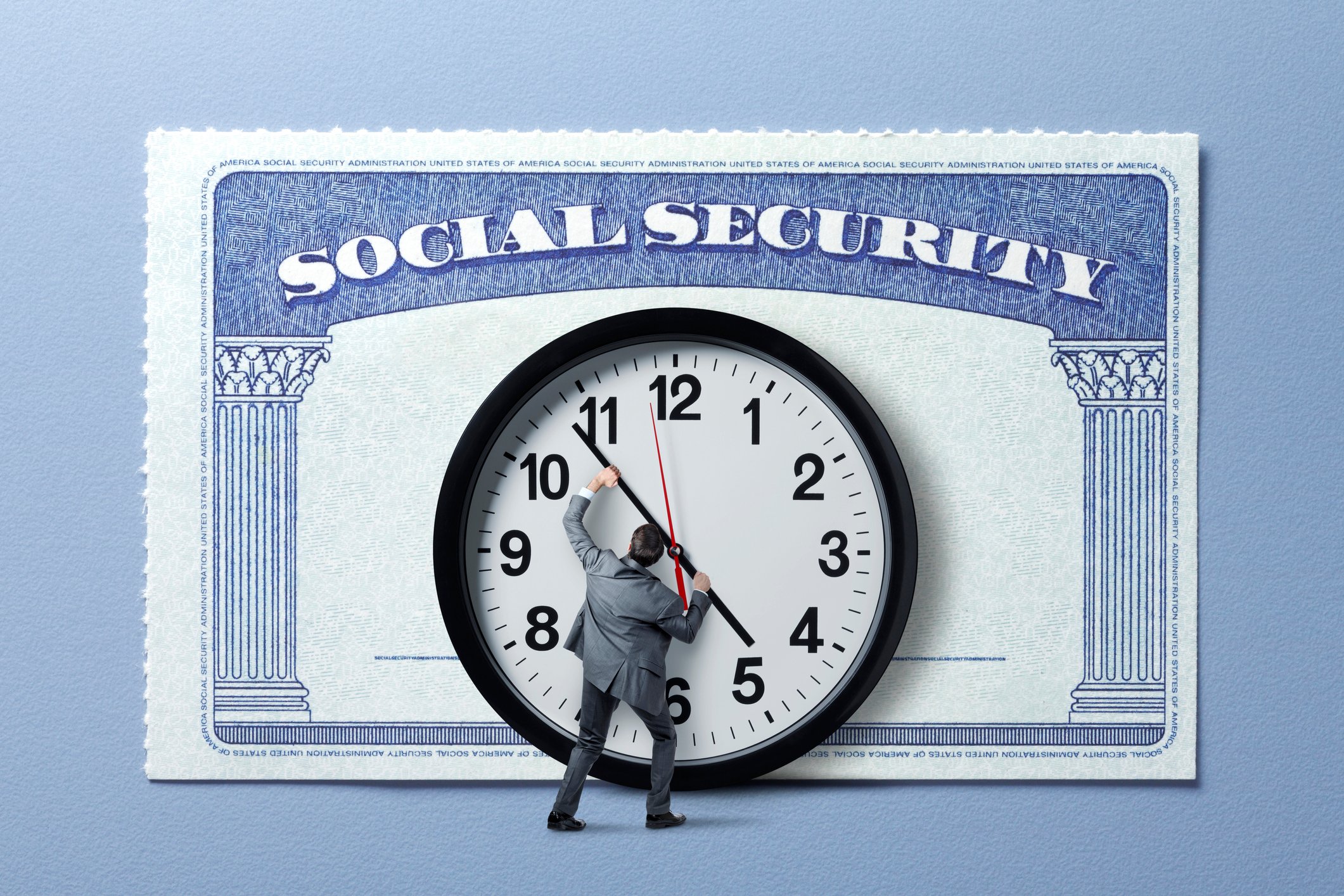
You have more than six months to take your 2026 required minimum distributions (RMDs) if you're 73 or older, so you may not see a reason to worry about them now. There's nothing legally wrong with putting them off until December, but it might not always be your best financial move.
If you're worried about potential market volatility in the latter half of 2026, now might be a good time to take your RMDs. If your portfolio dips later, you'll be glad you did.

Image source: Getty Images.
How RMDs work
You must take 2026 RMDs from all tax-deferred retirement accounts, except your current employer's 401(k), if you're still working and own less than 5% of the company. The amount you must withdraw depends on your age and your account balance as of Dec. 31, 2025.
You take the account balance and divide it by the applicable denominator next to your age in the IRS' Uniform Lifetime Table. The result is your RMD. For example, if you have $500,000 in a traditional IRA and you'll be 75 by the end of the year, your RMD would be $500,000 divided by the 24.6 applicable denominator for 75-year-olds, or about $20,325.
If you've already withdrawn some money from the account this year, subtract these withdrawals to figure out how much you still have to take out to satisfy your RMD. Remember, failure to take your RMD results in a 25% penalty on the amount you should have withdrawn.
Why you may want to take your 2026 RMD now
Your 2026 RMD amount is fixed by your age and your account balance, as described above, but the value of your portfolio isn't. If your investments decrease in value, you'll have to sell more of them to fulfill your RMD. That leaves less money in your accounts to cover future costs.
That's why taking your RMD early can be a smarter play if you're worried about market volatility. Taking a withdrawal while your investments are doing well lets more of your nest egg remain invested until you actually need it.
You can also spread your RMD out over several months. For example, if you had to take the $20,325 RMD from our example above, you might decide to spread it out over six months, withdrawing roughly $3,388 per month.
This strategy helps you hedge your bets. If your portfolio is down during the last few months of the year, you won't have to withdraw as much to fulfill your RMD. If your portfolio is doing well, taking your RMD a little at a time lets you hold some of your investments for a bit longer, so the money can continue working for you.