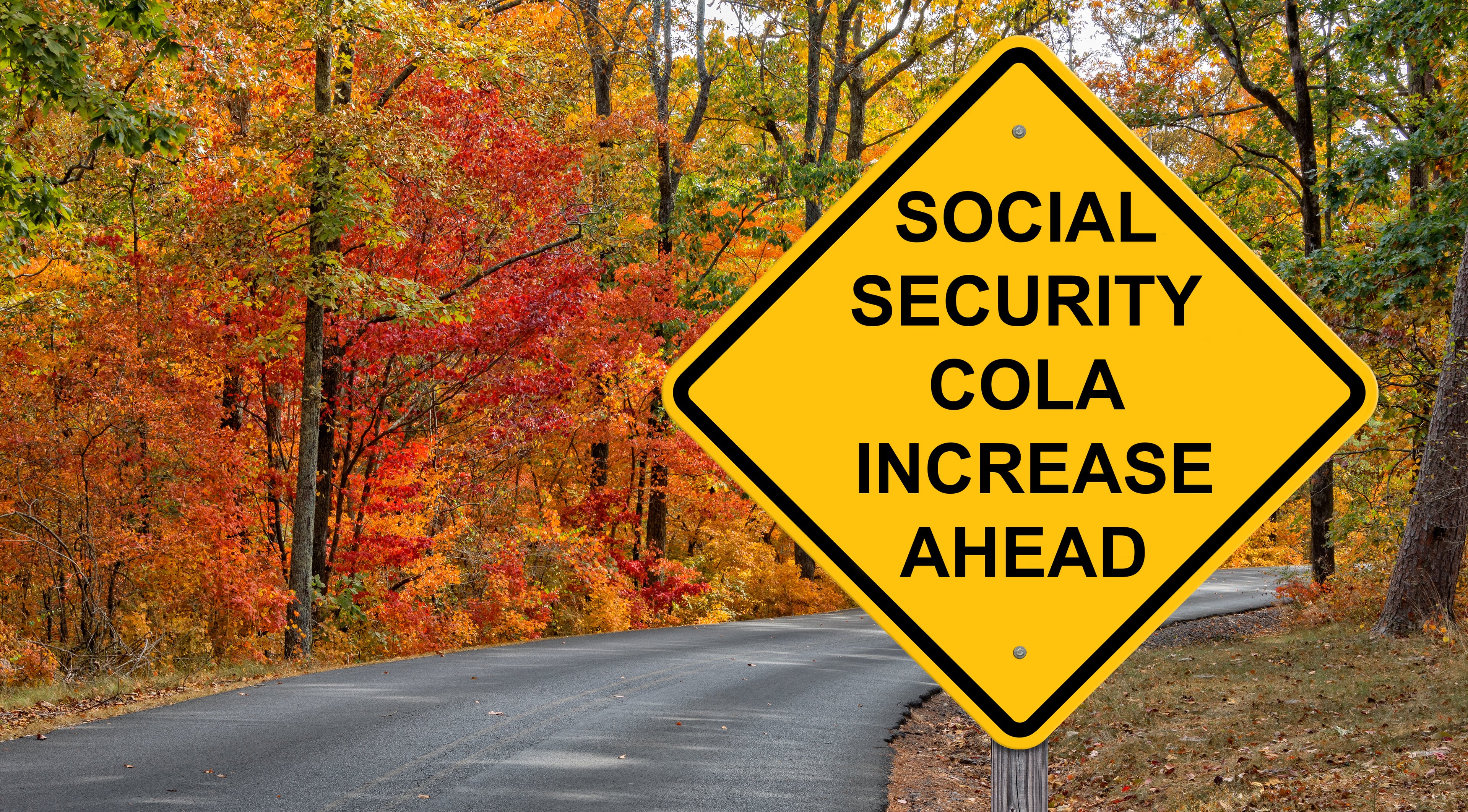
No one can say for certain how large the 2027 Social Security cost-of-living adjustment (COLA) will be, but it's a good bet it's going to be around 3.9%. This is according to the Senior Citizens League (TSCL), which also notes that seniors are feeling the pinch of high inflation and that a 3.9% increase is unlikely to move the needle much.
Image source: Getty Images.
What would that mean for your monthly benefit?
How much more money you can expect each month from a 3.9% COLA increase depends on how much you're currently receiving. For example:
|
Your Current Benefit |
Your Benefit After a 3.9% COLA Increase |
|---|---|
|
$1,000 |
$1,039.00 |
|
$1,200 |
$1,246.80 |
|
$1,500 |
$1,558.50 |
|
$1,700 |
$1,766.30 |
|
$2,000 |
$2,078.00 |
|
$2,300 |
$2,389.70 |
|
$2,500 |
$2,597.50 |
|
$2,700 |
$2,805.30 |
|
$3,000 |
$3,117.00 |
|
$3,200 |
$3,324.80 |
|
$3,500 |
$3,636.50 |
|
$3,700 |
$3,844.30 |
|
$4,000 |
$4,156.00 |
|
$4,300 |
$4,467.70 |
|
$4,500 |
$4,675.50 |
|
$4,700 |
$4,883.30 |
|
$5,000 |
$5,195 |
Calculations by author.
Given that the cost of Medicare Part B premiums tends to increase annually, you'd need to subtract the new, higher premium (the current standard premium is $202.90) as well as federal -- and possibly state -- taxes if you owe them.
COLAs are calculated by averaging third-quarter inflation as measured by the Consumer Price Index for Urban Wage Earners and Clerical Workers (CPI-W). In other words, how large (or small) a raise senior citizens receive depends on the inflation rate throughout the short third-quarter window of July, August, and September, and it is based on how much inflation those still working faced during those months.
Advocacy groups, like TSCL, say that the average senior misses out on thousands of dollars in Social Security payments because the government stubbornly sticks with a Consumer Price Index (CPI), a measure that does not reflect how retirees spend. Instead, these groups say the Consumer Price Index for the Elderly (CPI-E) should be used to measure the impact of inflation on seniors, as it better reflects their real-life spending.
TSCL research shows that retirees increasingly live under financial stress, and to get by, 57.6% of the country's 55.8 million seniors have forgone at least one healthcare product or service. The top medical services that seniors are trimming from their budgets are dental care (42.3%), vision care (28.8%), and hearing care (19.6%).
While any COLA increase is far superior to none, it's best to understand that 2027's probably won't stretch far.