While the "trickle-down theory" is frequently associated with President Ronald Reagan's policies, it dates back to the 1920s, when humorist Will Rogers coined the term. The trickle-down theory involves giving tax breaks and other perks to the richest Americans in the belief that they won't hoard the money, but rather, use it to build new businesses and spur economic growth.
If there's any truth to the trickle-down theory, it's illustrated by the impact those 63 million-plus Americans receiving Social Security retirement or survivors benefits have on their local economies. Here's a look at how Social Security supports local economies and what we can expect if the Social Security trust fund is depleted, leading to a 25% cut in benefits for retirees and their dependents.
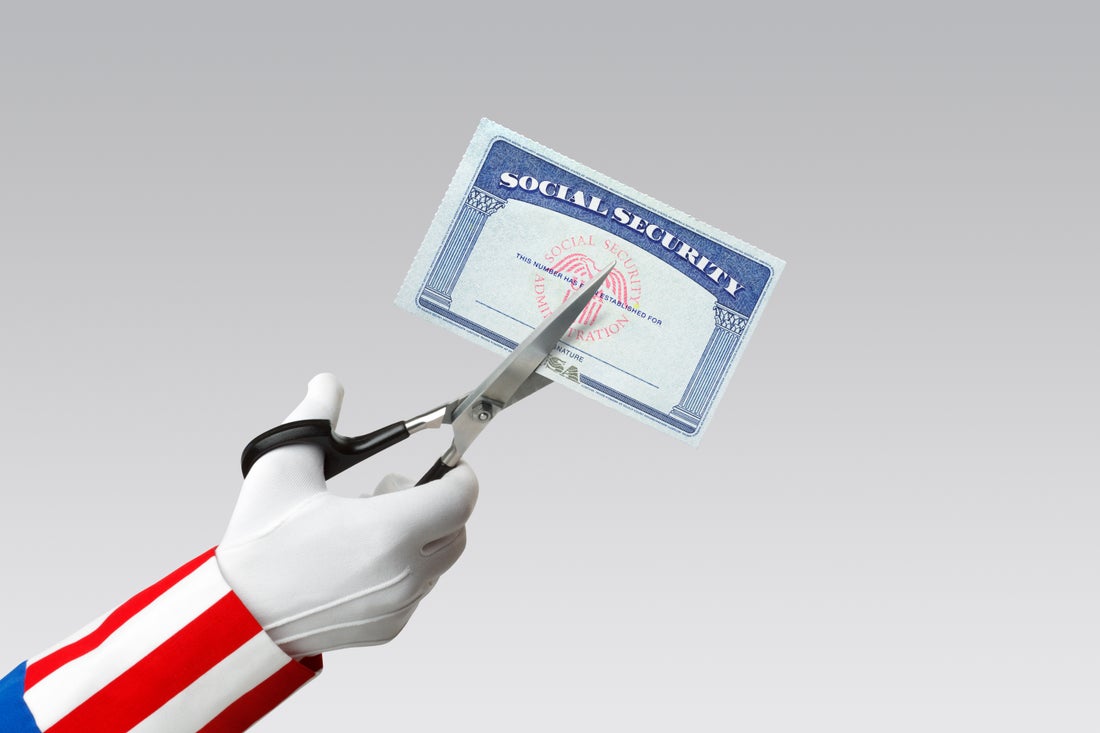
Image source: Getty Images.
A financial tsunami
With roughly one in five Americans receiving Social Security benefits, their monthly payments have an outsize impact on the U.S. economy.
According to Dan Doonan, executive director of the National Institute on Retirement Security (NIRS), Social Security benefits not only provide financial security for millions but also generate tax revenue, sustain jobs, and help keep local economies strong. Doonan suggests that policymakers debating the long-term solvency of Social Security should remember that benefit cuts won't just harm retirees.
After all, every dollar of Social Security benefits spent in the U.S. supports $2 of economic activity.
Based on the way Social Security dollars are spent, here's what you can expect to happen if benefits are cut.
1. Drop in profits
A 25% cut means less to spend, which would quickly translate to lower sales for local retailers, including grocery stores, clothing stores, pharmacies, and gas stations. Service businesses such as restaurants, barbershops, auto repair shops, and home maintenance companies would also be hit.
2. Reduced demand for professional services
Due to Social Security recipients' cutbacks, there would also be reduced demand for local professional services, including healthcare practices, dental offices, optometric offices, legal firms, and financial services.
3. Financial pain for businesses and employees
Less income from seniors means less income for suppliers and employees, who would then be forced to cut back on their own spending. As local spending falls, here's what typically happens:
- Businesses respond by freezing hiring, cutting employee hours, or laying off staff.
- Low- and moderate-wage jobs, including retail, food service, personal services, and hospitality, would be the first to feel the impact; at the same time, many Social Security recipients feel forced to reenter the workforce.
- Closure of small businesses unable to cover their fixed expenses.
4. Local governments under added pressure
As Social Security recipients cut back on spending and area employment weakens, sales tax falls, property values may stagnate, and local governments have far less money coming in to cover the cost of public safety, public transit, senior programs, and recreational facilities. Building and road maintenance is deferred, and local communities are forced to raise local taxes or fees to try to stop the bleeding.
At the same time, demand will rise for emergency medical services, public hospitals, subsidized healthcare, homeless shelters, and social service programs.
In short, few would come out unscathed by cuts to Social Security.