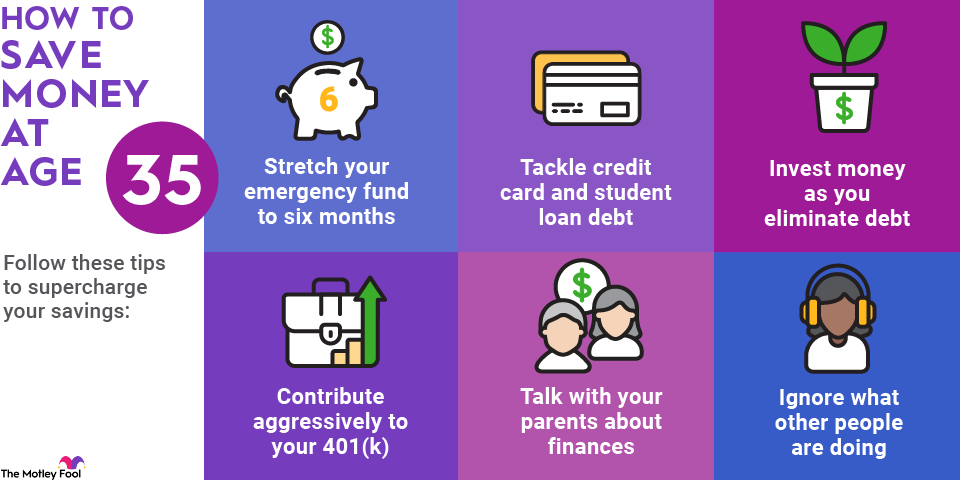
Tackle credit card and student loan debt
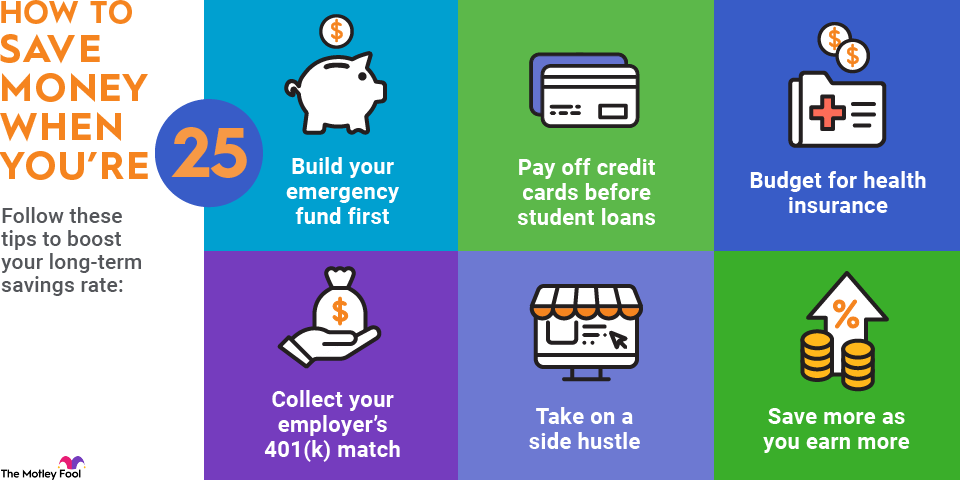
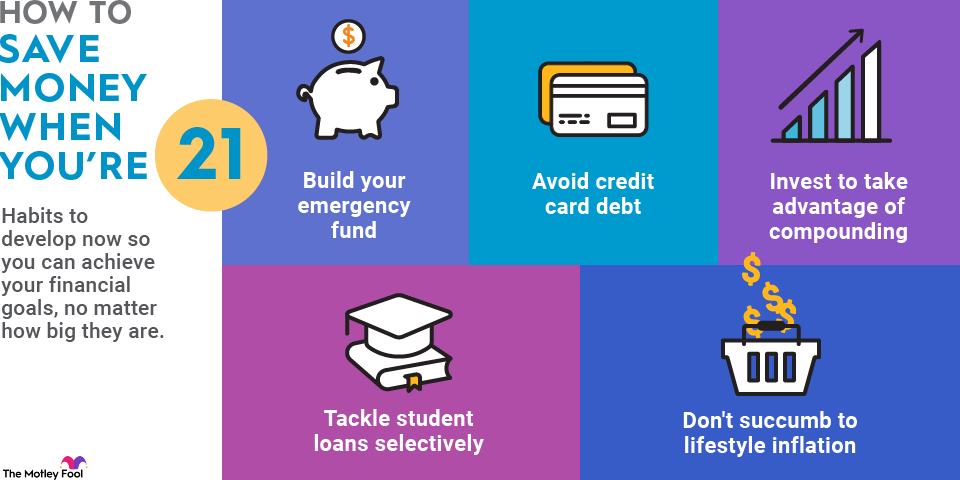
If you still have student loans or credit cards, make getting rid of them a top priority. Start with your credit cards because they typically have the highest interest rates of any debt. After that, pay down your student loans, focusing first on any private loans since they usually have higher interest rates.
Invest money as you eliminate debt
As you pay off debt, it's essential to spend money that was going toward debt payments in a way that most benefits you. Once you've rid yourself of high-interest debt, reallocate the amount you were spending on debt toward investing for your retirement. If you have multiple debts, try the "debt avalanche" method, where you focus on repaying the highest-interest debt first while paying minimum monthly amounts for the other debts. Once you repay that first debt, you can start focusing on the debt with the next-highest interest rate.
It's essential not to delay or deprioritize investing at age 35, particularly if you started investing late. You may have missed out on some powerful years of compounding interest, but your money could still grow for 30 or more years.
Contribute aggressively to your 401(k)
You'll notice a common theme here: What was good enough in your 20s often doesn't suffice when you're in your mid-30s and need to accelerate your saving and retirement investing.
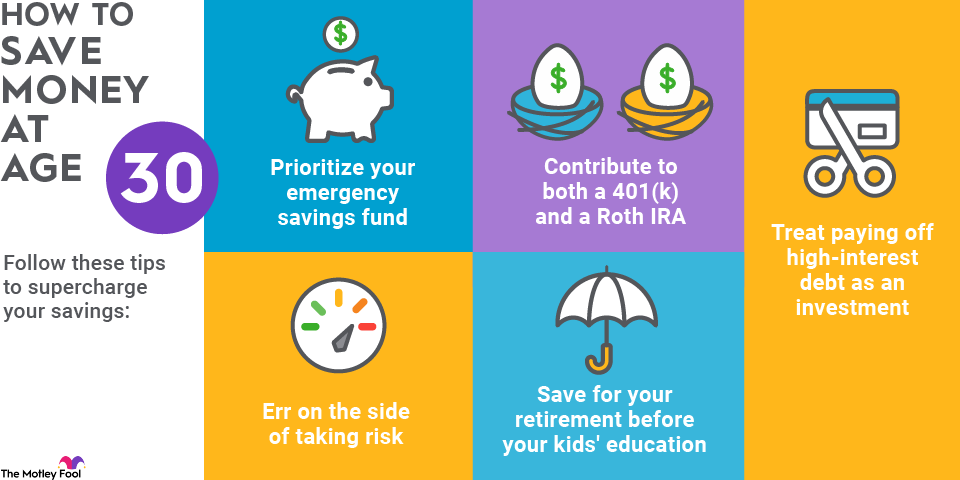
Typically, saving 15% to 20% of your pre-tax income is a good goal, although you may need to save a higher percentage if you're 35 and just getting started. Contributing enough money to your 401(k) plan to get your full company 401(k) match is a no-brainer, but this amount alone probably won't get you to 15 to 20% of your salary.
After you've received your employer's full match, aim to max out an individual retirement account such as a Roth IRA. If you have extra money to invest after that, you can add more to your 401(k). If you don't have a traditional salaried job, then check out your options for self-employed retirement plans.
Ignore what other people are doing
In your mid-30s, you'll often see a lot of your peers upgrading. Their houses get bigger and their cars and vacations get fancier. Social media often presents a misleading picture.
Focus on your own goals, even if that means living on the budget of a 20-something. Living a lifestyle you can afford, instead of one that's Insta-worthy, is the single best thing you can do to build meaningful wealth.