Your options at a glance
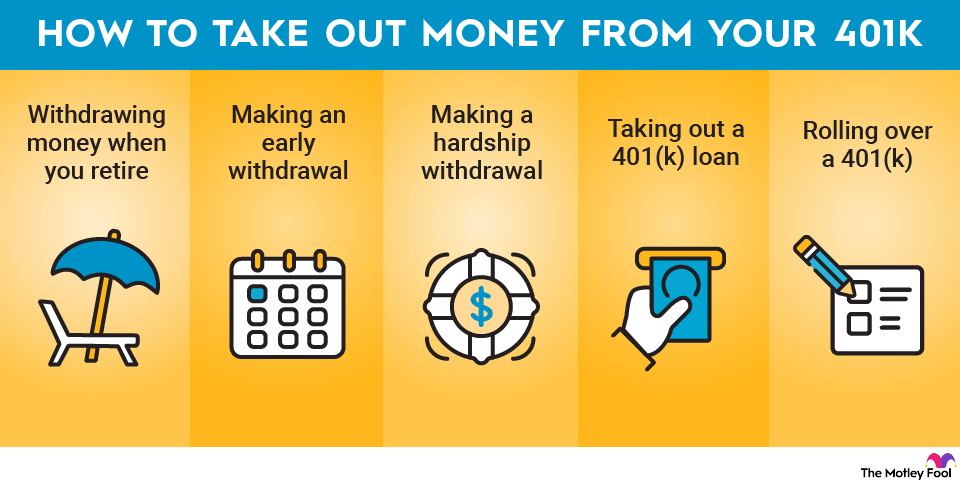
Here's a quick comparison of every way to access your 401(k) money, and when each makes sense.
Invest better with The Motley Fool. Get stock recommendations, portfolio guidance, and more from The Motley Fool's premium services.
401(k)s are incentivized plans to help Americans save for retirement. The government provides tax breaks to encourage you to contribute, but also enforces certain rules to discourage you from taking distributions before retirement.
Below, we cover all the approved ways you can take money out of a 401(k). The right option depends on your situation, your age, and how much the move will cost you. This guide covers each approach at a glance.
Option | Best
for | Penalty
risk |
|---|---|---|
Standard withdrawal | Retirees age 59½+ | None if age 59½+ |
Early withdrawal | Financial emergencies (last resort) | 10% plus income taxes |
Hardship withdrawal | Immediate, heavy financial need | Possible 10% penalty |
401(k) loan | Short-term cash needs | None if repaid on time |
Rollover | Leaving a job or changing plans | None if done correctly |
Now let's look at each option a little deeper.
Once you reach age 59½, you can withdraw money out of your 401(k) freely, paying only ordinary income tax on the amount withdrawn. Take money out before that age and you'll generally owe a 10% early withdrawal penalty on top of income taxes -- though there are exceptions for hardship situations and certain life events. At age 73, withdrawals become required.

Some plans allow you to borrow against your 401(k) balance without triggering taxes or penalties, as long as you repay the loan on schedule. It's not free money -- you'll pay interest, and if you leave your job before the loan is repaid, the balance may become due immediately.
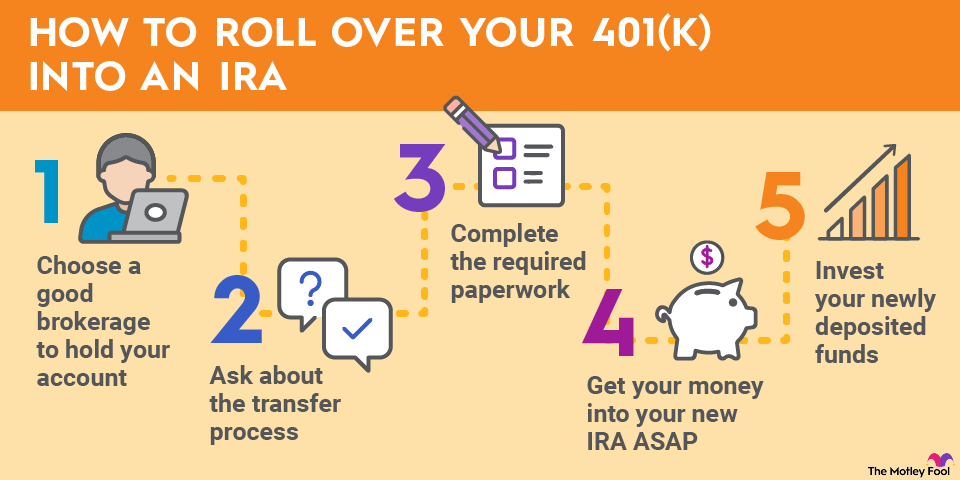
If you leave a job or your plan terminates, you can roll your 401(k) balance into an IRA or your new employer's plan without paying taxes or penalties. A direct rollover, where funds move straight from plan to plan, is generally the safest approach.
Getting laid off or changing jobs doesn't mean you have to cash out your 401(k). You typically have three options: leave the money with your old employer, roll it to your new employer's plan, or roll it to an IRA. Cashing it out is almost always the most expensive choice.
Taking money out before age 59½ without qualifying for an exception costs you 10% of the withdrawn amount as a federal penalty, plus ordinary income tax. On a $10,000 withdrawal, that could mean walking away with less than $7,000 after taxes and withdrawal penalties depending on your tax bracket. It's worth exhausting other options, like a 401(k) loan, before going this route.