A standard FIRE strategy
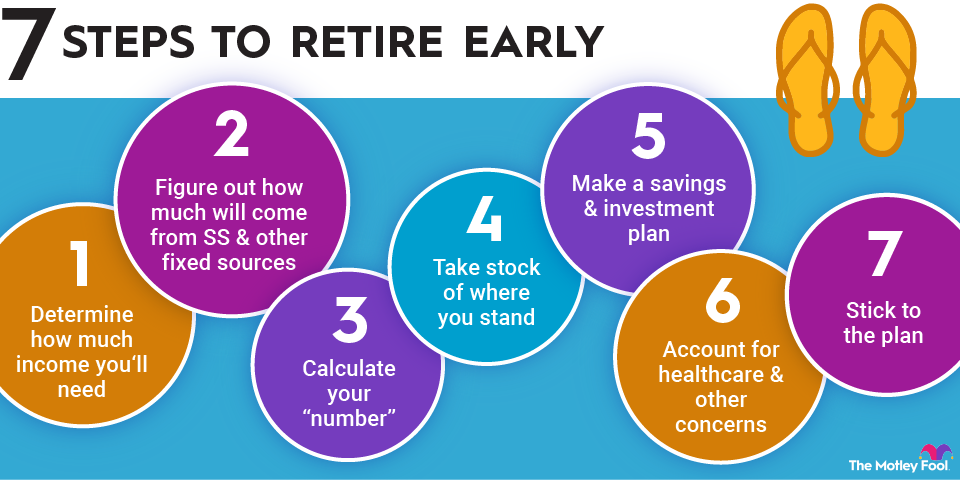
Developing a FIRE strategy starts with asking yourself some basic questions and then doing the math to figure out how much you'll need to save -- or if you need to adjust your goals.
- How much income do you need to sustain your lifestyle in early retirement?
- How soon do you want this to happen?
From there, you can determine if your goal is feasible. Let's start with the first number, which is how much you expect to spend each year in retirement.
A helpful rule of thumb is the 4% rule, where you'd withdraw 4% of your savings in your first year of retirement. In each successive year, your withdrawal amount may be increased by inflation. This works out to building a nest egg equal to about 25 times your annual spending requirements. For example, someone who needs $50,000 per year would need to have a $1.25 million portfolio.
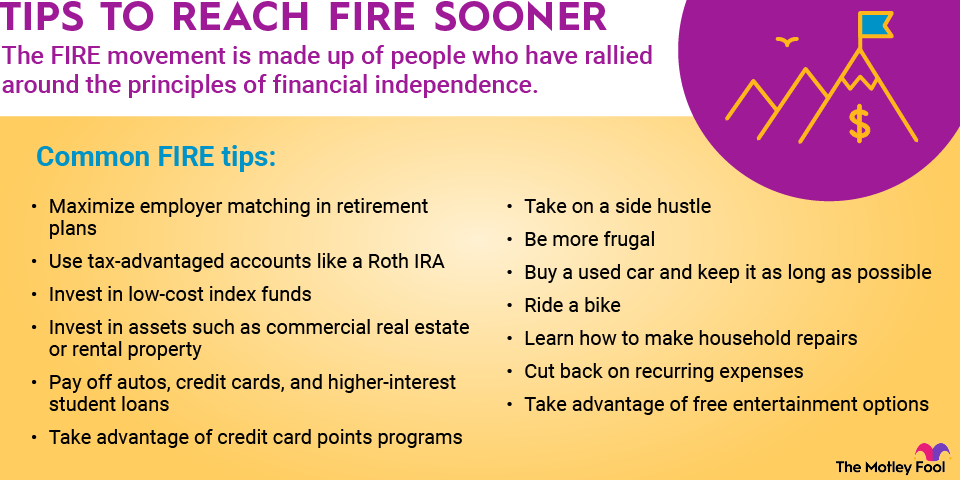
Simply sticking your money in a savings account is unlikely to get you to your FIRE number. However, there are ways to boost how much you save and to maximize how much your savings grow so you're not doing all the hard work on your own. And remember, FIRE is far from an all-or-nothing proposition. Even reaching 50% of your goal is a tremendous accomplishment and will earn you a significant amount of financial flexibility.
Saving a lot of money is much harder than growing wealth by investing a portion of that savings over the long term. And, perhaps a more salient point: Investing as much money as you can -- as soon as possible -- will pave the way toward financial freedom.
What does FIRE mean to you?
One of the unique things about the FIRE movement is that its proponents come from all walks of life and all income levels. Anyone can accelerate their trajectory toward FI by following a few simple financial planning principles.
Retiring early, on the other hand, tends to be more controversial and more self-defined. Becoming financially independent doesn't force you into quitting your job the next day, but it certainly does give you the choice.
Many people are bothered by the idea that FIRE requires too much sacrifice in the "now." Yet many FIRE practitioners say the lifestyle can be deeply gratifying. How much sacrifice FIRE requires you and your family to make really depends on your goals, your disposable income, and what you're prepared to give up or cut back on to get your savings rate as high as possible.
It's also possible you'll find over time that many things that were hard to give up are things you're better off having left behind. A simpler, less-expensive lifestyle that prioritizes experiences over things can be very meaningful, especially when it helps you achieve financial independence as early as you can.