A central processing unit (CPU) is the brain of your computer. Like a human brain, a CPU receives instructions from another part of the computer (the memory), processes the instructions, and sends the results to be executed. Keep reading for an understanding of CPUs -- their parts, their latest features, their history, and their manufacturers.
What is a CPU?
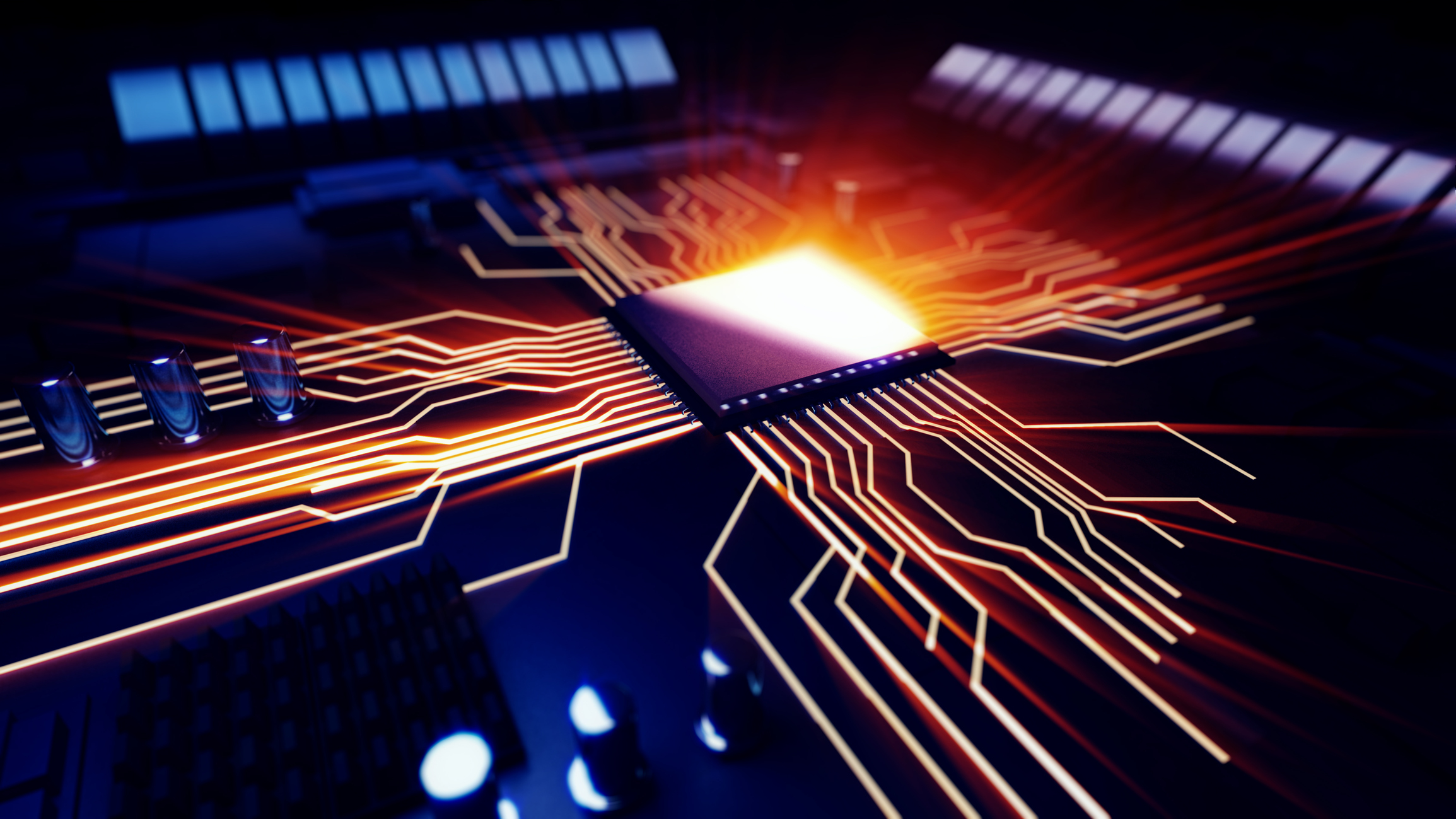
If you open your computer or laptop and examine the motherboard -- the sheet of electronics that relays signals throughout your computer -- you'll see a square chip, usually gold and generally measuring about 1 inch by 1 inch. That's the central processing unit, otherwise known as the brain of your computer.
Sounds simple, right? But a CPU isn't just a single chip that performs magic. It's a complicated circuit that includes five major components:
- Control unit. Think of the control unit as the CPU's project manager. It reads the instructions that are received from the computer’s memory, clarifies them, and assigns them to other parts of the central processing unit.
- Registers. Data that comes through the CPU is stored in registers, such as all-purpose registers holding operational data; instruction registers that store the instructions that are being processed; and a program counter than contains the address of the next instruction to be considered.
- Arithmetic logic unit (ALU). For many people, this Is the heart of the CPU. The ALU performs basic math and Boolean logic. It takes information from the registers, processes it, and provides a result.
- Memory management unit. These are often built into the CPU to handle memory-related tasks, such as governing interactions between the CPU and random access memory (RAM), and providing the cache memory located within the CPU.
- Clock. Central processing units use a clock signal to synchronize operations. The clock sends out a signal at a specific frequency, measured in hertz, that decides the number of instructions that a CPU can execute in a second. Most new CPUs have variable clock speeds that are set to maximize performance and/or power use.
CPU features
The original CPUs were vacuum tubes, built into early, room-size computers that generated a lot of heat but not a great deal of information. Since then, they've shrunk to the point where they’'e known as microprocessors. Yet even within a tiny square inch of electronic wafer, significant technological advances have been made, including:
- Multiple cores. CPUs used to have a single processing unit known as a core. Virtually all CPUs now have more than one core. Multiple cores give CPUs the ability to handle more than one set of instructions at the same time and divide a single large task into multiple smaller tasks.
- Hyperthreading. Intel (INTC +4.42%) developed a method that allows each CPU core to run multiple threads at the same time by allowing each physical core to show up as two virtual cores in the operating system. The method means hardware resources are used more efficiently.
- Advanced instruction sets. The explosion in new applications has led to specific instruction sets that are built into CPUs to handle tasks such as encryption, video decoding, graphics rendering, neural network operations, and virtual machine operation.
Related investing topics
CPU manufacturers
People who believe that developments such as the rise of artificial intelligence (AI) will continue to boost demand for central processing units have several options to consider when looking for potential CPU-related investments. The market for CPUs is expected to climb from $50.6 billion to $100.2 billion by 2030, with a compound annual growth rate (CAGR) of 10.5%.
Two companies -- Intel and Advanced Micro Devices (AMD +0.71%) – currently dominate the field, trailed by Apple (AAPL -0.50%), Qualcomm (QCOM +2.48%), ARM Holdings (ARM +5.81%), and MediaTek (TWSE:2454). Intel is clearly the heavyweight of the bunch, holding almost 64% of the market at the end of the second quarter in 2024; AMD held about one-third.
Research and Development (R&D)
Intel's lead, which it's maintained for more than two decades, is based on a commitment to research and development (R&D), a strong brand, partnerships with original equipment manufacturers (OEMs), and a diverse customer base.