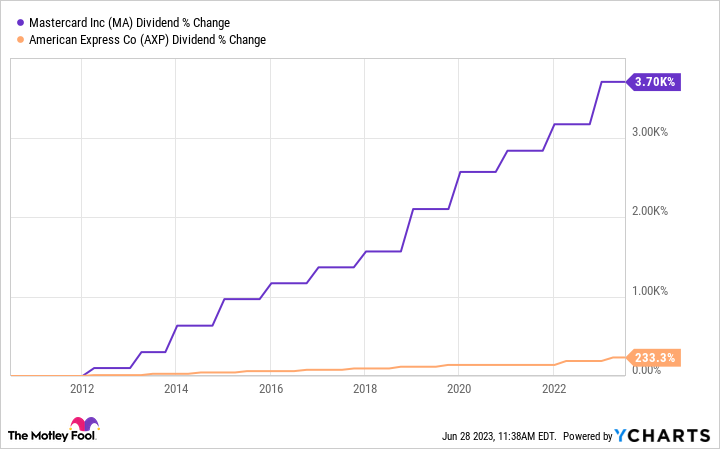
It's important to realize that a stock's dividend yield can change over time, either in response to market fluctuations or as a result of dividend increases or decreases by the issuing company. So unlike a bond, the yield on a stock is not set in stone. It's most useful as a metric to help determine if a stock trades for a good valuation, to find stocks that meet your needs for income, and to let you know if a dividend may be in trouble.
How to calculate dividend yield from quarterly or monthly dividends
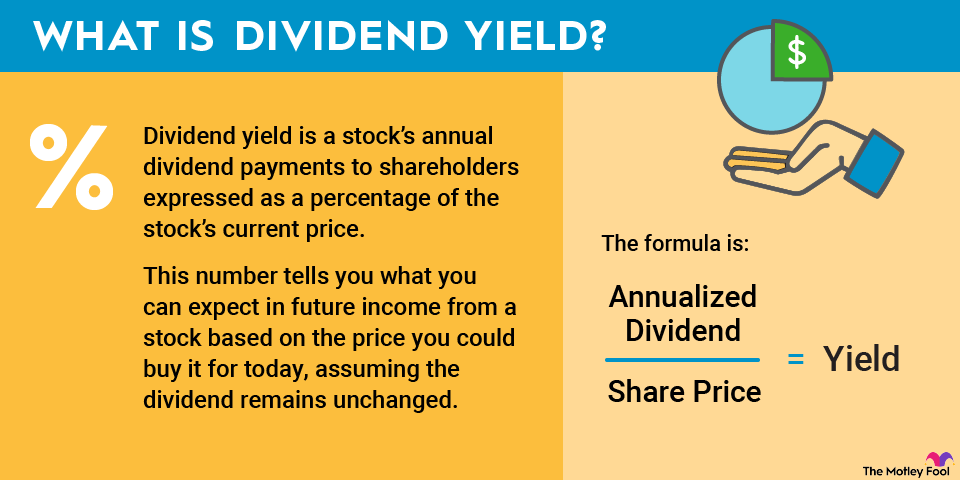
Most stocks pay quarterly dividends, some pay monthly, and a few pay semiannually or annually. To determine a stock's dividend yield, you need to annualize the dividend by multiplying the amount of a single payment by the number of payments per year -- 4 for stocks that pay out quarterly and 12 for monthly dividends.
If you're looking to collect dividends as often as possible, stocks that pay monthly may be ideal. Most (although not all) monthly payers are REITs, or real estate investment trusts. This category of companies benefits from some tax advantages that allow them -- actually, require them -- to pay above-average dividends.
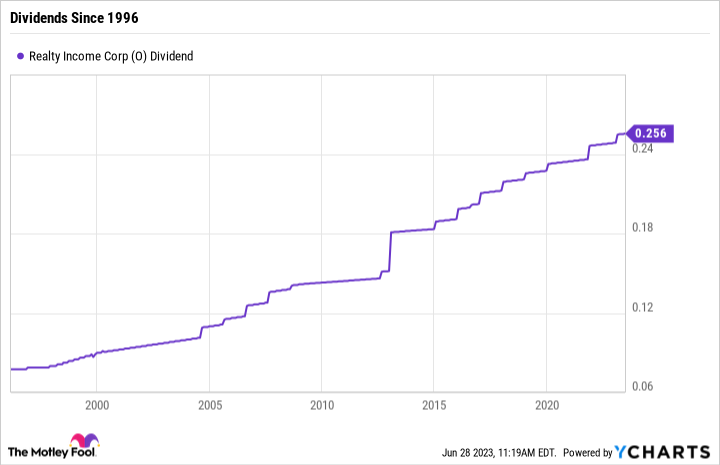
One of the most popular is Realty Income (O -1.29%), which we can use as an example. As of June 2023, the most recent dividend was $0.255 per share, and the share price was near $60. Let's use the formula in the previous section to determine the dividend yield.
A monthly dividend of $0.255 times 12 equals an annualized dividend of $3.07 (rounded). That $3.07 dividend divided by a share price of $60 equals a dividend yield of 5%.
If you're calculating a stock's yield, be careful. Don't just assume that the next dividend payment will be equal to the last. Companies occasionally issue special dividends, and dividends can also get cut. Take the time to research the company and make sure the dividend yield you think a stock will pay matches up with reality.
Realty Income's dividend, for example, has been increased three times in the past year, and it has a long history of modest, regular increases. Costco (NYSE:COST) also has a history of modest regular increases and also pays a special dividend some years -- but not in others. Make sure you don't include these special dividends in your expected yield when evaluating companies with a history of special dividends; they don't happen every year.