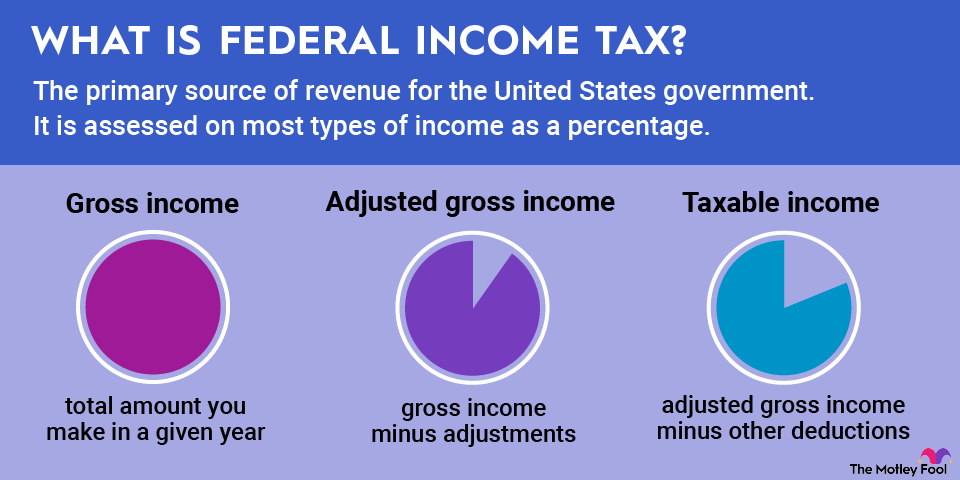
With this information in mind, it’s important to understand how this works. The federal income tax system in the U.S. uses marginal tax brackets. In other words, if you are single and your taxable income in 2023 is $100,000, you wouldn’t simply pay 24% because you fall into this tax bracket. You’d pay 10% on the first $11,000 you earned, 12% on the amount between $11,000 and $44,725, and so on. Think of your tax bracket as the rate you pay on your last dollar of income, not on your entire earnings.
It’s also important to note that certain types of income are taxed differently. Most commonly, long-term capital gains and most stock dividends have only three “brackets,” with rates of 0%, 15%, and 20%.
Federal income tax deductions and credits
There are two main categories of tax breaks that U.S. taxpayers can use to reduce their taxable income -- deductions and credits.
Tax deductions lower your taxable income. For example, if you earned $100,000 and have $25,000 in tax deductions, it would lower your taxable income to $75,000. Common tax deductions include mortgage interest, charitable contributions, and certain medical expenses. There’s also a standard deduction that taxpayers can choose to use.
On the other hand, tax credits are applied after your tax is calculated and reduce the amount you owe dollar-for-dollar. In other words, if your federal income tax for 2023 is $15,000 and you have a $3,000 tax credit, the amount you have to pay is reduced to $12,000.
Because of tax deductions and credits, it’s important to understand the concept of an effective tax rate. Your effective tax rate is the amount of federal income tax that you actually pay the government as a percentage of your total income. For example, if your gross income in 2023 is $100,000 and you pay $10,000 in federal income tax, your effective tax rate is 10%.
Related investing topics