Perhaps the most dominant theme in the stock market over the last three years is the advent of generative artificial intelligence (AI). Seemingly overnight, technology giants such as Microsoft, Alphabet, Amazon, Tesla, and Meta Platforms pivoted their respective business models to go all in on artificial intelligence.
Now that we're three years into the AI revolution, a new chapter is starting to be written. Investors are increasingly looking for the next breakthrough, and an emerging technology called quantum computing seems to be the lead candidate for AI's next megatrend.
D-Wave Quantum (QBTS 0.94%) is a pure-play quantum AI stock whose shares have rocketed by 677% over the last year -- absolutely trouncing the gains seen in Nvidia, the S&P 500, and the Nasdaq Composite.
Despite its performance, D-Wave's leadership just sent a $43 million warning to investors. Is now a good time to sell your D-Wave stock? Let's find out.

Image source: Getty Images.
What is quantum computing and how does it work?
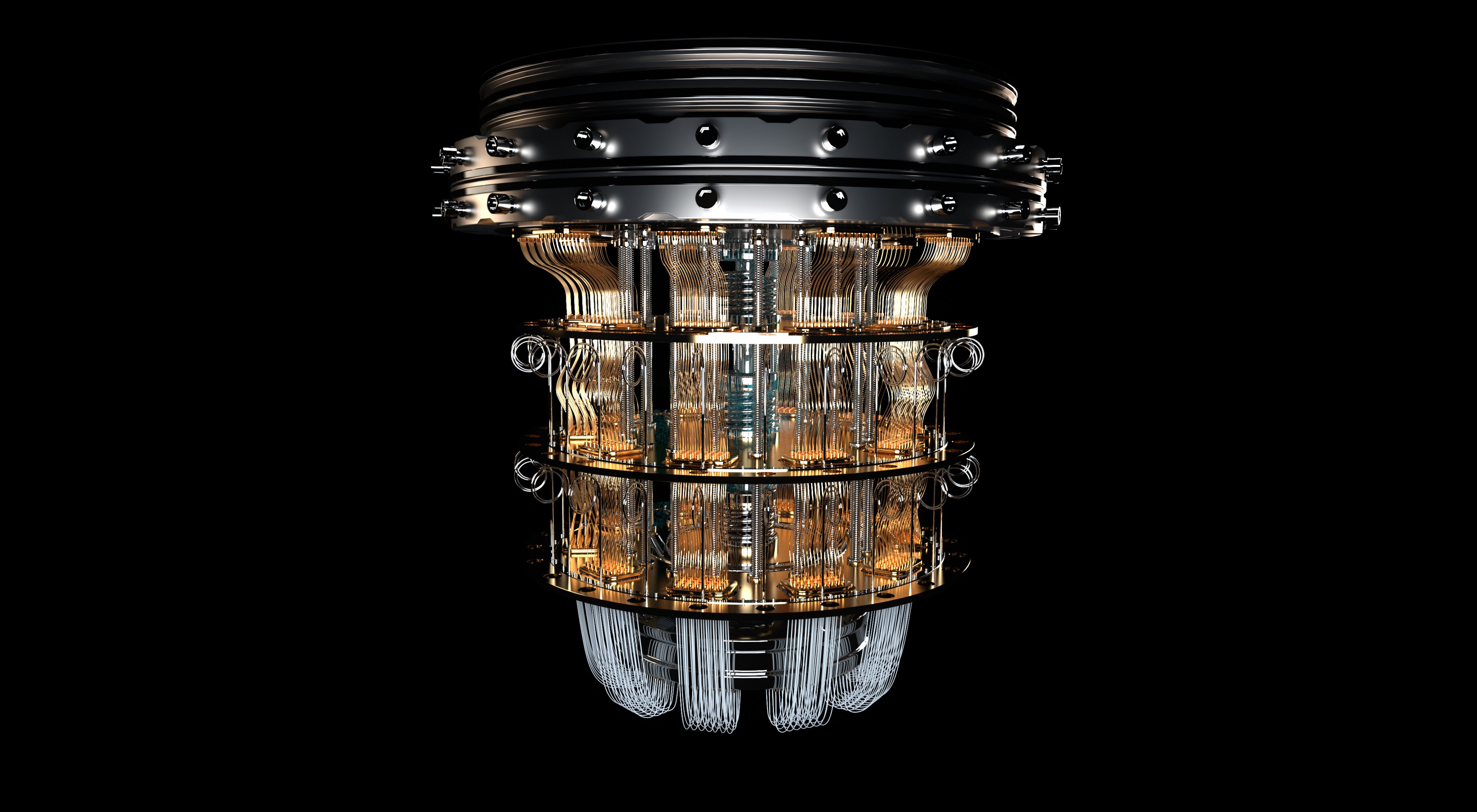
The algorithms that run classical computing are written in long lines of binary bits coded in 0's and 1's. Quantum computers also use this structure; however, the underlying codebase can process algorithms in multiple places at one time through a property known as superposition. Given these characteristics, the code in quantum computers are referred to as qubits (quantum bits).
The underlying theory is that quantum computers can process extremely sophisticated datasets at much faster speeds and higher precision compared to today's most powerful supercomputers.
Should these breakthroughs come to fruition, quantum computers could revolutionize critical services including modeling energy patterns, sophisticated financial simulations, cryptography, logistics, drug discovery, and more.
Given the variety and importance of quantum AI's use cases, it's not surprising that management consulting firm McKinsey & Company is forecasting this technology to add up to $2 trillion in economic value by 2035.
What is D-Wave's approach to quantum computing?
Given the exploratory nature of quantum computing, there are quite a few dense physics terms that are often thrown around by the executives leading these companies.

NYSE: QBTS
Key Data Points
D-Wave focuses on quantum annealing, which is a technique that computers can use to run a number of simulations at once and then gradually identify the best solution. These systems rely on superconducting qubits.
Broadly speaking, D-Wave's technology can be used in optimization-oriented applications such as analyzing traffic routes.
If the technology is revolutionary, then why are executives dumping the stock?
Given the analysis above, it would appear that investing in quantum computing stocks could potentially yield multibagger returns for your portfolio. However, despite the company's promises, D-Wave CEO Alan Baratz has been selling stock like there is no tomorrow.
Between May and November, Baratz sold over $43 million in stock. Per the Form 4 filings, his sale on Nov. 11 for roughly $23.3 million was part of a 10b5-1(c) plan. This means the sale was pre-determined. However, the rest of Baratz's stock sales over the last several months appear to be deliberate and not part of a pre-arranged agreement.
Taking this one step further, D-Wave's Chief Financial Officer (CFO), John Markovich, as well as several members of the company's board of directors, have also been selling stock over the last six months or so.
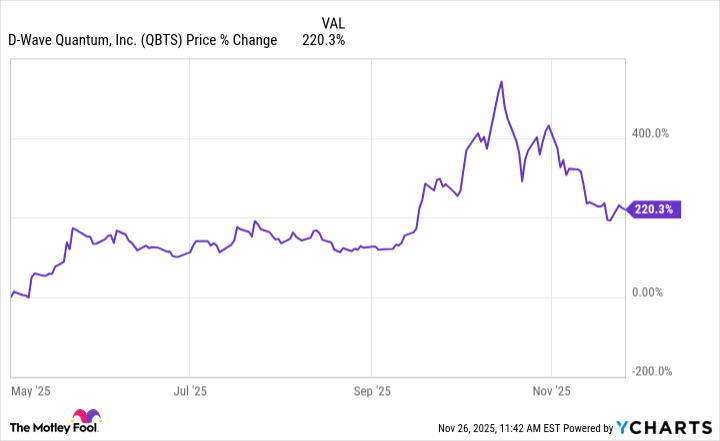
To me, it does not signal confidence when leadership uses momentum to cash out their stock at a premium. If they were so confident about D-Wave's future, then why are they collectively selling stock now when prices are soaring?
I think that retail investors are falling for the idea that quantum computing could be the next big thing, and unfortunately, many are buying the shares that these corporate executives are unloading.
All told, if I owned D-Wave stock, I would consider selling at this time. The stock still trades at a lofty valuation that it likely won't be able to sustain in the long run.
Against this backdrop, now may be a good time to consider exiting a position in D-Wave and rotating your capital into more diversified AI and quantum computing stocks within big tech.
This approach provides investors with exposure to established AI leaders and a more insulated display of quantum computing without being overly vulnerable to this speculative movement.