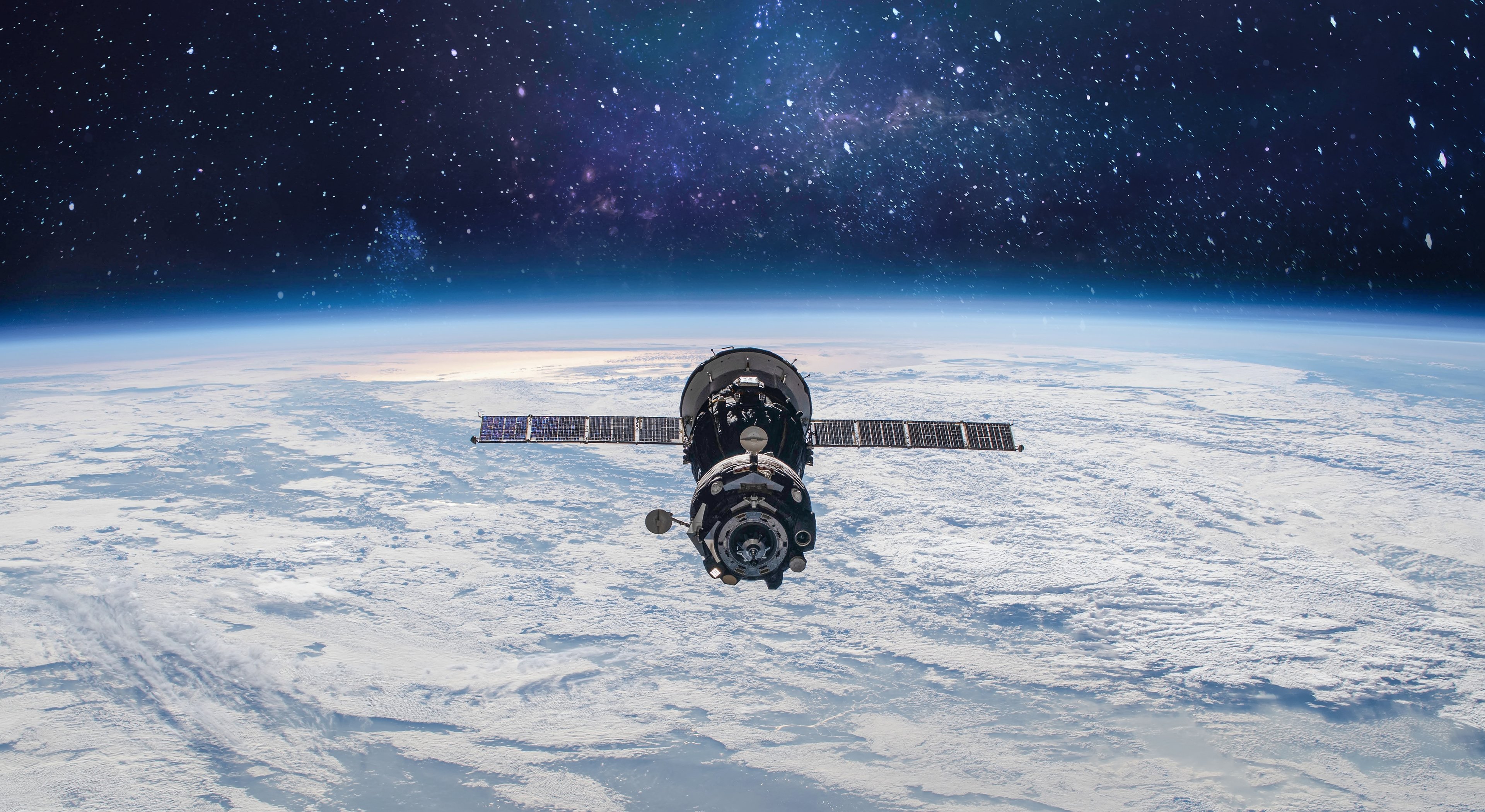
The global space economy is huge, reaching approximately $613 billion last year, with the commercial sector accounting for the majority of it. But this is just the beginning. The space economy could triple by 2035, according to McKinsey estimates, reaching $1.8 trillion.
Private investment in the industry has increased significantly over the past few decades, with companies like SpaceX leading the way. Space infrastructure is exploding. Systems such as launch vehicles, satellites, and advanced hardware are scaling rapidly as space development and exploration ramp up.
With the space industry experiencing rapid growth, a company like Rocket Lab (RKLB +1.80%) is an intriguing investment for growth-oriented investors. Here are three reasons why Rocket Lab stock is a buy today.

NASDAQ: RKLB
Key Data Points
1. The Neutron launch vehicle will open up big revenue opportunities
Rocket Lab has made a name for itself with its small-lift launch vehicle called Electron. This is the company's flagship rocket servicing the small-satellite launch market. While Rocket Lab has earned a spot as the second-most-used space launch company in the U.S., trailing only SpaceX, the company aims to better compete for larger contracts.
Its Neutron medium-lift rocket will be a huge game changer because it will enable the company to carry a significantly larger payload (up to 13,000 kg to low Earth orbit) than its Electron rocket (up to 300 kg). This larger rocket will allow it to compete with SpaceX's Falcon 9 launch vehicle and earn higher-value contracts from commercial and government customers.
The launch of Neutron has been long-awaited by investors. Rocket Lab hoped to launch by the end of this year, and there was significant skepticism about this goal. Rocket Lab slightly pushed back this goal to the first quarter of next year. Analysts at Stifel called it a "more realistic goal, prioritizing mission success over speed," while analysts at Morgan Stanley described the delay as "more modest than feared."
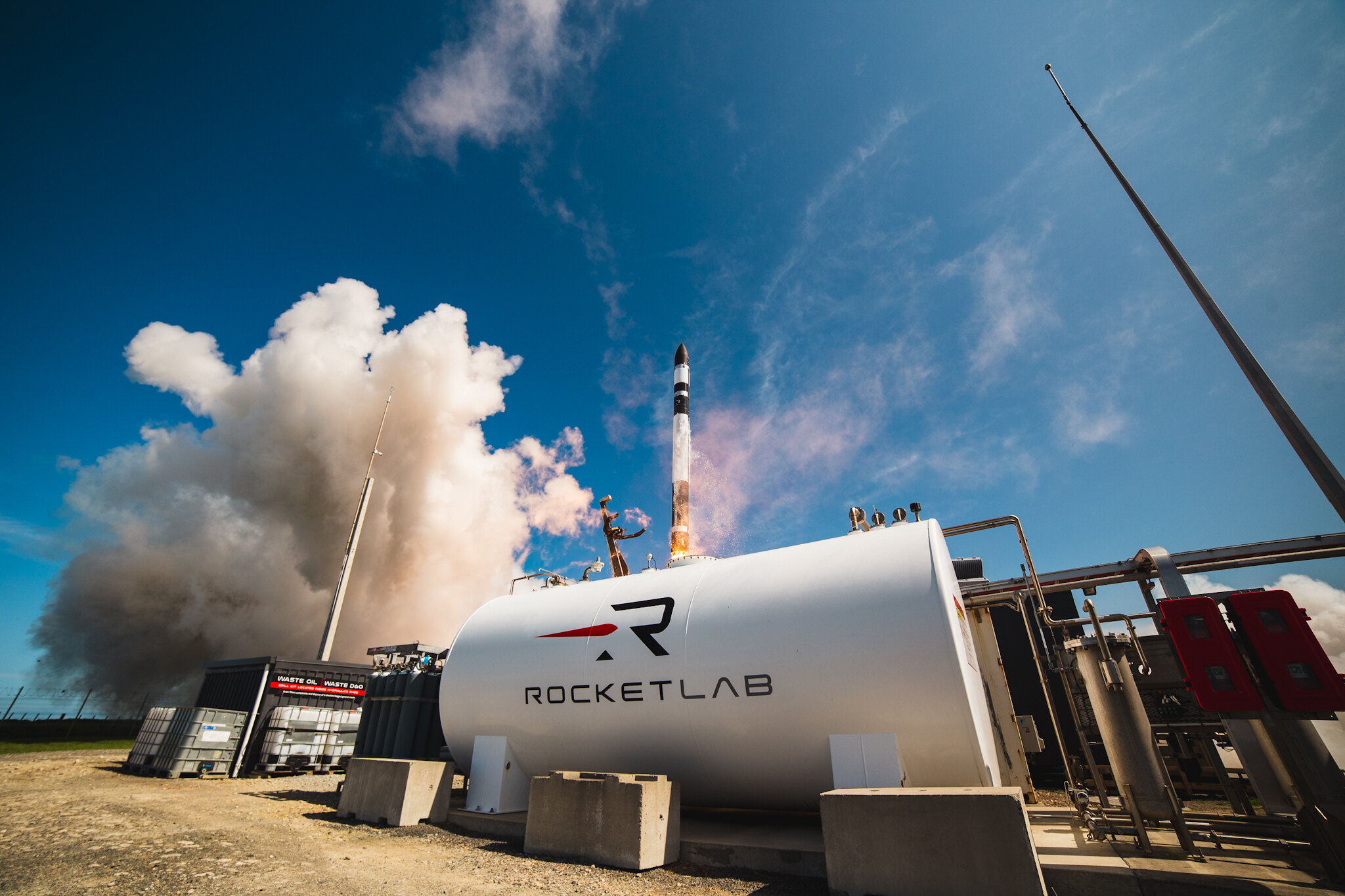
Rocket Lab's launch vehicle taking off from the launchpad. Image source: Rocket Lab.
2. The space systems business is seeing strong demand
Rocket Lab isn't just focused on launch services. CEO Peter Beck aims to transform Rocket Lab into an end-to-end space company, overseeing all aspects of a mission, from launch to component manufacturing and on-orbit operations.
Its space systems segment is a critical part of this mission. Here, Rocket Lab provides spacecraft design and manufacturing for platforms capable of operating from low Earth orbit to interplanetary destinations. It also designs and manufactures components for aerospace prime contractors and governments, as well as providing program management and mission operations.
What makes Rocket Lab's space systems business so compelling is that it is its primary revenue driver. Through Sept. 30, the company generated nearly $300 million from this segment, with gross profit of $93.8 million. In comparison, its launch services segment produced $123 million in revenue and $45.1 million in gross profit.
3. The booming space economy should be a long-term tailwind
The demand for real-time Earth observation, global connectivity, and defense applications is driving significant growth in satellite launches and space infrastructure, positioning Rocket Lab to capitalize on this multiyear trend.
Rocket Lab has positioned itself as a contractor for national security missions, leveraging its vertically integrated structure across the space ecosystem. The company is a prime contractor for the Space Development Agency's Proliferated Warfighter Space Architecture in low Earth orbit, building satellites for resilient, real-time military communications.
The company's growth potential is evident from its substantial backlog, which represents the value of signed launch and spacecraft contracts that have not yet been delivered. This is future revenue for the company, and its backlog stood at $1.1 billion as of Sept. 30, with about 47% related to launch services and the remainder to space systems.
Rocket Lab is carving out a place as an end-to-end space company. The launch of its Neutron rocket will be a noteworthy event in 2026, and the company anticipates completing three missions within one year following its initial test launch. With robust demand, evidenced by its growing backlog, and support for the space economy growing, now looks like a good time to buy.