It's generally a bad idea to catch a falling knife, because it can cut you on the way down. Investors in Lucid Group (LCID 2.29%) learned this the hard way. Shares in the embattled electric vehicle (EV) start-up have fallen by a whopping 87% since hitting the market in 2021. And this trend has intensified this year, with shares losing 57% of their value in 2025 alone.
It isn't hard to see why Lucid is shedding value. The company is burning through cash, and electric vehicle demand has turned out to be softer than anticipated in the U.S. market. That said, with a market cap of just $4.2 billion, Lucid could experience substantial growth if it captures just a fraction of the EV and autonomous driving opportunities.
Let's explore some reasons why the stock still may have millionaire-maker potential.

NASDAQ: LCID
Key Data Points
EV hype is fading
After Tesla pioneered the U.S. EV industry and showed the world what was possible, a slew of competitors like Rivian Automotive and Lucid joined the fray, hoping to capture market segments the industry leader overlooked. Lucid aimed to focus on luxury and quality with models such as its flagship Air Sedan, which has won numerous awards for its powertrain and design.
That said, a good product doesn't always guarantee a good business. And Lucid's stock price peaked at around $580 (stock split adjusted) before quickly giving back most of its gains as the hype started fading away.
Lucid has had immense problems scaling up its business model. While there are several reasons for this, the most important is weak demand. EV customers tend to gravitate toward SUVs and smaller economy-oriented vehicles over large luxury sedans like the Lucid Air.
To make matters worse, the Trump administration is rolling back fuel economy standards and regulations, making gasoline-powered cars more competitive compared to their electrified counterparts.
How Lucid can bounce back
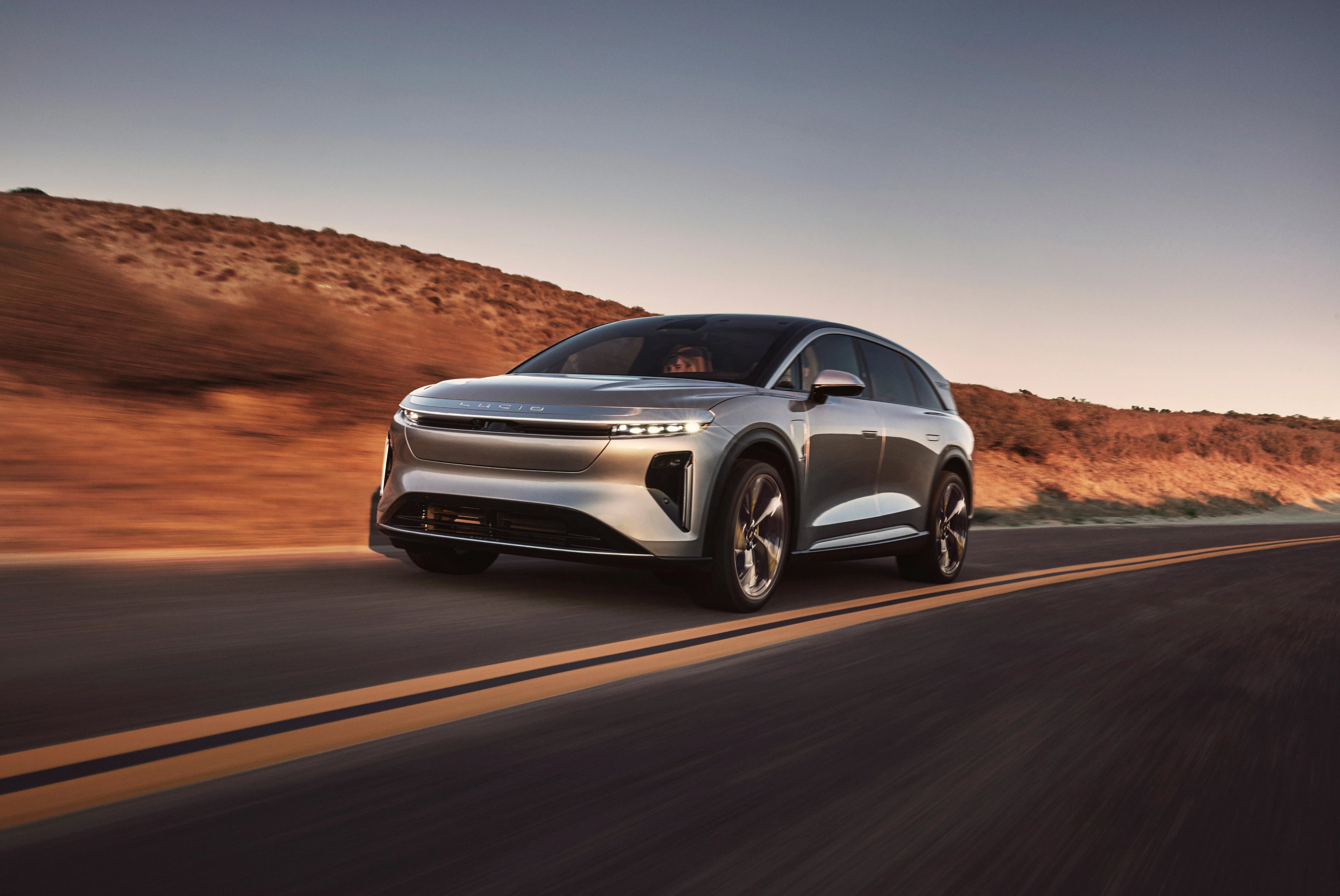
Lucid's management has outlined several compelling strategies to get the company back on track in the near term. For starters, they are pivoting to the more popular SUV category, with a new release called the Lucid Gravity. With a starting MSRP of $79,900, this vehicle is still quite expensive. But the company is planning to potentially expand its lineup even further with cheaper models like the Lucid Earth, a mid-sized SUV expected to start around $50,000 when it hits the market in 2027.
Investors should remember that Tesla's rapid expansion coincided with the release of affordable vehicles like the Model Y and Model 3. And Lucid may be looking to pull off a similar transition. The Trump administration's aggressive tariff policy could also help protect Lucid's made-in-America vehicles from competition from European rivals like Mercedes-Benz and BMW, which also target the premium electric SUV market.

Image source: Getty Images.
The transition is already having a significant impact on Lucid's operational results. Third-quarter earnings jumped 68% year over year to $336.6 million, driven by sales of the new Gravity SUV. That said, Lucid is still far from sustainable profitability, with an operational loss of $942 million in the period. If losses continue to grow at their current rate, Lucid's annualized cash burn could exceed its market cap of $4.2 billion.
The company's $2.34 billion in cash and short-term investments probably won't last very long, and management may have to turn to debt or equity financing, which could hurt stock performance.
I'm cautiously optimistic about Lucid stock
On the whole, Lucid is a risky stock because of its immense cash burn and no clear pathway to profitability. However, over the long term, the company still has millionaire-maker potential, as new model releases potentially help it scale up its business model.
The market also seems to be overlooking the largely untapped demand the company could get from the Saudi Arabian government (which has agreed to purchase up to 100,000 of its vehicles over the next 10 years) and the recent deal with Uber Technologies, which plans to use over 20,000 of the new Lucid Gravity SUVs as the basis for its planned robotaxi service. The future can be brighter than the past.