Whether markets trade up, down, or sideways, there's one strategy that stands out as worth investigating. This strategy is looking for companies that are operating well but whose stock price has performed poorly, on the theory that the stock will eventually "revert to the mean" and bounce back up.
One of the best-known strategies looking for out-of-favor stocks is the "Dogs of the Dow," which invests in high-yielding dividend stocks in the Dow Jones Industrial Average. (A falling stock price drives up yield.)
As The Motley Fool notes: "The idea behind this strategy is that investors can profit from the relative strength of Dow stocks and the opportunity to buy undervalued components using dividend yield as a proxy for valuation. The underlying thesis is that these 'dogs' are often down for short-term reasons, and the market's overreaction has created an opportunity for contrarian investors."

Image source: Getty Images.
Many dogs outside the Dow look like strong runners
Even better is tweaking the Dogs of the Dow strategy and looking for stocks outside those 30 that are cheap, hated by the market, and -- this is key -- in an uptrend that can improve returns even more over time.
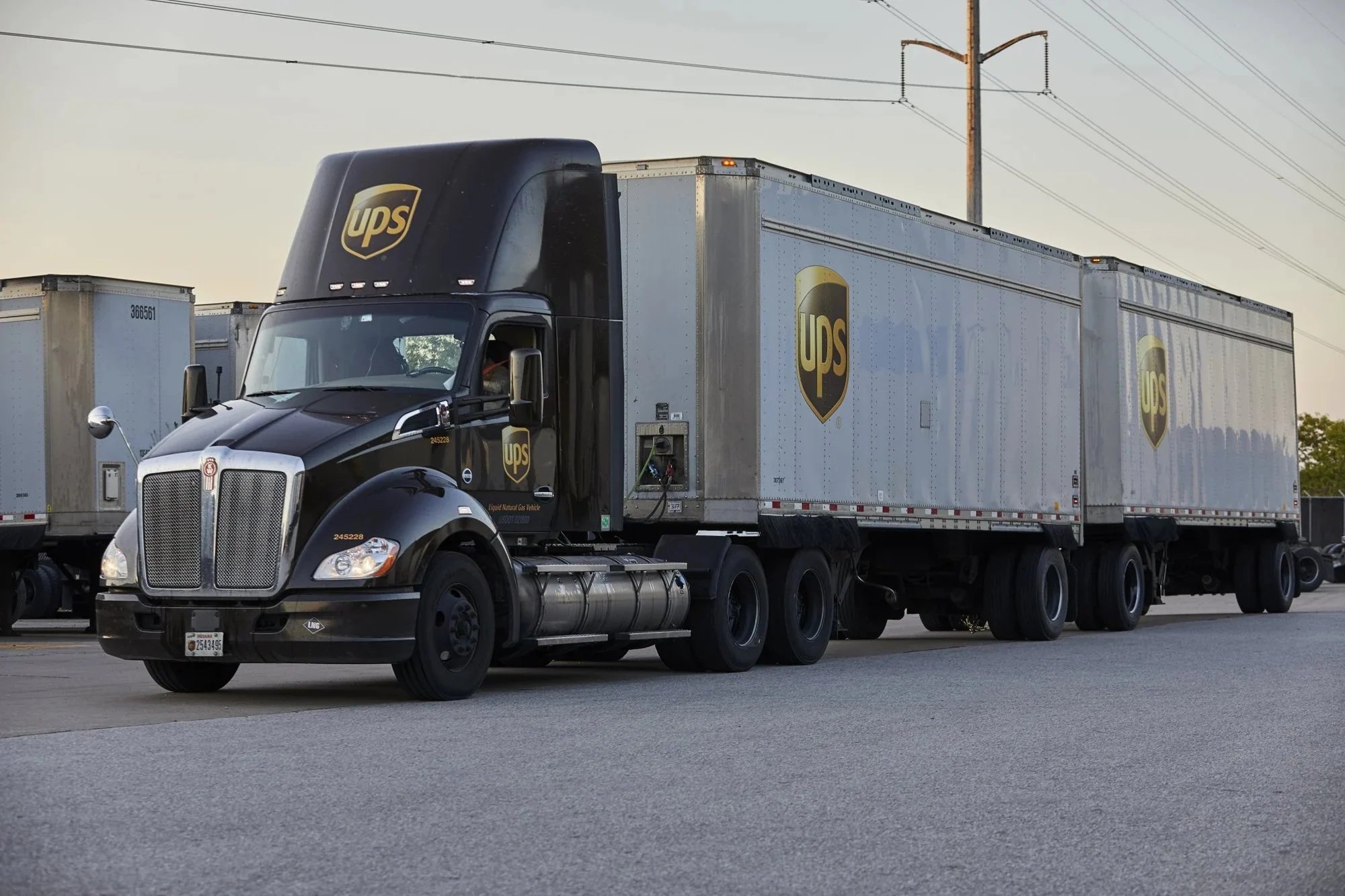
For instance, United Parcel Service (UPS +1.26%). It was a poor performer in 2025, with a 20% decline. Even worse, shares are down about 40% over the past five years.

NYSE: UPS
Key Data Points
Business has been declining, following an early pandemic boost in shipping that moderated with the end of lockdowns. Yet, after hitting a five-year low of $82 earlier in 2025, shares have started trending higher in recent months, closing the year closer to $100.
What's happening?
UPS is in the early stages of cost-cutting moves. And markets like what they're hearing so far.
Starting in early 2025, UPS launched its turnaround plan, dubbed Efficiency Reimagined. The plan includes closing 73 facilities and moving 50% of its package volume away from Amazon. Additional investments in artificial intelligence (AI) and automation allowed UPS to cut jobs. The end goal? To cut $3.5 billion in annual costs.
There's been some early success so far, with the company's Q3 2025 earnings, released in October, showing improvements.
Revenue topped $21.4 billion, a decrease of 3.7% year over year. However, diluted earnings per share came in 34% higher than analyst expectations. And UPS sported a 10% operating margin, up from 7.7% earlier in the year.
In the meantime, given the size and scope of the package delivery industry, UPS and its competitors, such as FedEx, operate in an oligopolistic environment dominated by just a few players. Although by no means guaranteed, companies in industries like this can have an easier time making necessary changes relative to those in more competitive industries. Building a package delivery network from the ground up would require billions in start-up costs, and FedEx/UPS largely have the market to themselves.
In short, UPS is a strong candidate for further improvements in revenue and profit margins as it aggressively cuts costs. That's led to at least one analyst upgrade in late December, citing an improved volume outlook.
For now, the real question for investors is how quickly that can happen, as it could materially impact the company's dividend, which currently yields around 6.4%.
Dividend under pressure until more efficiencies are reimagined
With the company's key metrics improving, shares look attractively valued at about 14 times forward earnings estimates, which is a substantial discount to the overall stock market right now. However, the real story going into 2026 will be the company's dividend.
UPS currently has a 16-year history of raising its dividend payout annually. However, at its current depressed earnings level, the payout ratio exceeds 100% of earnings per share.
In other words, if UPS wants to maintain its generous dividend, it needs to continue executing on its cost-saving plan and increase earnings. Historically, management has committed to targeting a 50% return of prior-year earnings to shareholders via a dividend.
With a current payout ratio nearly double that, the dividend could be at risk for a cut if earnings are slow to rebound or cost savings don't fully materialize.
For now, UPS shares are in an uptrend, and the stock yields north of 6%. The dividend remains at risk of dropping if things don't continue to improve. That puts UPS well into the "cheap, hated stock trending higher" category.
Investors will want to watch carefully for any negative change in the dividend. If operations continue to improve, UPS shares could trend higher. And that could mean a classic "reversion to the mean" story that outperforms the market, making it a top dividend dog of sorts.