Last year was something of a roller-coaster ride for Nvidia (NVDA 1.21%) investors. The stock continued the bull run that began back in early 2023 when the company's graphics processing units (GPUs) became the gold standard for running artificial intelligence (AI) applications in data centers. Despite fears of rising competition, Nvidia closed out 2025 in strong fashion, gaining 39% for the year, more than twice the 16% increase for the S&P 500.
However, investors are looking to the future and asking the quintessential investing question. In the wake of the company's strong performance in recent years, is it too late to buy Nvidia stock as we head into 2026? Let's examine the available evidence to see what it reveals.
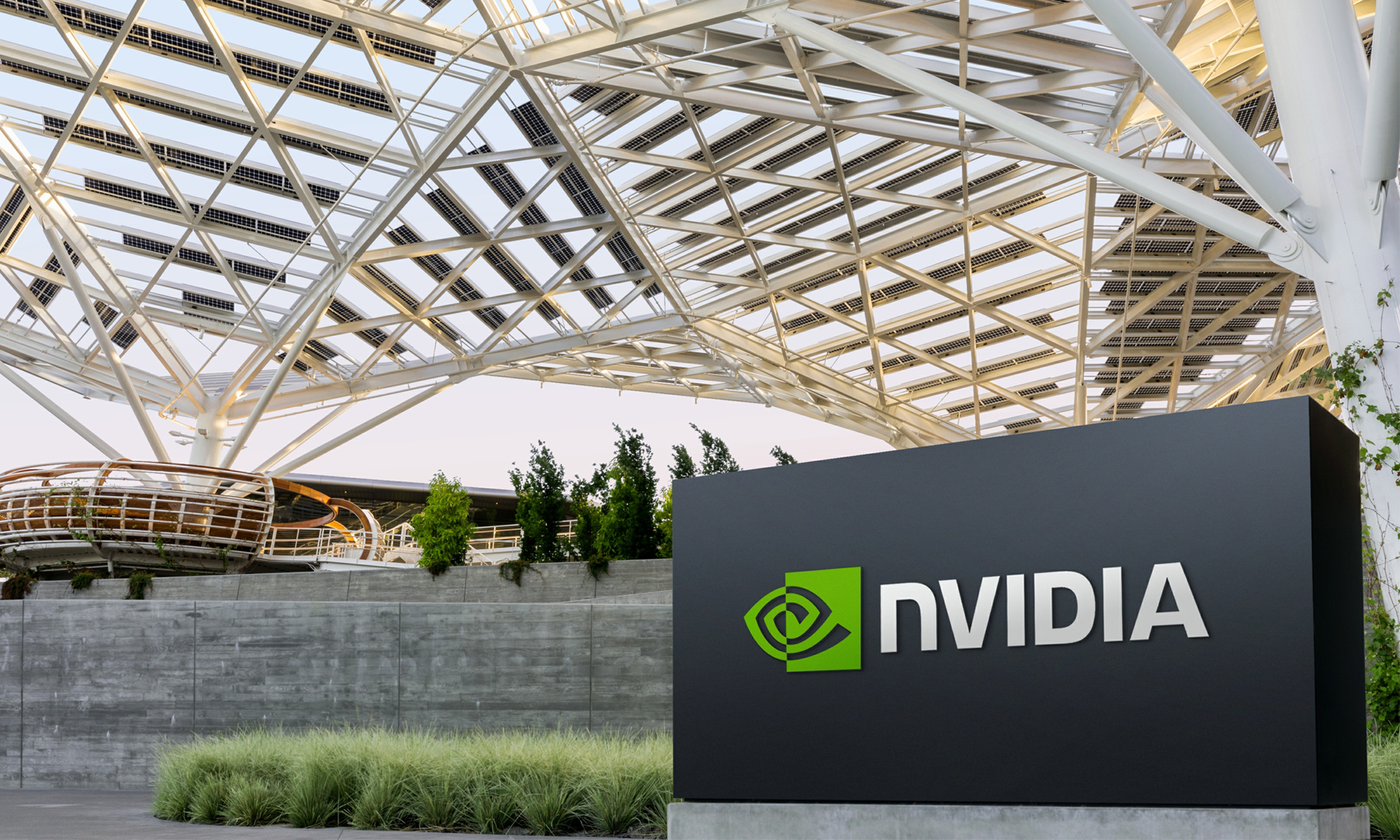
Image source: Nvidia.
A position of strength
Nvidia continues to operate from a position of strength, despite encroaching competition (more on that in a bit). CEO Jensen Huang recognized the increasing potential of AI as early as 2013 and positioned the company to capitalize on the wave of AI adoption, paving the way for future success.
Don't take my word for it. Nvidia dominates the data center GPU market with a 92% share, according to IoT Analytics. Furthermore, the company adopted an annual product development and release cadence that makes it extremely difficult for competitors to gain ground.
Tactical advantage -- Nvidia
There's been a lot of talk about the increasing competition in the AI space, and that certainly appears to have some merit.
While Amazon has been developing its own homegrown AI processors for years, the company recently launched its Trainium 3 chip, which Amazon claims is 4 times faster, boasts 4 times more memory, and is 40% more energy-efficient than its predecessor.
Alphabet's Google debuted its first Tensor Processing Unit (TPU) in 2015 and released the seventh-generation Ironwood TPU late last year. The company notes that the latest version offers peak performance 10 times that of the fifth version and 4 times the improvement compared to version six.
Advanced Micro Devices -- Nvidia's most oft-cited rival -- released its MI350 processors last year, which offer 4 times better performance than the prior version. Furthermore, the company's MI400 series of rack-scale processors, which are due out this year, is being touted as the best yet for AMD.
Yet Nvidia maintains a competitive moat that was years in the making. The company's Compute Unified Device Architecture (CUDA) is an extensive library of software tools that help developers get the best performance out of Nvidia's GPUs. CUDA is widely acknowledged as the gold standard for GPU programming and is used by more than 4.5 million developers, creating a powerful network effect and a unique competitive advantage that will keep its rivals at bay for years to come.

NASDAQ: NVDA
Key Data Points
Is Nvidia overvalued?
Some investors would argue that Nvidia stock is pricey, and that view is certainly understandable, given the stock currently trades for 46 times earnings. However, taking a step back suggests that view is also myopic.
Nvidia has risen 1,200% over the past three years, and growth of that magnitude shows why the stock is deserving of a premium. Additionally, the most commonly used valuation metrics struggle to value high-growth stocks. The more appropriate price/earnings-to-growth (PEG) ratio returns a multiple of 0.78 -- when any number less than 1 is the standard for an undervalued stock. Furthermore, the stock is trading for a much more reasonable multiple of 25 times next year's earnings.
Its growth streak is expected to continue. For its fiscal 2026 (which ends in late January), Nvidia is on track to increase revenue by 63% and earnings per share (EPS) by 59% -- despite heavy investment in the next generation of AI-centric processors. Furthermore, Wall Street expects the company to grow its revenue by 50% in fiscal 2027.
Taken together, Nvidia's strong competitive position, proven track record, and robust growth prospects suggest that the stock remains a buy heading into 2026.