Applied Digital (APLD 1.57%) rebranded in November 2022, changing its name from Applied Blockchain. The name change reflected its shift from a blockchain company to an artificial intelligence (AI) infrastructure provider.
The move has been successful so far. Over the last three years, Applied Digital stock is up 1,720% (as of Jan. 12). A large portion of those gains came after the June 2025 announcement of a lease deal with hyperscaler CoreWeave. Applied Digital and CoreWeave have since signed another lease agreement, and the two deals combine for $11 billion in total anticipated revenue.
Considering Applied Digital's incredible success in recent years, could a stock split be on the horizon? Here's what to expect, and how to decide if you should invest in this company.
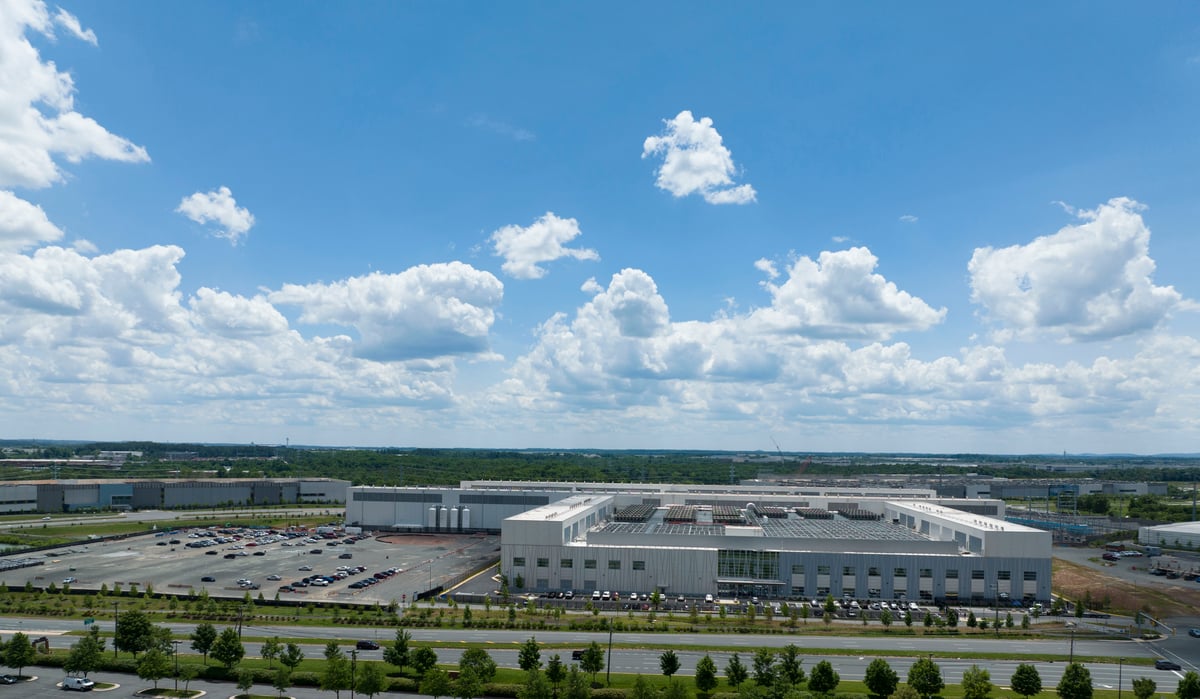
Image source: Getty Images.
Why would Applied Digital split its stock?
A stock split is a way for a company to reduce its share price and increase liquidity. When a company has a high share price, not all investors can afford it. Even if they can, some will be reluctant to allocate a significant portion of their budget to a single company. With a stock split, each share is divided into smaller, more affordable slices, without affecting the company's actual value.
Imagine a company trades at $2,000 per share and executes a 20-for-1 stock split. For each share you owned pre-split, you'd receive 20 new shares worth $100 each post-split. Applied Digital stock has jumped quite a bit, which is one of the reasons companies execute stock splits. However, shares are still affordable, currently trading under $40 (as of Jan. 12).

NASDAQ: APLD
Key Data Points
There would be no benefit if Applied Digital were to split its stock right now. We probably won't see a stock split or a reverse stock split (where a company reduces its number of shares to increase its share price) from Applied Digital anytime soon.
A rapidly growing AI infrastructure stock
AI infrastructure is in high demand, and Applied Digital is well-positioned to capitalize on this opportunity. Its Polaris Forge campuses are located in North Dakota, which has the second-lowest energy rates in the U.S. and a cold climate that reduces cooling costs. Applied Digital data centers can also handle much higher power densities than traditional data centers, with the Polaris Forge 1 campus designed for 400 MW (its first 100 MW building is fully operational as of November 2025).
As mentioned, Applied Digital already has lease agreements with CoreWeave worth $11 billion. It also recently announced a 15-year lease with an unnamed U.S. hyperscaler, expected to deliver $5 billion in revenue. That announcement was part of its earnings report for the second quarter of its 2026 fiscal year (which ended Nov. 30), where Applied Digital reported revenue of $126.6 million, up a whopping 250% year over year.
With a $16 billion backlog from those deals, Applied Digital should see continued revenue growth. The risk is that all that revenue is tied to just two customers. If issues arise with either company, it could spell disaster -- especially considering it's burning a significant amount of cash to build its "AI factories." Capital expenditures (capex) jumped from $141.8 million in its 2024 fiscal year to $681.6 million in 2025. Over the first two quarters of its 2026 fiscal year, Applied Digital has already surpassed that with $801.5 million in capex spending.
Applied Digital's revenue growth is impressive, but this company comes with substantial risk. It's also expensive, trading at 33 times trailing sales.
The future of Applied Digital stock
There's robust demand for Applied Digital's data centers, and this demand is likely to continue rising. AI companies are spending heavily on data centers, with total worldwide spending of $430 billion in 2024, and there are estimates that it could reach $1.1 trillion by 2029. If you're looking for AI infrastructure stocks, Applied Digital is worth a look.
I wouldn't open a large position, considering this company is unprofitable and carries a high valuation. However, Applied Digital could continue to be a high-growth company that outperforms the market over the next five years, particularly with its substantial revenue backlog. While it is unlikely to carry out a stock split during that time frame, this doesn't affect its value as an investment.