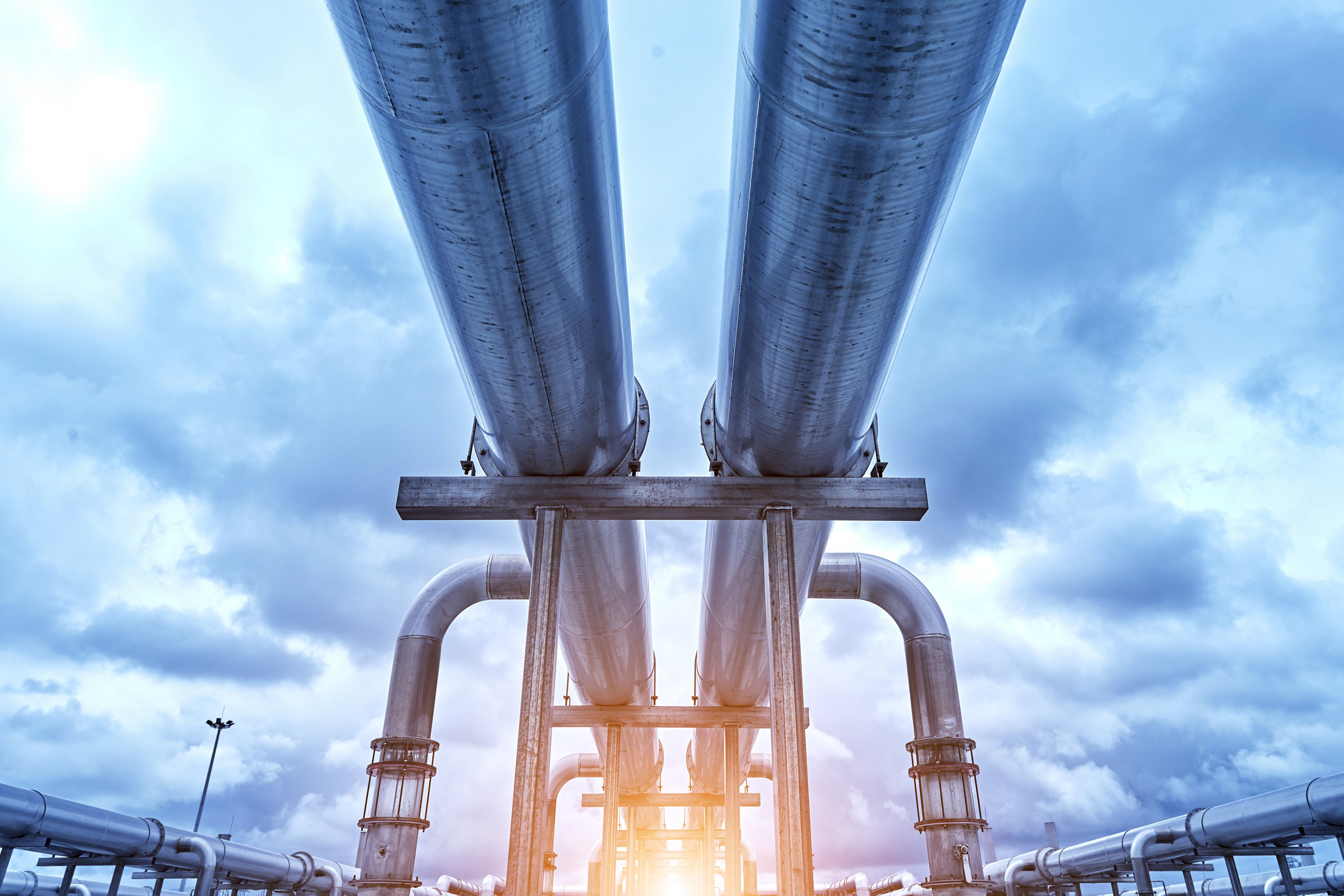
Energy Transfer (ET 0.66%) is one of the largest owners of energy infrastructure in North America. The fees it charges customers for moving oil and natural gas around the world are a reliable backstop for the master limited partnership's lofty 7.5% yield. Still, the biggest problem that more conservative income investors may have with Energy Transfer is trust. Here's what you need to know.
Energy Transfer's business seems reliable
Energy Transfer is a bit more complex than other pipeline-focused MLPs. It not only operates its own collection of midstream assets, but it also manages two other publicly traded MLPs, Sunoco LP (SUN 0.02%) and USA Compression Partners (USAC 0.12%). It earns fees for doing that, but some might view that obligation as a potential distraction since the fees only account for about 15% of adjusted earnings before interest, taxes, depreciation, and amortization (EBITDA).

Image source: Getty Images.
Through the first nine months of 2025, Energy Transfer's distributable cash flow covered the distribution by a very comfortable 1.8 times. The MLP's leverage, while higher than some of its peers, isn't worrying, with a financial debt-to-EBITDA ratio of roughly 4.2.
Looking ahead, Energy Transfer has $5.5 billion worth of capital investment projects on the books for 2026 alone. Management believes that it will support distribution growth of 3% to 5% during the year. That range is the long-term target, as Energy Transfer looks to become a more reliable income investment. There are very good reasons why you might want to buy Energy Transfer while it is trading below $20 a unit.
The problem with Energy Transfer
The future isn't the big problem when it comes to investing in Energy Transfer; it's the past. More conservative dividend investors have to come to terms with events that occurred during the last two material energy industry downturns.
In 2020, when the global reaction to the coronavirus pandemic pushed U.S. oil prices below zero, Energy Transfer cut its distribution in half. The goal of deleveraging was noble, but if you had bought the MLP hoping for a reliable income stream, you would have been sorely disappointed. The distribution is growing again, and above where it was prior to the cut, but a glass-half-empty view of this decision might keep you on the sidelines.

NYSE: ET
Key Data Points
In the 2016 energy downturn, Energy Transfer decided to buy a competitor, Williams Companies (WMB +1.95%), but got cold feet. Energy Transfer warned that consummating the deal might have required a dividend cut, taking on excessive leverage, or both. As part of an effort to scuttle the deal it initiated, Energy Transfer issued convertible securities, with its then-CEO buying a material amount of the issuance. Although the deal was called off in the end, it appears that the convertibles would have shielded their holders from the risk of an Energy Transfer dividend cut. The negative take on the convertible is that it would have protected insiders at the expense of shareholders.
There are other options
If those two corporate decisions have you wondering if owning Energy Transfer would keep you up at night, you should probably avoid it. Trusting that management has your back is important when you make an investment. And the fact is, there are other options in the midstream space that don't have similar question marks like that in their past. Some good alternatives could be Enterprise Products Partners (EPD 0.45%) and Enbridge (ENB +1.50%), both of which have decades of annual dividend increases under their belts. You will have to give up some yield, with Enterprise yielding 6.6% and Enbridge 5.8%. However, more conservative income investors will probably find that trade-off to be worthwhile.