Editor's note: This article has been corrected. While Beyond Meat reported $1.2 billion in debt as of Sept. 27, 2025, it then completed a tender offer in October that exchanged debt due in 2027 for shares and debt due in 2030. On Nov. 11, the company said in its quarterly call that "we reduced debt levels by approximately $900 million." Also, Beyond Meat notes that its Beyond Burgers have 75% less saturated fat than regular ground beef burgers.
Let's play a what-if game. Let's imagine that you spent $1,000 on shares of alternative protein company Beyond Meat (BYND 7.39%) a year ago. What would your stake (not steak!) be worth today?
Check it out:
|
Time period |
Average annual return |
|---|---|
|
Past 1 year |
(77.46%) |
|
Past 3 years |
(62.12%) |
|
Past 5 years |
(63.47%) |
Source: Data from Morningstar.com as of Jan. 23, 2026.

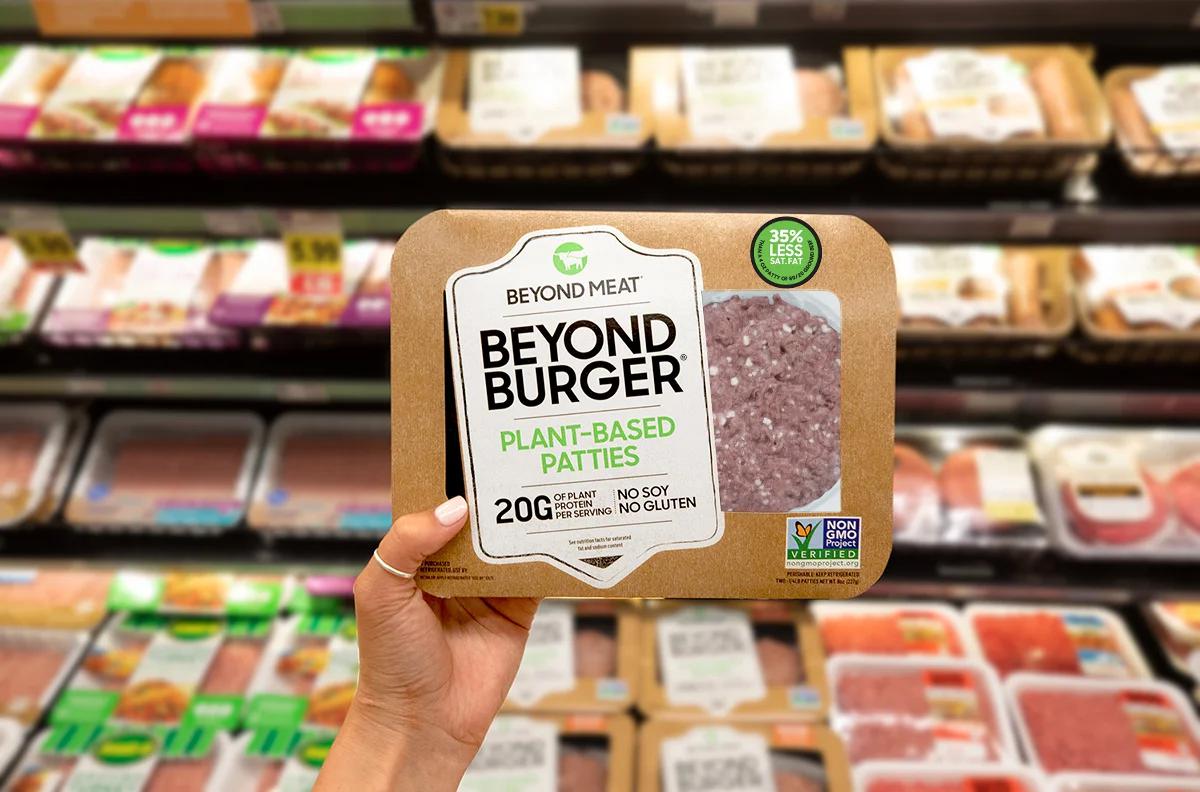
Image source: Getty Images.
Those parentheses mean those are negative returns. Losses. Your $1,000 would have lost 77.5% of its value in a single year, becoming about $225. Yikes.

NASDAQ: BYND
Key Data Points
What happened? Well, Beyond Meat has been struggling mightily in recent years.
In the company's third-quarter earnings report, it posted revenue of $70.2 million, down 13% year over year. Operating losses came in at $112 million, much deeper than the year-earlier loss of $31 million.
Shares were recently priced at less than a dollar, putting them deep in penny-stock territory. (Remember, a penny stock is one trading for less than about $5 per share, and such companies are often extra-volatile and risky.)
The premise of the company seems sound: Lots of people want to eat healthier meals, and offerings from companies such as Beyond Meat are indeed full of protein and nutrients. But as Harvard Health has noted, "[M]eatless burgers are heavily processed and high in saturated fat." Beyond Meat says its Beyond Burgers have 75% less saturated fat than regular ground beef burgers.
Given all that, should you consider investing in Beyond Meat, now that its stock price is so much lower than it used to be? The answer, to me, seems a strong no. To me, it seems too risky, and while the company may indeed turn its fortunes around, it's safer to wait and see. It's not generating much money and it's spending a lot of money.
There are plenty of more exciting stocks out there.